Detection of Dirofilaria repens and Mansonella llewellyni in the United States by Wolbachia Surveillance
Charlotte O. Moore, Cynthia Robveille, Barbara Qurollo, Edward B. Breitschwerdt

TL;DR
Researchers found evidence of two types of filarial worms, Dirofilaria repens and Mansonella llewellyni, in U.S. domestic and wild animals using Wolbachia DNA detection.
Contribution
The study reports the first detection of D. repens and Mansonella llewellyni in U.S. animals using Wolbachia surveillance.
Findings
Wolbachia DNA from Dirofilaria repens was detected in a dog imported from Slovakia.
Wolbachia sequences from raccoons were closely related to Mansonella ozzardi and Mansonella llewellyni.
Molecular surveillance identified potential novel filarial species in U.S. wildlife.
Abstract
In mammals, detection of Wolbachia bacteria can be used to diagnose filarial infection, while antibiotic treatment to eliminate Wolbachia can assist in eliminating filarial infections. Because Wolbachia are necessary for survival of several filarioids and closely related to Anaplasma and Ehrlichia, we analyzed Wolbachia DNA amplification by Anaplasma/Ehrlichia qPCR, from 39,526 domestic and wildlife animal blood samples submitted to a diagnostic laboratory between 2017 and 2023. Filarial infection was confirmed by 28S gene amplification, followed by phylogenetic analysis utilizing filarial cytochrome oxidase subunit 1 (cox1), myosin heavy chain (myoHC), and 70 kilodalton heat shock protein (hsp70) gene sequencing. Wolbachia DNA was detected in 57 domestic dogs (Canis familiaris) and three raccoons (Procyon lotor) from 23 states and Puerto Rico. A majority of the Wolbachia sequences from…
Genes, proteins, chemicals, diseases, species, mutations and cell lines named across the full text — each resolved to its canonical identifier and authoritative record.
Click any figure to enlarge with its caption.
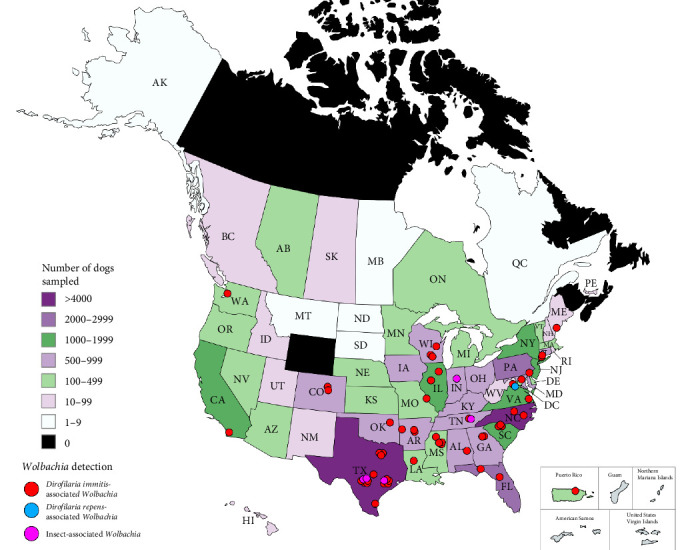 Figure 1
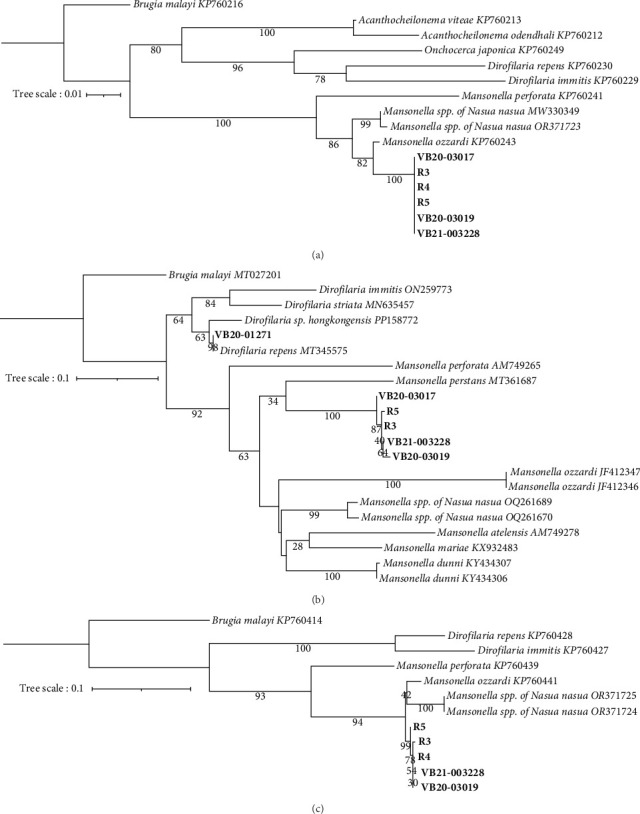 Figure 2
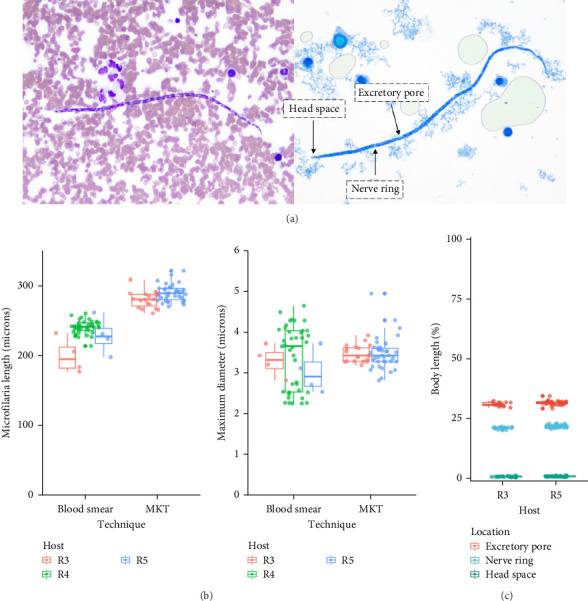 Figure 3
Peer Reviews
No public reviews on file for this paper yet. If you reviewed it on a platform where reviews are public (OpenReview, ICLR, NeurIPS, ICML), you can paste yours below so the community can read it here.
Videos
No videos yet. Explain this paper in a talk, walkthrough, or lecture? Add one.
Taxonomy
TopicsParasitic Diseases Research and Treatment · Insect symbiosis and bacterial influences · Mosquito-borne diseases and control