Oculocutaneous albinism in a patient with an OCA2 variant: molecular and clinical insights
Mostafa Neissi, Sahar Kareem Al-Mozani, Ayoob Radhi Al-Zaalan, Samaneh Sanavi Shiri, Motahareh Sheikh-Hosseini, Adnan Issa Al-Badran, Elaheh Nekouei

TL;DR
A new OCA2 gene variant causing albinism is identified in an Iranian family, providing insights into its molecular and clinical effects.
Contribution
A novel homozygous missense variant in the OCA2 gene is identified and analyzed for its role in oculocutaneous albinism.
Findings
A novel OCA2 variant, c.1274T>G (p.Met425Arg), was identified as the cause of albinism in a consanguineous Iranian family.
The variant is predicted to be pathogenic based on bioinformatics and structural modeling analyses.
The study confirms autosomal recessive inheritance with both parents as heterozygous carriers.
Abstract
Albinism is a rare genetic condition characterized by hypopigmentation of the skin, hair, and eyes, as well as visual impairments. Oculocutaneous albinism type 2 (OCA2) is commonly associated with variants in the OCA2 gene, which encodes a protein critical for melanosomal pH regulation and melanin biosynthesis. Exome sequencing, validated by Sanger sequencing, was employed to investigate the genetic basis of albinism in a consanguineous Iranian family. Bioinformatics analyses and structural modeling were conducted to assess the pathogenicity and impact of the detected variant. A 27-year-old male from a consanguineous Iranian family presented with features of oculocutaneous albinism, including white hair, blue eyes, strabismus, sun-sensitive skin, reduced visual acuity, and significant photophobia, resulting in functional limitations in bright environments. Genetic analysis identified a…
Genes, proteins, chemicals, diseases, species, mutations and cell lines named across the full text — each resolved to its canonical identifier and authoritative record.
Click any figure to enlarge with its caption.
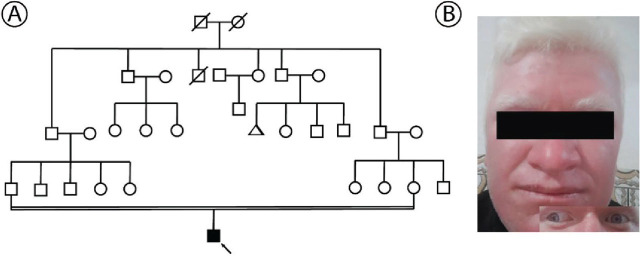 Figure 1
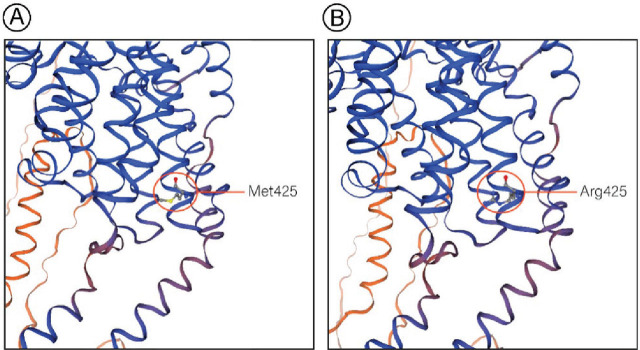 Figure 2
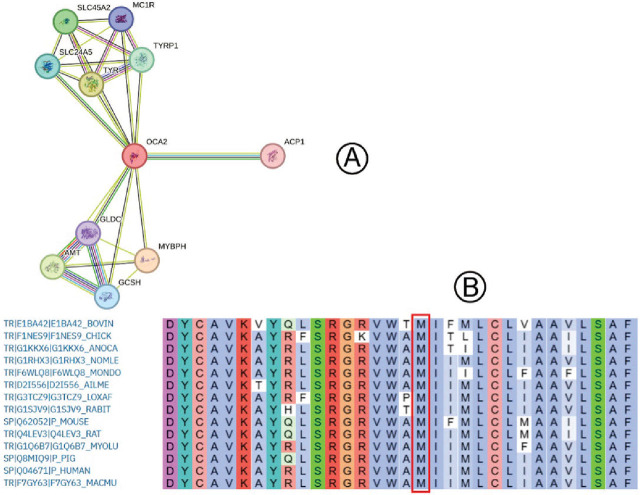 Figure 3
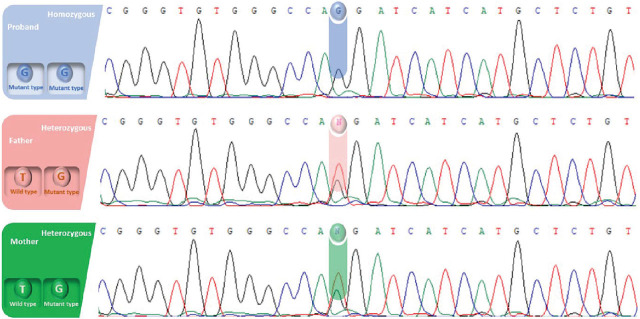 Figure 4
Peer Reviews
No public reviews on file for this paper yet. If you reviewed it on a platform where reviews are public (OpenReview, ICLR, NeurIPS, ICML), you can paste yours below so the community can read it here.
Videos
No videos yet. Explain this paper in a talk, walkthrough, or lecture? Add one.
Taxonomy
Topicsmelanin and skin pigmentation · Biochemical Analysis and Sensing Techniques · Skin Protection and Aging