Homocysteine, HHcy, H-type hypertension and dizziness: an NHANES analysis
Yiyin Liang, Tianjie Lai, Juan Feng

TL;DR
This study finds that high homocysteine levels and H-type hypertension are linked to various types of dizziness, suggesting their importance in diagnosis and treatment.
Contribution
The study provides new evidence on the associations between homocysteine, H-type hypertension, and dizziness using a large population dataset.
Findings
Elevated homocysteine levels and H-type hypertension are significantly associated with various symptomatic dizziness.
HHcy shows the strongest link with fall risk, while H-type hypertension is most associated with any dizziness.
Non-linear relationships exist between homocysteine levels and dizziness symptoms.
Abstract
Homocysteine (Hcy) is associated with various diseases, but its specific relationship with different types of dizziness remains unclear. This study utilizes NHANES cross-sectional data to investigate the associations between Hcy levels, H-type hypertension, and various symptomatic dizziness, aiming to provide new insights for clinical diagnosis and treatment. This cross-sectional study analyzed 6,970 participants from NHANES (1999–2004) using weighted logistic regression, trend tests, restricted cubic spline analysis, and subgroup analysis. Elevated Hcy levels and H-type hypertension showed significant positive associations with various symptomatic dizziness. HHcy showed the strongest association with fall risk (OR = 1.83, 95% CI: 1.24–2.77), while H-type hypertension was most strongly associated with any symptomatic dizziness (OR = 1.75, 95% CI: 1.34–2.28). No significant…
Genes, proteins, chemicals, diseases, species, mutations and cell lines named across the full text — each resolved to its canonical identifier and authoritative record.
Click any figure to enlarge with its caption.
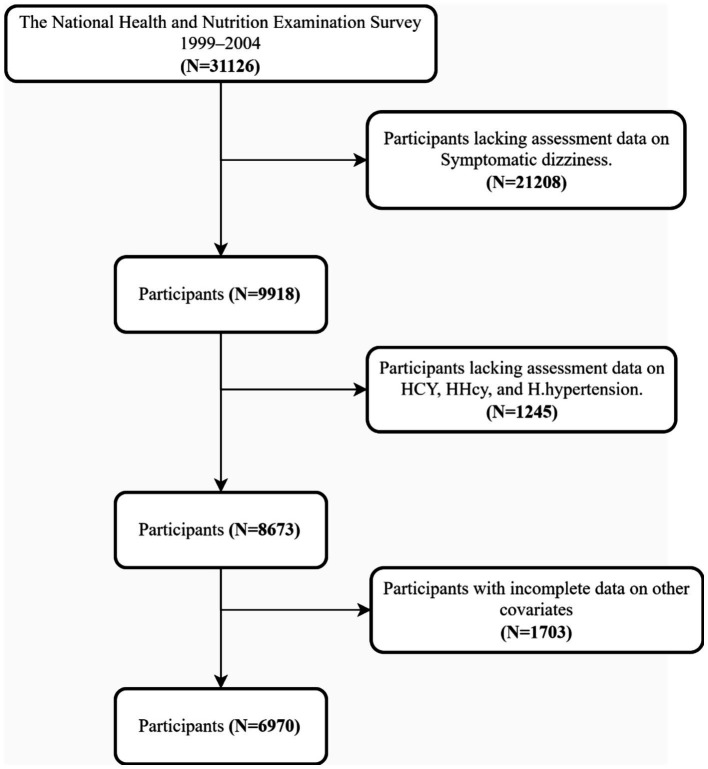 Figure 1
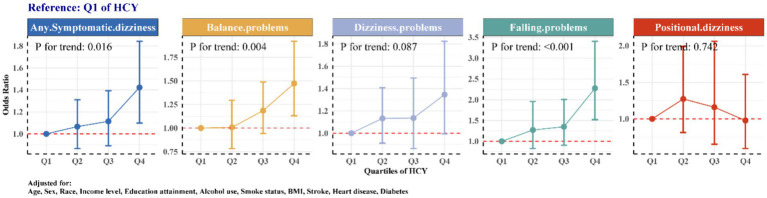 Figure 2
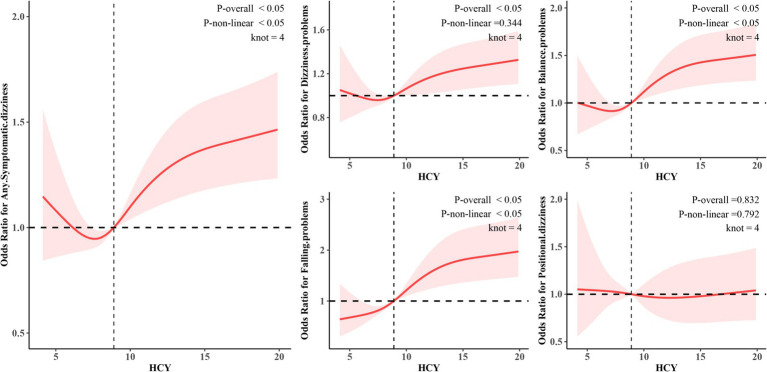 Figure 3
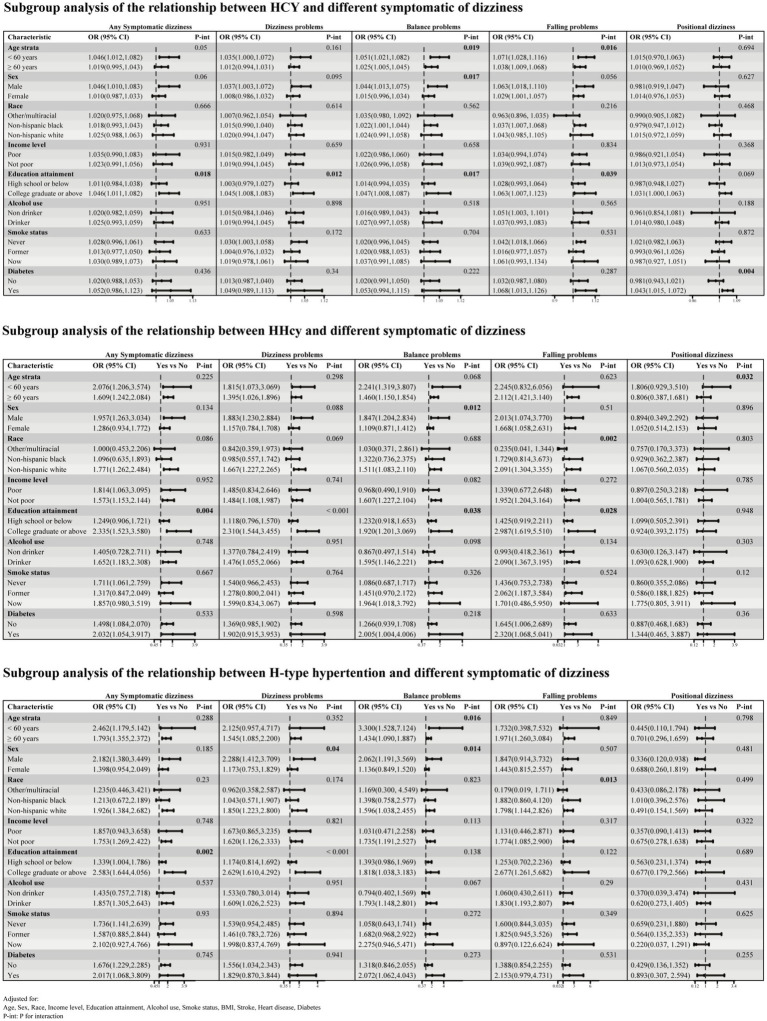 Figure 4
Peer Reviews
No public reviews on file for this paper yet. If you reviewed it on a platform where reviews are public (OpenReview, ICLR, NeurIPS, ICML), you can paste yours below so the community can read it here.
Videos
No videos yet. Explain this paper in a talk, walkthrough, or lecture? Add one.
Taxonomy
TopicsVestibular and auditory disorders · Hearing, Cochlea, Tinnitus, Genetics · Neuroscience of respiration and sleep