Perspectives From Adolescents and Young Adults With Klinefelter Syndrome on Testosterone Supplementation and Fertility
Abigail Tubman, Jaclyn L Papadakis, Courtney Finlayson, Debra Duquette, Allison Goetsch Weisman

TL;DR
This study explores how adolescents and young adults with Klinefelter syndrome understand testosterone treatment and infertility, highlighting the need for better education and support.
Contribution
The study provides new insights into the perspectives of adolescents and young adults with Klinefelter syndrome on testosterone supplementation and fertility.
Findings
Most participants lacked a comprehensive understanding of testosterone treatment and its health benefits.
Perceived health benefits were a facilitator for testosterone replacement adherence, while delivery mode was a barrier.
Participants emphasized the importance of learning alternative ways to have children despite infertility.
Abstract
Infertility and testicular dysfunction are typical features of Klinefelter syndrome (KS; 47,XXY). KS affects ∼1:600 male births, making it the most common chromosomal aneuploidy. As more adolescent and young adult (AYA) patients with KS seek care, it becomes increasingly important to investigate their understanding of information about testosterone supplementation and infertility. This qualitative study aimed to explore the perspectives of AYA with KS about testicular dysfunction, specifically the likely need for testosterone replacement and, if desired, fertility-related interventions. Semistructured interviews were conducted with 13 AYA with KS ages 14 to 23 years (mean, age 16 years). Reflexive thematic analysis was applied. Two themes were generated concerning testicular dysfunction: understanding of testosterone supplementation and fertility discussions. Most individuals lacked…
Genes, proteins, chemicals, diseases, species, mutations and cell lines named across the full text — each resolved to its canonical identifier and authoritative record.
Click any figure to enlarge with its caption.
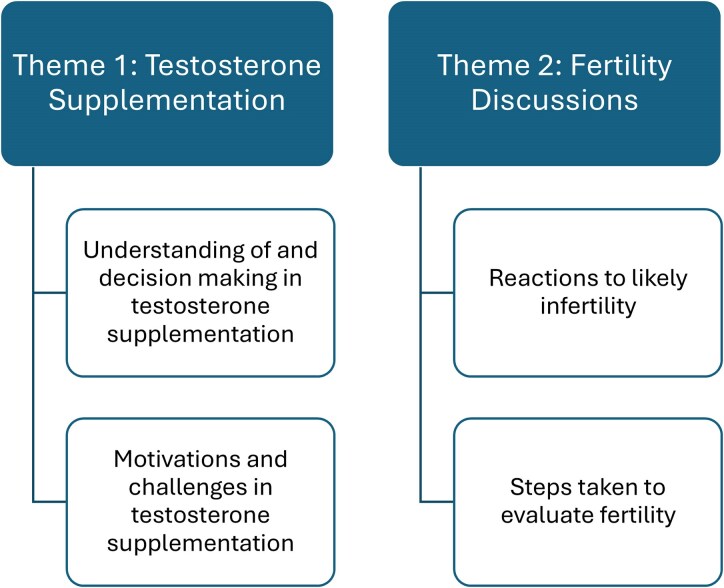 Figure 1
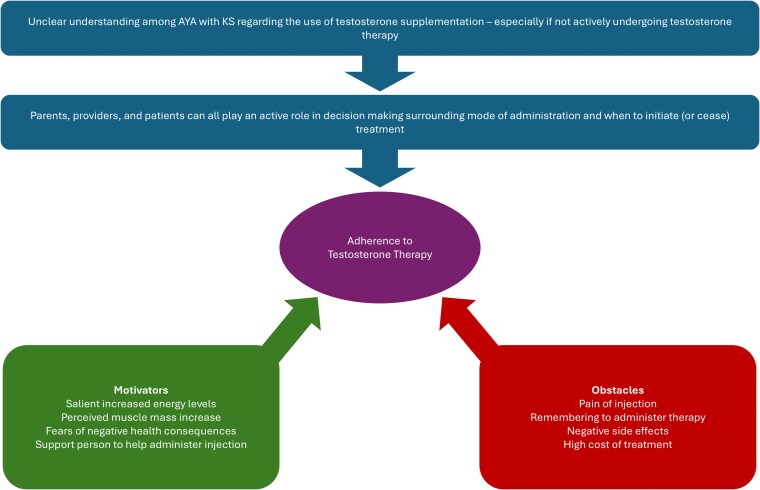 Figure 2
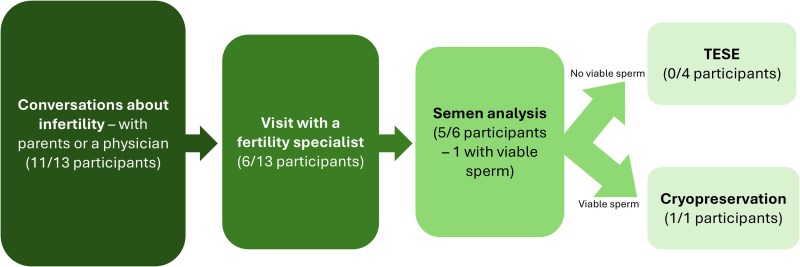 Figure 3
Peer Reviews
No public reviews on file for this paper yet. If you reviewed it on a platform where reviews are public (OpenReview, ICLR, NeurIPS, ICML), you can paste yours below so the community can read it here.
Videos
No videos yet. Explain this paper in a talk, walkthrough, or lecture? Add one.
Taxonomy
TopicsGenetic and Clinical Aspects of Sex Determination and Chromosomal Abnormalities · Sexual Differentiation and Disorders · Hormonal and reproductive studies