Additional Complexity in Historic and Contemporary Gene Flow Among Hoary, Vancouver Island, and Olympic Marmots Revealed by Microsatellites and Ultraconserved Elements
Natalie M. Hamilton, Nicholas J. Kerhoulas, Kathryn M. Everson, Aren M. Gunderson, Link E. Olson

TL;DR
This study explores genetic mixing among three marmot species in the Pacific Northwest and finds complex patterns of historical and current gene flow, which may be influenced by climate change.
Contribution
The study reveals new insights into historic and contemporary gene flow using microsatellites and UCEs, resolving mito-nuclear discordance in marmots.
Findings
Microsatellite data show no current gene flow between hoary and Vancouver Island marmots.
UCE data reveal historic gene flow between hoary and Vancouver Island marmots.
Mito-nuclear discordance is driven by mitochondrial introgression and male-biased dispersal.
Abstract
Alpine species are inordinately threatened by habitat loss and precipitation changes resulting from climate change. In North America's Pacific Northwest (PNW), three closely related alpine mammal species—hoary, Olympic, and Vancouver Island marmots—may face greater negative impacts of climate change relative to species found at lower elevations. Phylogenetic studies have found these three species form a monophyletic complex; however, discordant evolutionary histories between mitochondrial and nuclear genes suggest that gene flow may have occurred between these marmot species. Furthermore, mitochondrial data find two reciprocally monophyletic mitochondrial clades (haploclades) of hoary marmots. Nuclear data do not recover this pattern, and interspecific relationships among the markers are not consistent. We used nine microsatellite loci and ultraconserved elements (UCEs) to explore…
Genes, proteins, chemicals, diseases, species, mutations and cell lines named across the full text — each resolved to its canonical identifier and authoritative record.
Click any figure to enlarge with its caption.
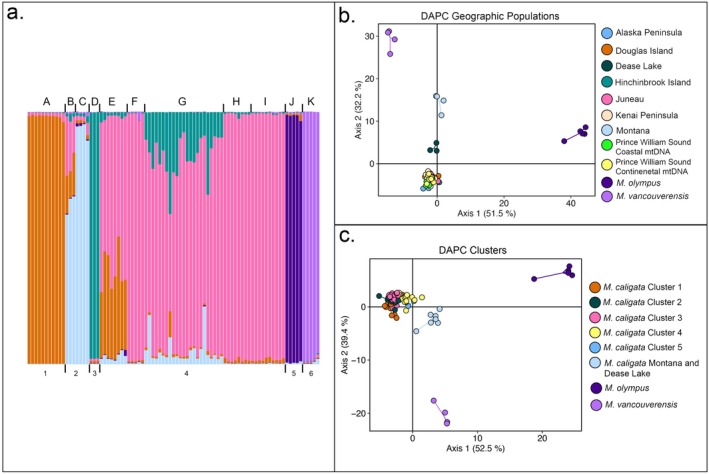 Figure 1
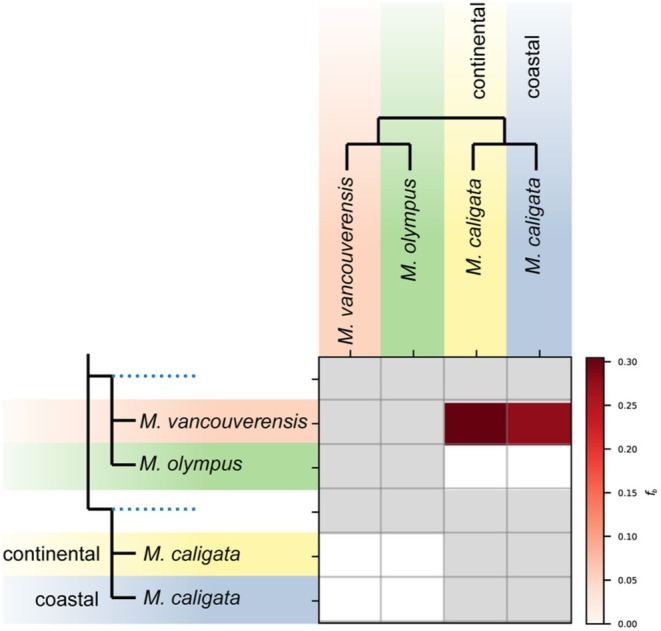 Figure 2
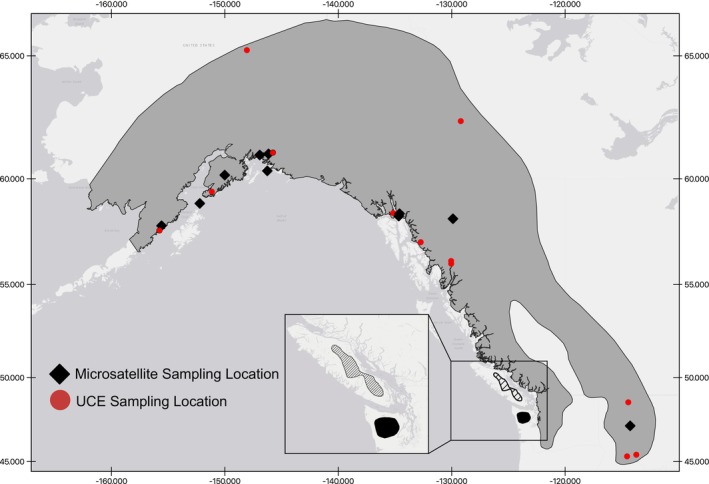 Figure 3
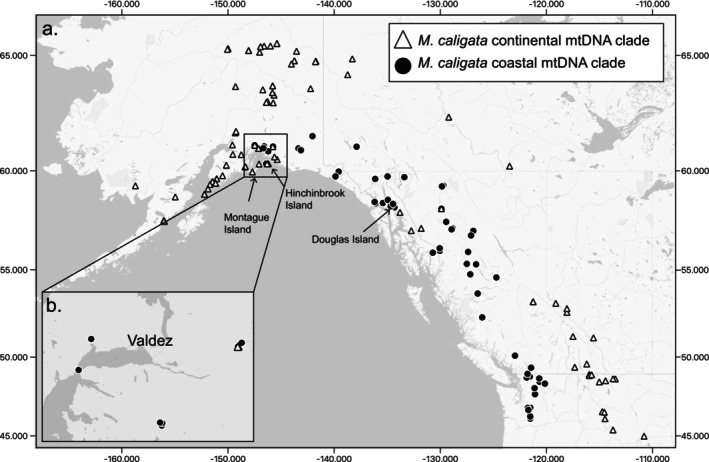 Figure 4
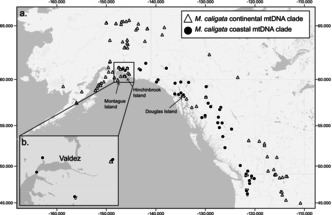 Figure 5
Peer Reviews
No public reviews on file for this paper yet. If you reviewed it on a platform where reviews are public (OpenReview, ICLR, NeurIPS, ICML), you can paste yours below so the community can read it here.
Videos
No videos yet. Explain this paper in a talk, walkthrough, or lecture? Add one.
Taxonomy
TopicsGenetic diversity and population structure · Species Distribution and Climate Change · Environmental DNA in Biodiversity Studies