Studies on the Emission of Volatile Organic Compounds from Selected Forest Mushrooms of the Genus Lactarius Using Proton-Transfer Reaction Mass Spectrometry
Tomasz Wróblewski, Anna Kamińska, Agnieszka Włodarkiewicz

TL;DR
This study uses a fast and sensitive technique to identify differences in chemical emissions from three similar forest mushrooms, helping distinguish edible from poisonous species.
Contribution
The study introduces a rapid PTR-MS method for classifying Lactarius mushrooms based on their volatile organic compound emissions.
Findings
PCA and discriminant analysis showed significant differences in 20 VOC concentrations among three Lactarius species.
PTR-MS enabled quick and accurate differentiation of edible, inedible, and poisonous mushrooms without special sample preparation.
The method's high sensitivity and speed make it suitable for comparative VOC analysis in mushroom identification.
Abstract
Forest mushrooms, due to their taste and smell, have been a component of people’s diets since the beginning of time. Unfortunately, there are many inedible or poisonous species of mushrooms that are similar to those that are eaten. For example, the highly valued Boletus edulis is similar to the inedible bitter bolete and the poisonous bolete. In the case of mushrooms of the genus Lactarius, such similarities are demonstrated by the delicious tasting L. deliciosus, the inedible downy L. pubescens and the poisonous cottony L. torminosus. This study presents an attempt to classify these three species based on studies of the emission of volatile organic compounds from the volatile headspace using proton-transfer reaction mass spectrometry (PTR-MS). The conducted statistical tests, principal component analysis (PCA) and discriminant analysis revealed significant differences in the…
Genes, proteins, chemicals, diseases, species, mutations and cell lines named across the full text — each resolved to its canonical identifier and authoritative record.
Click any figure to enlarge with its caption.
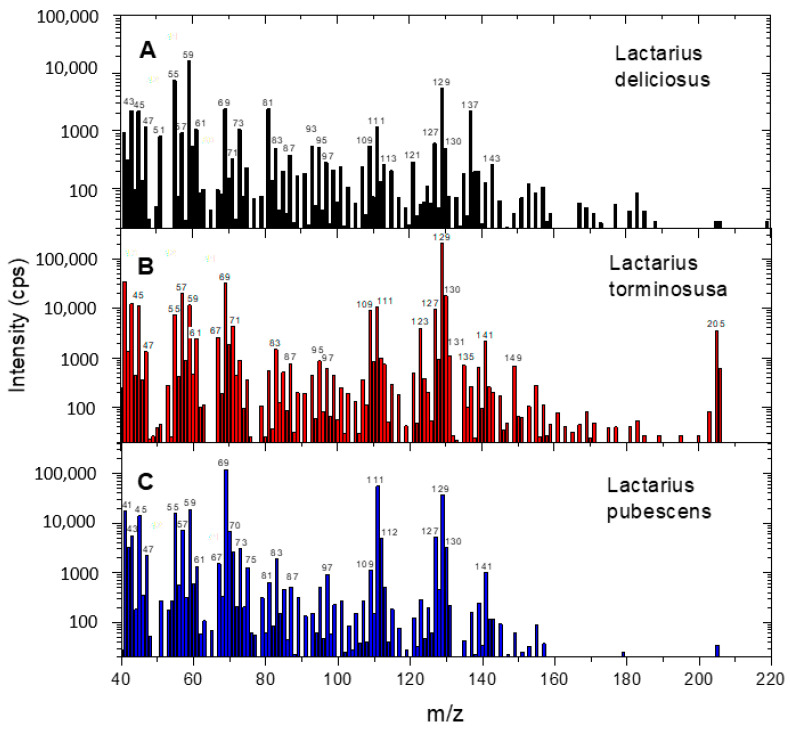 Figure 1
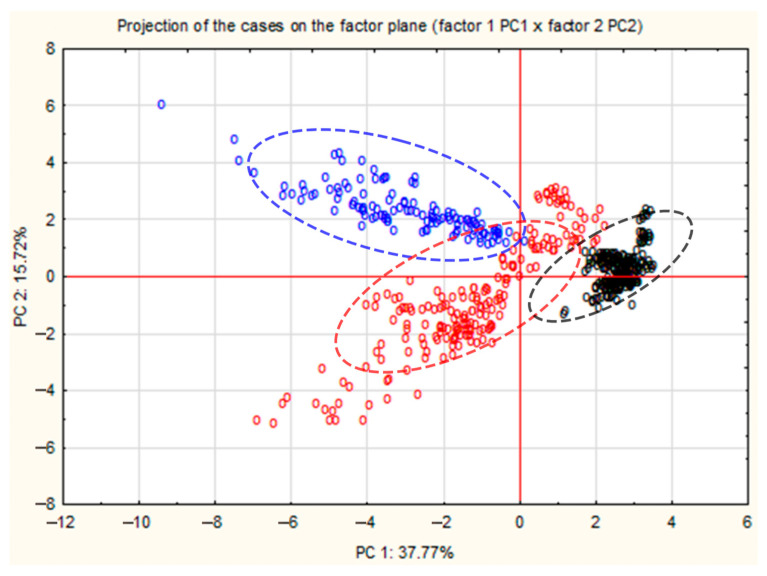 Figure 2
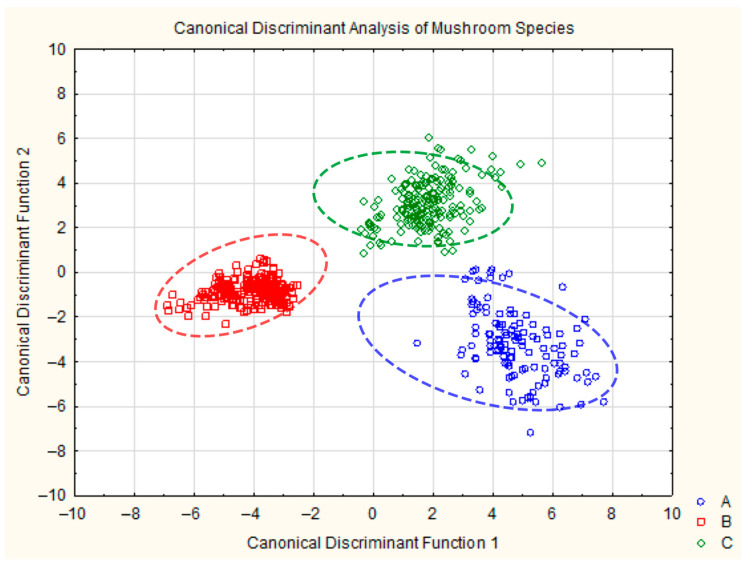 Figure 3
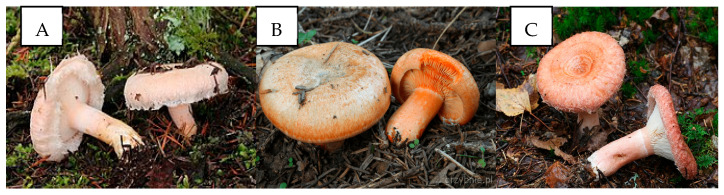 Figure 4
Peer Reviews
No public reviews on file for this paper yet. If you reviewed it on a platform where reviews are public (OpenReview, ICLR, NeurIPS, ICML), you can paste yours below so the community can read it here.
Videos
No videos yet. Explain this paper in a talk, walkthrough, or lecture? Add one.
Taxonomy
TopicsFungal Biology and Applications · Silymarin and Mushroom Poisoning · Bee Products Chemical Analysis