Tissue Distribution and Abundance of the Parasitic Dinoflagellate Hematodinium perezi in Naturally Infected Portunus trituberculatus
Ju Zhang, Meng Li, Qian Huang, Lijun Hu, Qi Xue, Jiayi Wang, Caiwen Li

TL;DR
This study examines how the parasitic dinoflagellate Hematodinium perezi spreads in infected crabs, revealing its tissue distribution and abundance.
Contribution
The study provides new quantitative data on Hematodinium perezi's tissue tropism and abundance in naturally infected crabs.
Findings
Hematodinium perezi trophonts were found in hemolymph and stomach tissues with varying abundance based on infection levels.
The highest abundance of H. perezi was observed in pereiopod muscles during advanced infection stages.
Host hemocyte numbers significantly decreased during Hematodinium infection.
Abstract
The parasitic dinoflagellate Hematodinium is an infectious pathogen that causes severe enzootic in numerous economically important marine crustaceans worldwide. Previous research has focused on investigating the identification and life stages of Hematodinium parasites, while the parasite abundance and tissue proliferation process of Hematodinium in naturally infected crustacean hosts need to be further studied. In the present study, the tissue tropisms and intensity of H. perezi were investigated in the naturally infected Chinese swimming crabs Portunus trituberculatus by both the qualitative (hemolymph assay, histology) and quantitative analysis (cell count, quantitative PCR). The results showed that in P. trituberculatus with infection level I (4 ± 2 parasites in 200× microscopic field), filamentous trophonts were observed in the hemolymph and stomach tissues, with the average…
Genes, proteins, chemicals, diseases, species, mutations and cell lines named across the full text — each resolved to its canonical identifier and authoritative record.
Click any figure to enlarge with its caption.
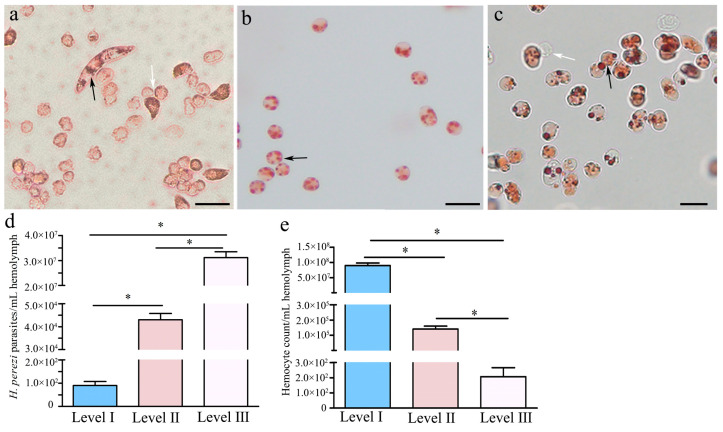 Figure 1
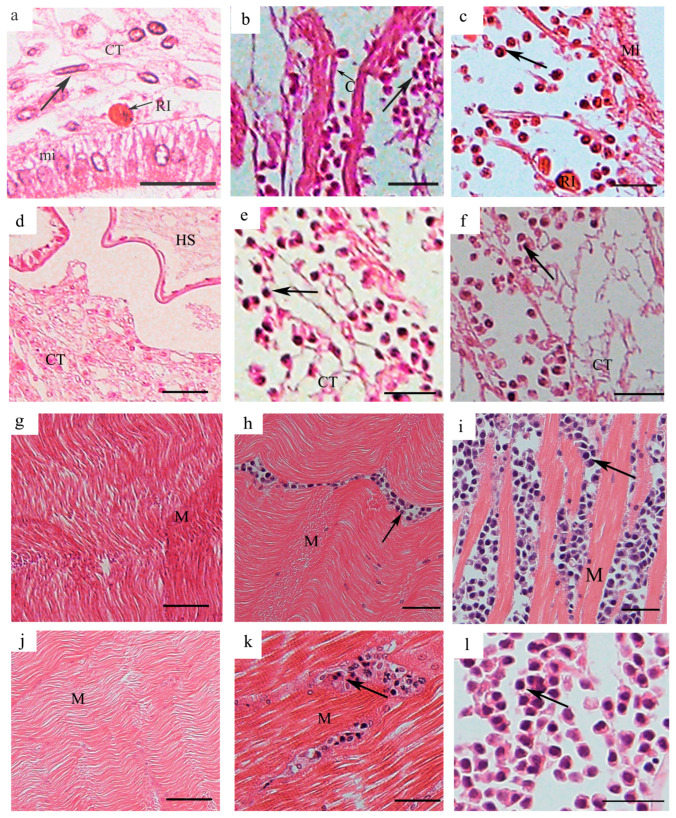 Figure 2
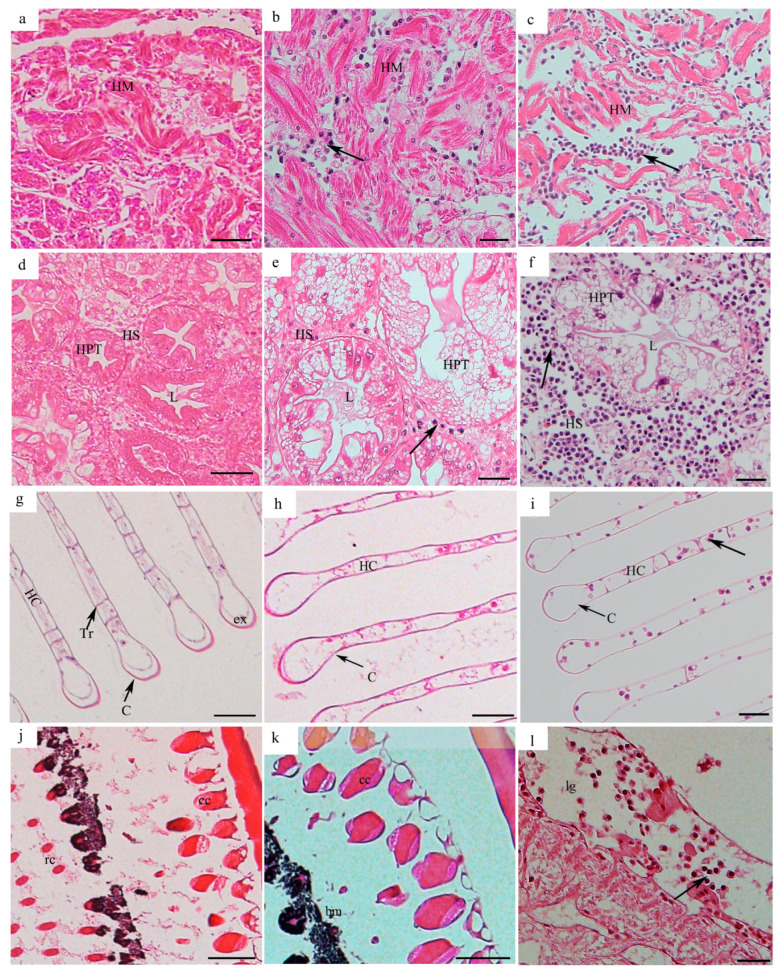 Figure 3
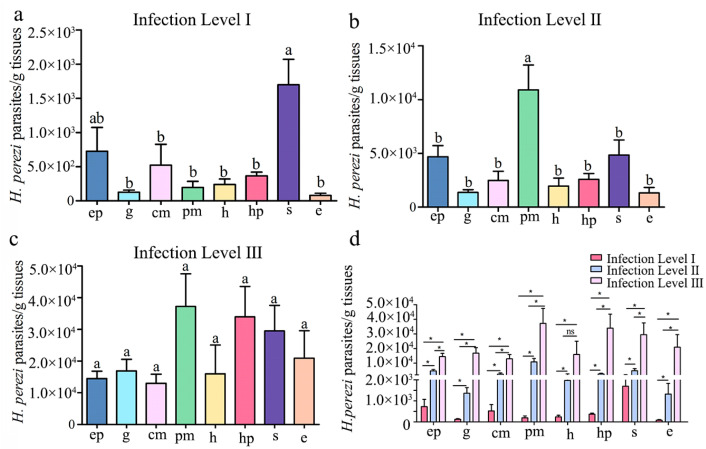 Figure 4
Peer Reviews
No public reviews on file for this paper yet. If you reviewed it on a platform where reviews are public (OpenReview, ICLR, NeurIPS, ICML), you can paste yours below so the community can read it here.
Videos
No videos yet. Explain this paper in a talk, walkthrough, or lecture? Add one.
Taxonomy
TopicsParasite Biology and Host Interactions · Invertebrate Immune Response Mechanisms · Insect symbiosis and bacterial influences