Design, Synthesis, and Study of Protective Activity Against Stroke for Novel Water-Soluble Aldehyde Dehydrogenase 2 Activators
Fengping Zhao, Zhenming Yu, Wei Tian, Xinhui Huang, Qingsen Zhang, Ruolan Zhou, Jian Hu, Shichong Yu, Xin Chen, Canhui Zheng

TL;DR
Researchers developed new water-soluble compounds that activate ALDH2, which may help treat stroke by reducing brain damage in animal models.
Contribution
The study introduces novel water-soluble ALDH2 activators with significantly improved solubility and efficacy for stroke treatment.
Findings
Compound D10 showed 114% activation of ALDH2 compared to Alda-1.
The hydrochloride salt D27 had over 200-fold increased water solubility.
Intravenous D27 reduced infarct area in rat stroke models.
Abstract
Stroke poses a serious threat to human health, while there are very few drugs that can directly alleviate ischemia/reperfusion injury and improve the prognosis. Studies have shown that small-molecule activators of aldehyde dehydrogenase 2 (ALDH2) have the potential to become novel therapeutic drugs for ischemic stroke. In this study, through the systematic structural optimization of novel N-benzylaniline-based ALDH2 activators obtained from our previous virtual screening, ALDH2 activators with improved water solubility and activity were obtained. Among them, compound D10 exhibits the best activity, with a maximum activation fold reaching 114% relative to Alda-1. And the water solubility of its hydrochloride salt D27 was increased by more than 200-fold. The intravenous injection of this compound can significantly reduce the infarct area in the rat model of cerebral infarction compared…
Genes, proteins, chemicals, diseases, species, mutations and cell lines named across the full text — each resolved to its canonical identifier and authoritative record.
Click any figure to enlarge with its caption.
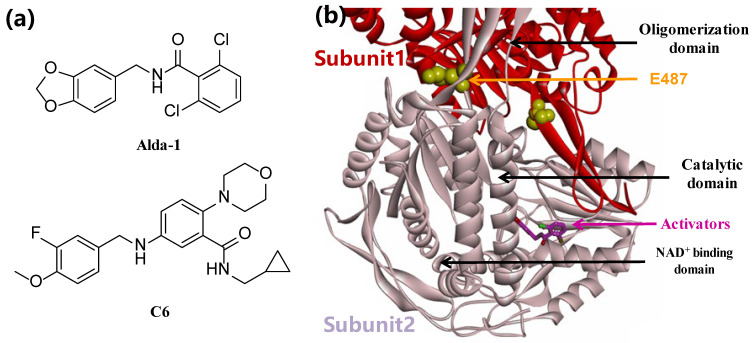 Figure 1
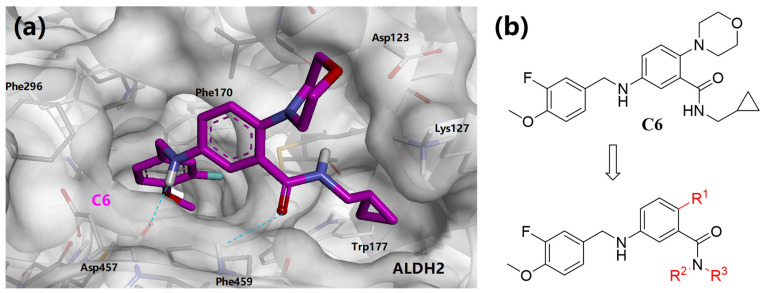 Figure 2
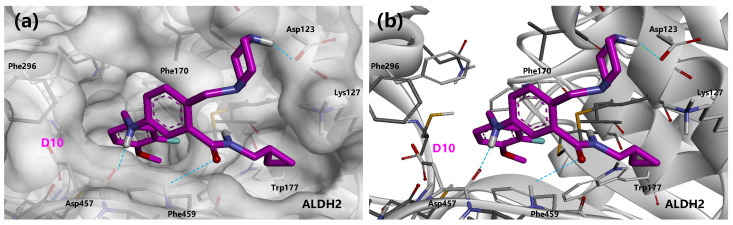 Figure 3
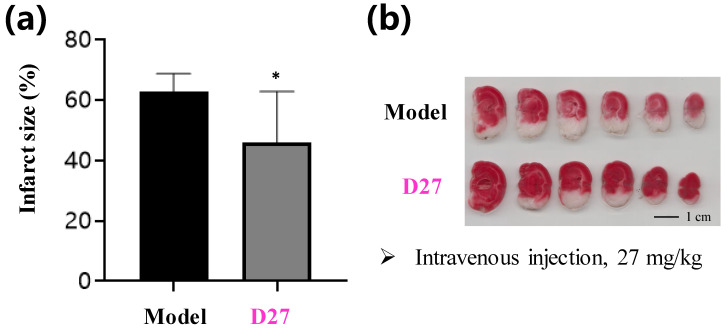 Figure 4
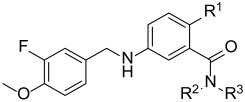 Figure 5
 Figure 6
 Figure 7
 Figure 8
 Figure 9
 Figure 10
 Figure 11
 Figure 12
 Figure 13
 Figure 14
 Figure 15
 Figure 16
 Figure 17
 Figure 18
 Figure 19
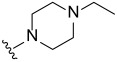 Figure 20
 Figure 21
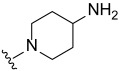 Figure 22
 Figure 23
 Figure 24
 Figure 25
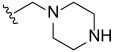 Figure 26
 Figure 27
 Figure 28
 Figure 29
 Figure 30
 Figure 31
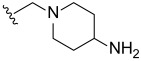 Figure 32
 Figure 33
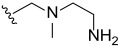 Figure 34
 Figure 35
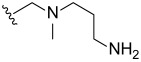 Figure 36
 Figure 37
 Figure 38
 Figure 39
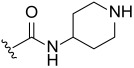 Figure 40
 Figure 41
 Figure 42
 Figure 43
 Figure 44
 Figure 45
 Figure 46
 Figure 47
 Figure 48
 Figure 49
 Figure 50
Peer Reviews
No public reviews on file for this paper yet. If you reviewed it on a platform where reviews are public (OpenReview, ICLR, NeurIPS, ICML), you can paste yours below so the community can read it here.
Videos
No videos yet. Explain this paper in a talk, walkthrough, or lecture? Add one.
Taxonomy
TopicsEicosanoids and Hypertension Pharmacology · Metabolomics and Mass Spectrometry Studies · Pharmacological Receptor Mechanisms and Effects