A Personalized Approach to Maintaining Brain Drainage: A Case Series with a Technical Note
Manuel Moneti, Anna Malfatto, Ernesto Migliorino, Antonio Bassoli, Mariangela Chiarito, Claudia Iulianella, Noemi Miglionico, Luca Bombarda, Carlo Alberto Castioni, Carlo Bortolotti, Antonino Scibilia, Corrado Zenesini, Raffaele Aspide

TL;DR
This study explores using a personalized approach with a drug called uPA to prevent blockages in brain fluid drains, showing it is mostly safe and effective in most cases.
Contribution
The study evaluates the personalized use of intrathecal uPA for preventing EVD occlusion, offering insights into its feasibility and safety.
Findings
Intrathecal uPA maintained EVD patency in 95% of cases.
Higher initial clot severity correlated with increased uPA use but not with worse outcomes.
Infection rates were slightly higher than in prior studies, possibly due to longer EVD retention.
Abstract
Background/Objectives: The percutaneous insertion of an external ventricular drain (EVD) is a common neurosurgical procedure that is crucial in managing acute brain injuries because of the drain’s role in monitoring intracranial pressure and draining cerebrospinal fluid. The primary indication is acute hydrocephalus, which often results from subarachnoid hemorrhage, intracranial hemorrhage, traumatic brain injury, stroke, or infection. Standard EVD placement targets the frontal horn of the lateral ventricle. However, complications such as hemorrhage, infection, and catheter occlusion frequently arise, with occlusion rates ranging from 19% to 47%. Occlusion can lead to increased intracranial pressure, necessitating interventions such as saline flushes or fibrinolytic drug administration. The placement of an EVD is a very specific choice that must be tailored to the individual patient,…
Genes, proteins, chemicals, diseases, species, mutations and cell lines named across the full text — each resolved to its canonical identifier and authoritative record.
Click any figure to enlarge with its caption.
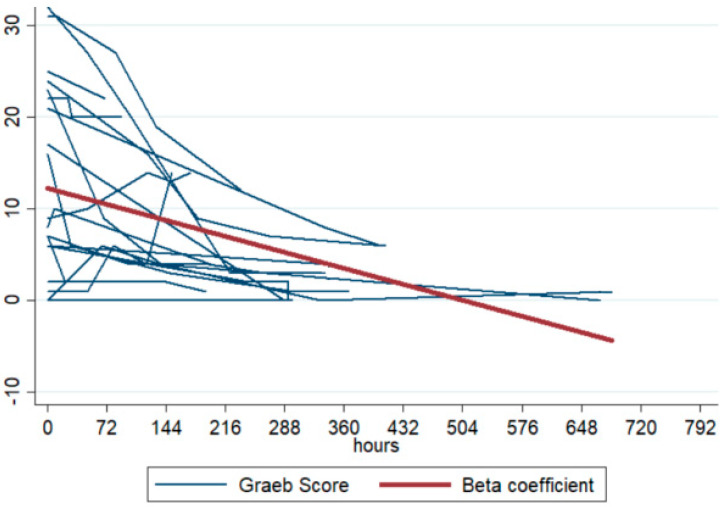 Figure 1
 Figure 2
Peer Reviews
No public reviews on file for this paper yet. If you reviewed it on a platform where reviews are public (OpenReview, ICLR, NeurIPS, ICML), you can paste yours below so the community can read it here.
Videos
No videos yet. Explain this paper in a talk, walkthrough, or lecture? Add one.
Taxonomy
TopicsIntracerebral and Subarachnoid Hemorrhage Research · Traumatic Brain Injury and Neurovascular Disturbances · Cerebrospinal fluid and hydrocephalus