Impact of Sex on Rehospitalization Rates and Mortality of Patients with Heart Failure with Preserved Ejection Fraction: Differences Between an Analysis Stratified by Sex and a Global Analysis
Victoria Cendrós, Mar Domingo, Elena Navas, Miguel Ángel Muñoz, Antoni Bayés-Genís, José María Verdú-Rotellar

TL;DR
This study found that analyzing heart failure patients by sex reveals different risk factors and outcomes compared to a general analysis, highlighting the importance of sex-specific approaches in HFpEF prognosis.
Contribution
The study demonstrates that sex-stratified analysis provides more accurate insights into mortality and rehospitalization risks in HFpEF patients than non-stratified analysis.
Findings
Male sex was associated with higher mortality and rehospitalization risks in overall analysis, but not in sex-stratified analysis.
Age and hemoglobin were significant predictors of mortality in both sexes, but additional factors like BMI and diuretic use varied by sex.
Sex-stratified analysis revealed distinct risk profiles for men and women, suggesting non-stratified models may underestimate risks in women.
Abstract
Background: Differences in the prognosis and associated factors in patients with heart failure with a preserved fraction (HFpEF) according to sex remain uncertain. Objective: The objective was to determine the relevance of sex-stratified predictive models in determining prognosis in HFpEF patients. Methods: The study was a retrospective, multicenter study of patients previously hospitalized with ejection fraction ≥ 50% (HFpEF) using data from the SIDIAP database. The endpoints were mortality and rehospitalization. Predictive models were performed. Results: We identified 2895 patients with HFpEF who were 57% female, with a mean age of 77 (standard deviation [SD] 9.7) years and a median follow-up of 2.0 (IQR 1.0–9.0) years. In the overall analysis, male sex was associated with a higher risk of mortality (HR 1.26, 95% CI 1.06–1.49, p = 0.008) and rehospitalization (HR 1.14, 95% CI…
Genes, proteins, chemicals, diseases, species, mutations and cell lines named across the full text — each resolved to its canonical identifier and authoritative record.
Click any figure to enlarge with its caption.
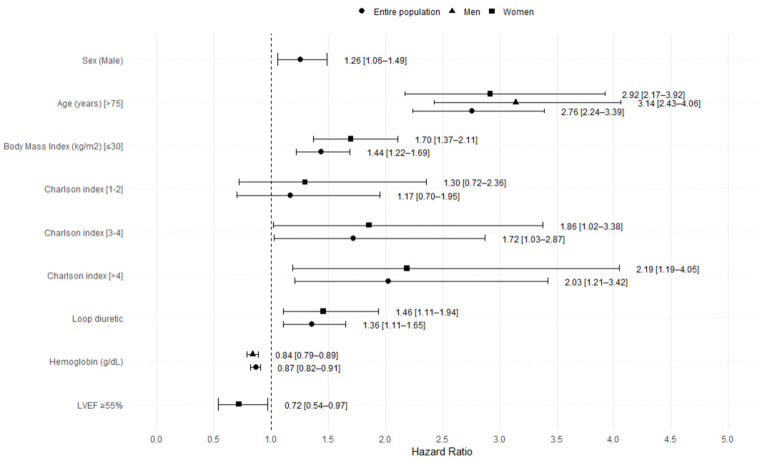 Figure 1
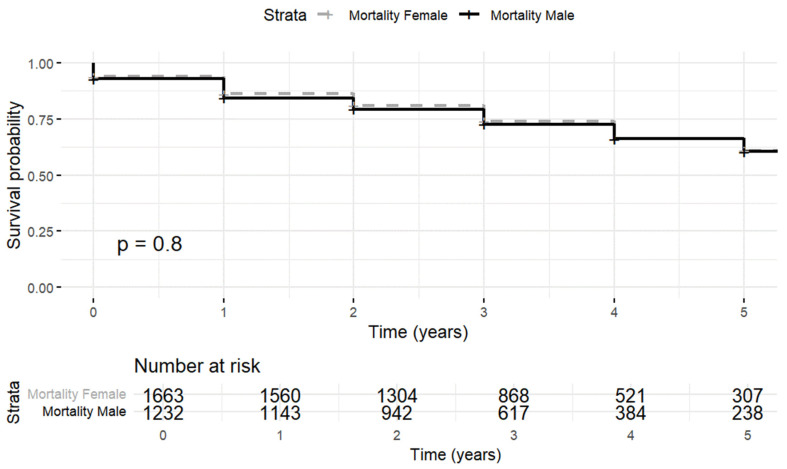 Figure 2
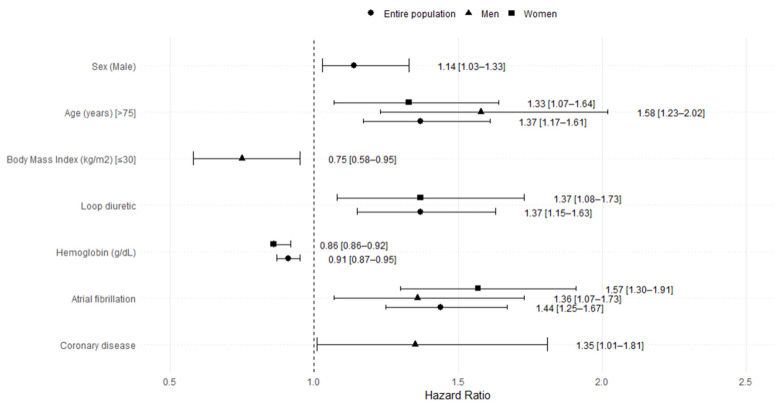 Figure 3
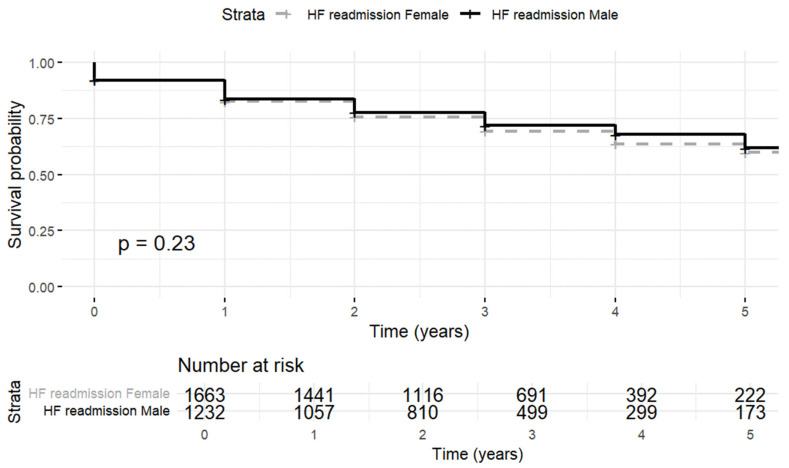 Figure 4
Peer Reviews
No public reviews on file for this paper yet. If you reviewed it on a platform where reviews are public (OpenReview, ICLR, NeurIPS, ICML), you can paste yours below so the community can read it here.
Videos
No videos yet. Explain this paper in a talk, walkthrough, or lecture? Add one.
Taxonomy
TopicsHeart Failure Treatment and Management · Cardiovascular Function and Risk Factors · Cardiac Structural Anomalies and Repair