Inhibitory Activity of Compounds Obtained from Streptomyces Against Trypanosoma cruzi
Jorge Andrés Delgado-Garduño, Lucio Galaviz-Silva, Ma Guadalupe Rojas-Verde, Joel Horacio Elizondo-Luevano, Lidia Baylón-Pacheco, José Luis Rosales-Encina, Guadalupe Gutiérrez-Soto, Zinnia Judith Molina-Garza

TL;DR
This study explores compounds from Streptomyces bacteria that show promise as safe and effective treatments for Chagas disease.
Contribution
The study identifies specific antiparasitic compounds from Streptomyces metabolites with low toxicity and high efficacy against Trypanosoma cruzi.
Findings
Extracellular metabolites from Streptomyces strains showed LC50 values of 102–116 μg/mL against T. cruzi forms.
Amphomycin and K-252c aglycone staurosporine were identified as active antiparasitic compounds.
The metabolites were non-toxic to Artemia salina, non-cytotoxic to Huvecs, and non-hemolytic to human erythrocytes.
Abstract
Chagas disease (ChD) caused by Trypanosoma cruzi remains a major public health concern, affecting approximately 8 million people worldwide. However, the number of undiagnosed cases is likely much higher. Existing treatments rely on benznidazole and nifurtimox which, despite their efficacy during the acute phase of infection, are often associated with severe side effects that can be life-threatening. As a promising alternative, actinomycetes—which are renowned for producing pharmacologically and industrially relevant metabolites—have demonstrated potent antimicrobial properties; however, their antiparasitic potential remains largely unexplored. This study evaluated the anti-trypanocidal activities of extracellular metabolites produced by Streptomyces thermocarboxydus strain Chi-43 (ST-C43) and Streptomyces sp. strain Chi-104 (S-C104) against epimastigote, trypomastigote, and amastigote…
Genes, proteins, chemicals, diseases, species, mutations and cell lines named across the full text — each resolved to its canonical identifier and authoritative record.
Click any figure to enlarge with its caption.
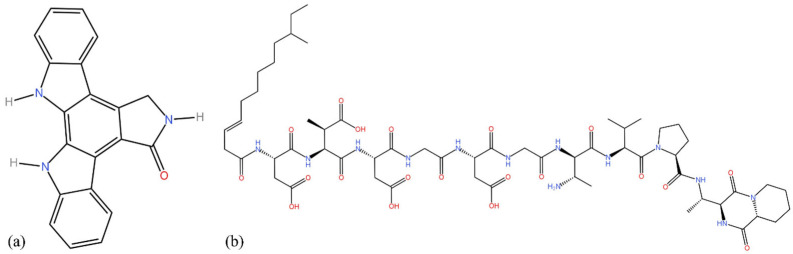 Figure 1
Peer Reviews
No public reviews on file for this paper yet. If you reviewed it on a platform where reviews are public (OpenReview, ICLR, NeurIPS, ICML), you can paste yours below so the community can read it here.
Videos
No videos yet. Explain this paper in a talk, walkthrough, or lecture? Add one.
Taxonomy
TopicsTrypanosoma species research and implications · Research on Leishmaniasis Studies · Insect symbiosis and bacterial influences