The Association of Axonal Damage Biomarkers and Osteopontin at Diagnosis Could Be Useful in Newly Diagnosed MS Patients
Eleonora Virgilio, Chiara Puricelli, Nausicaa Clemente, Valentina Ciampana, Ylenia Imperatore, Simona Perga, Sveva Stangalini, Elena Boggio, Alice Appiani, Casimiro Luca Gigliotti, Umberto Dianzani, Cristoforo Comi, Domizia Vecchio

TL;DR
This study explores how biomarkers like axonal damage and osteopontin in cerebrospinal fluid and blood can help predict disability and treatment needs in newly diagnosed MS patients.
Contribution
The study identifies correlations between axonal and inflammatory biomarkers and disability in newly diagnosed MS patients.
Findings
CSF and serum NFL levels correlate with EDSS at diagnosis and are higher in patients with active lesions and effective DMT.
CSF OPN and NFL levels significantly differentiate patients based on disability, with a combined ROC AUC of 0.88.
CSF OPN and spinal cord dissemination are significant predictors of early disability in MS.
Abstract
(1) Background: Multiple sclerosis (MS) is a biologically highly heterogeneous disease and has poor predictability at diagnosis. Moreover, robust data indicate that early disease activity strongly correlates with future disability. Therefore, there is a need for strong and reliable biomarkers from diagnosis to characterize and identify patients who require highly effective disease-modifying treatments (DMTs). Several biomarkers are promising, particularly neurofilament light chains (NFLs), but the relevance of others is less consolidated. (2) Methods: We evaluated a panel of axonal damage and inflammatory biomarkers in cerebrospinal fluid (CSF) and matched serum obtained from a cohort of 60 newly diagnosed MS patients. Disability at diagnosis, negative prognostic factors, and the initial DMT prescribed were carefully recorded. (3) Results: We observed correlations between different…
Genes, proteins, chemicals, diseases, species, mutations and cell lines named across the full text — each resolved to its canonical identifier and authoritative record.
Click any figure to enlarge with its caption.
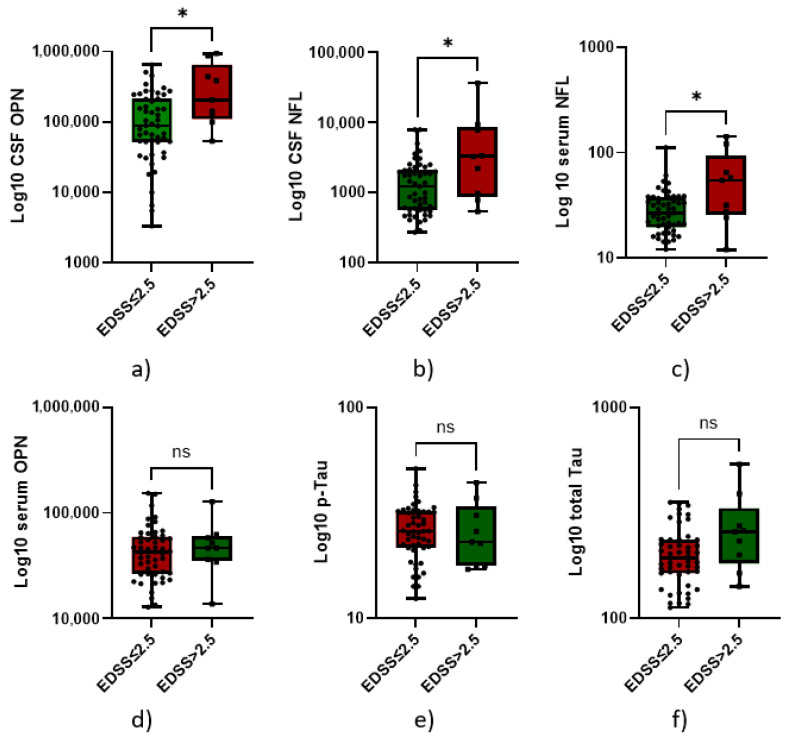 Figure 1
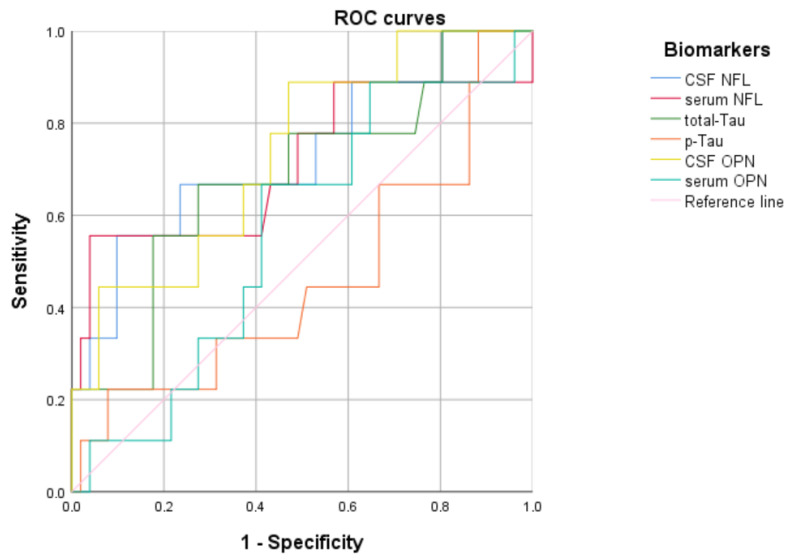 Figure 2
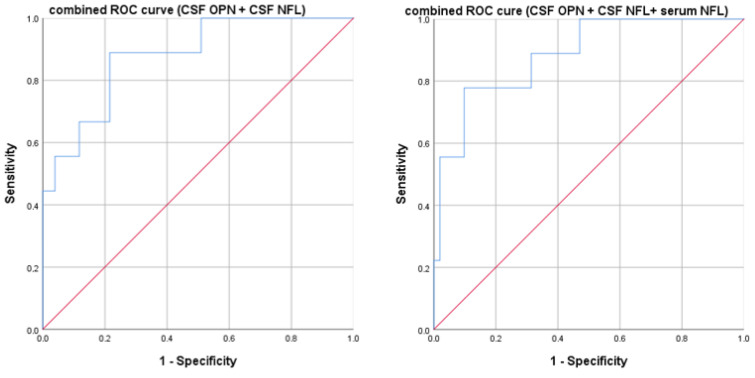 Figure 3
Peer Reviews
No public reviews on file for this paper yet. If you reviewed it on a platform where reviews are public (OpenReview, ICLR, NeurIPS, ICML), you can paste yours below so the community can read it here.
Videos
No videos yet. Explain this paper in a talk, walkthrough, or lecture? Add one.
Taxonomy
TopicsHereditary Neurological Disorders · RNA regulation and disease · Fibromyalgia and Chronic Fatigue Syndrome Research