High-Performance Multilevel and Ambipolar Nonvolatile Organic Transistor Memory Using Small-Molecule SFDBAO and PS as Charge Trapping Elements
Lingzhi Jin, Wenjuan Xu, Yangzhou Qian, Tao Ji, Kefan Wu, Liang Huang, Feng Chen, Nanchang Huang, Shu Xing, Zhen Shao, Wen Li, Yuyu Liu, Linghai Xie

TL;DR
Researchers developed a high-performance organic transistor memory using a special small-molecule and polymer combination for efficient charge storage.
Contribution
A novel SFDBAO/PS hybrid material is shown to outperform existing materials in charge trapping for organic transistor memories.
Findings
The SFDBAO/PS-based memory exhibits a wide memory window of 146 V and fast switching speed of 20 ms.
It achieves excellent retention time over 5 × 10⁴ seconds and stable performance for 36 cycles.
The device supports four-level data storage through gate voltage control.
Abstract
Organic nonvolatile transistor memories (ONVMs) using a hybrid spiro [fluorene-9,7′-dibenzo [c, h] acridine]-5′-one (SFDBAO)/polystyrene (PS) film as bulk-heterojunction-like tunneling and trapping elements were fabricated. From the characterization of the 10% SFDBAO/PS based on ONVM, a sterically hindered small-molecule SFDBAO with rigid orthogonal configuration and a donor–acceptor (D-A) structure as a molecular-scale charge storage element demonstrated significantly higher charge trapping ability than other small-molecule materials such as C60 and Alq3. The ONVM based on 10% SFDBAO/PS presents ambipolar memory behaviors with a wide memory window (146 V), a fast-switching speed (20 ms), an excellent retention time (over 5 × 10⁴ s), and stable reversibility (36 cycles without any noticeable decay). By applying different gate voltages, the above ONVM shows reliable four-level data…
Genes, proteins, chemicals, diseases, species, mutations and cell lines named across the full text — each resolved to its canonical identifier and authoritative record.
Click any figure to enlarge with its caption.
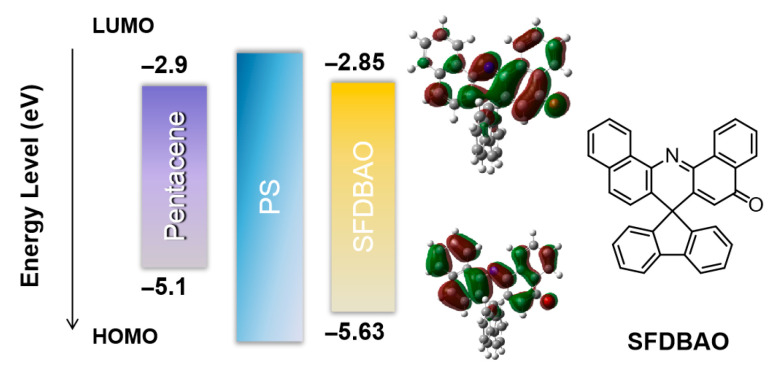 Figure 1
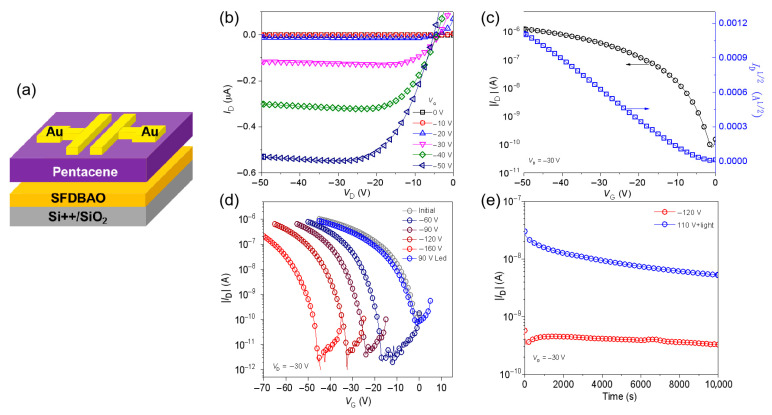 Figure 2
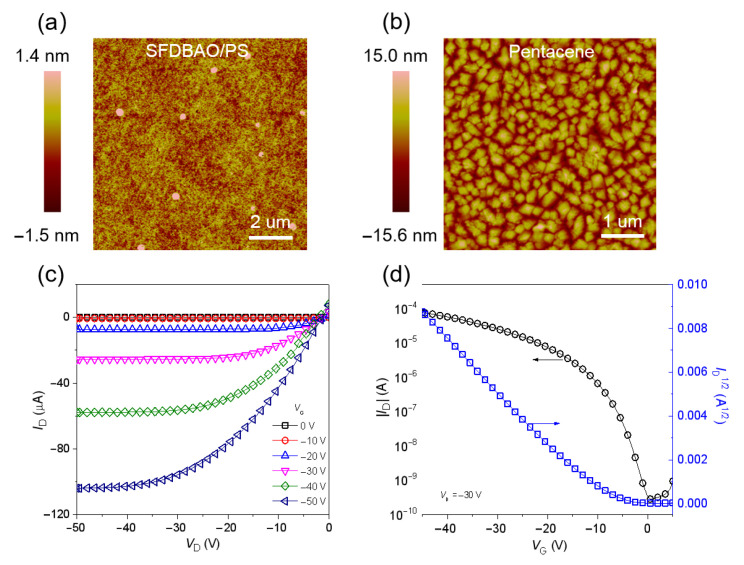 Figure 3
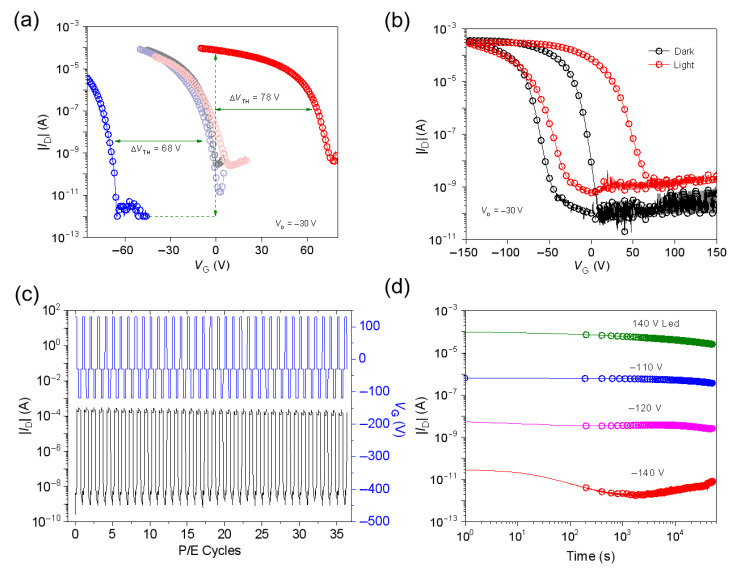 Figure 4
Peer Reviews
No public reviews on file for this paper yet. If you reviewed it on a platform where reviews are public (OpenReview, ICLR, NeurIPS, ICML), you can paste yours below so the community can read it here.
Videos
No videos yet. Explain this paper in a talk, walkthrough, or lecture? Add one.
Taxonomy
TopicsAdvanced Memory and Neural Computing · Semiconductor materials and devices · Quantum-Dot Cellular Automata