Development of a Broad-Spectrum Antigen-Capture ELISA Using Combined Anti-p26 Polyclonal and Monoclonal Antibodies for Detection of Equine Infectious Anemia Virus
Haibing Liang, Bingqian Zhou, Zhe Hu, Xiaoyu Chu, Xuefeng Wang, Cheng Du, Xiaojun Wang

TL;DR
This study developed a sensitive and specific ELISA test to detect the EIAV capsid protein p26, offering a reliable method for diagnosing and studying equine infectious anemia virus.
Contribution
The novel AC-ELISA combines monoclonal and polyclonal antibodies for broad-spectrum detection of multiple EIAV strains.
Findings
The AC-ELISA detected p26 with a limit of 1.95 ng/mL and showed a linear range up to 60.5 ng/mL.
The assay effectively distinguished EIAV from other equine viruses without cross-reactivity.
It detected diverse EIAV strains, including virulent, attenuated, and international isolates.
Abstract
Equine Infectious Anemia Virus (EIAV) poses significant diagnostic challenges due to its genetic variability and the limitations of conventional nucleic acid detection methods. This study developed an antigen-capture, enzyme-linked immunosorbent assay (AC-ELISA) for the detection and quantification of the EIAV capsid protein p26. The assay utilized a monoclonal antibody (1G11) specific to the p26 protein as the capture antibody and a polyclonal antibody as the detection antibody, forming a highly specific and sensitive detection system. Under optimized conditions, the detection limit of the AC-ELISA was 1.95 ng/mL, with a good linear relationship observed between 1.95 ng/mL and 60.5 ng/mL of p26 protein. Additionally, the AC-ELISA effectively distinguished EIAV from other equine viruses, including equine herpesvirus 1 (EHV-1), equine arteritis virus (EAV), and equine influenza virus…
Genes, proteins, chemicals, diseases, species, mutations and cell lines named across the full text — each resolved to its canonical identifier and authoritative record.
Click any figure to enlarge with its caption.
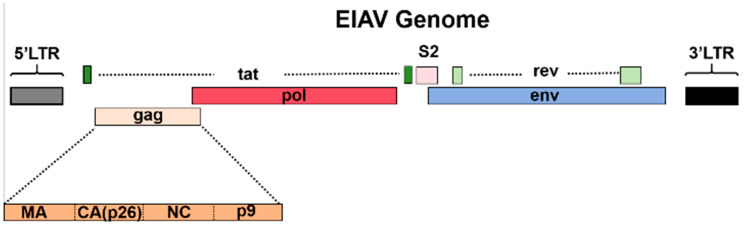 Figure 1
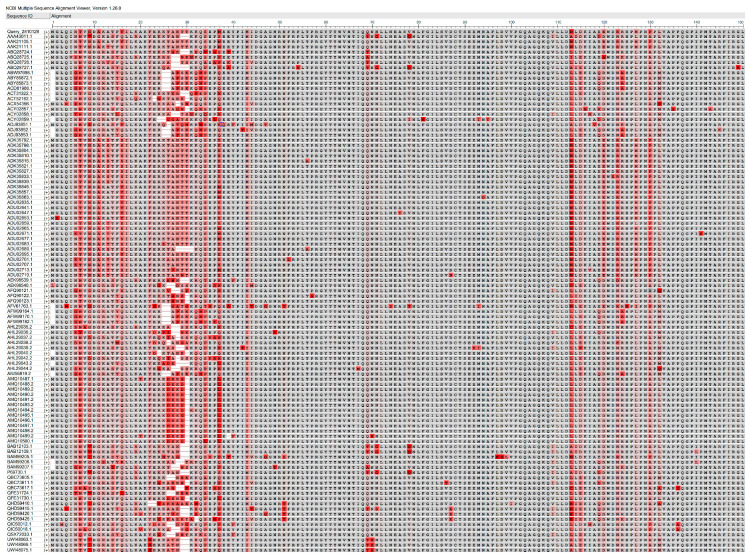 Figure 2
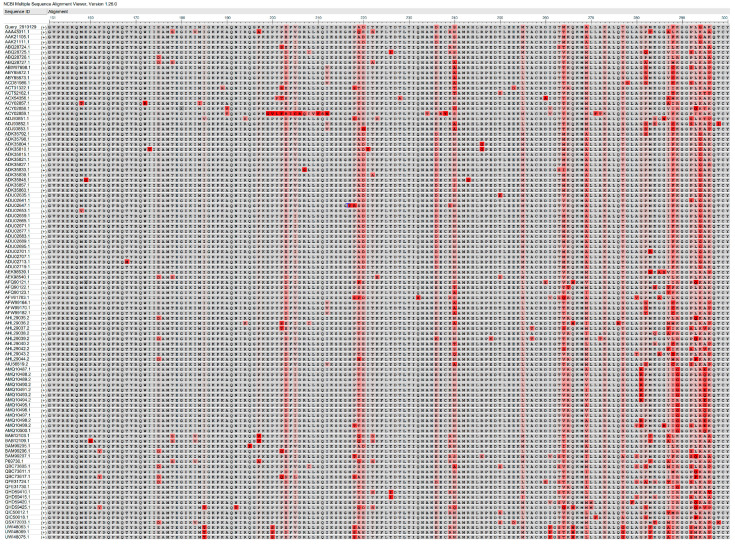 Figure 3
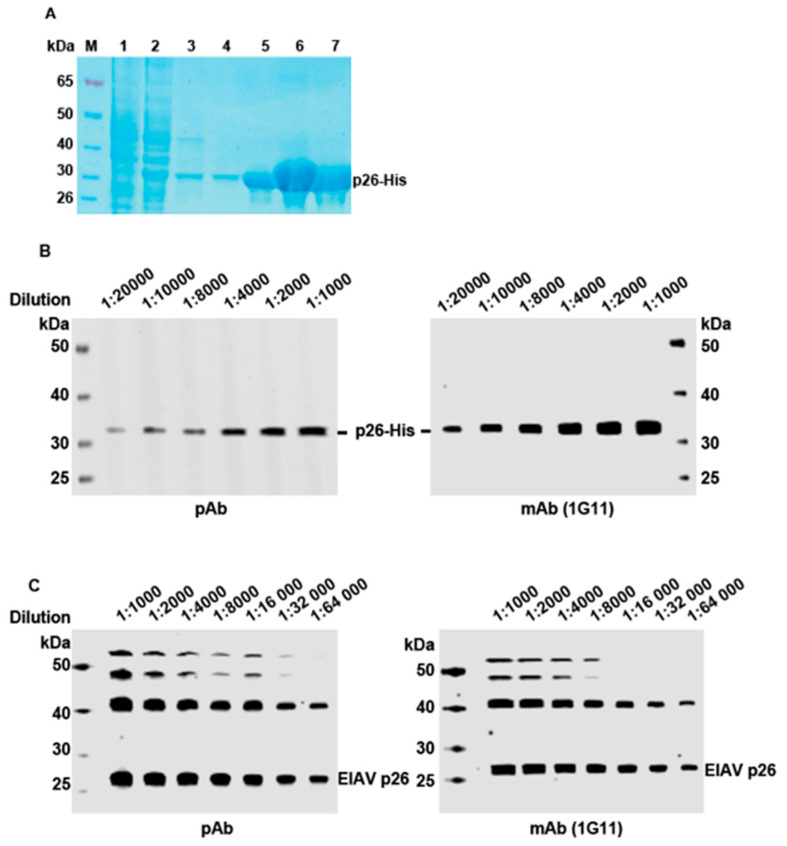 Figure 4
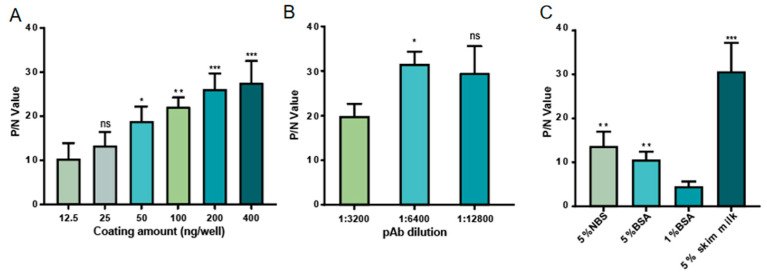 Figure 5
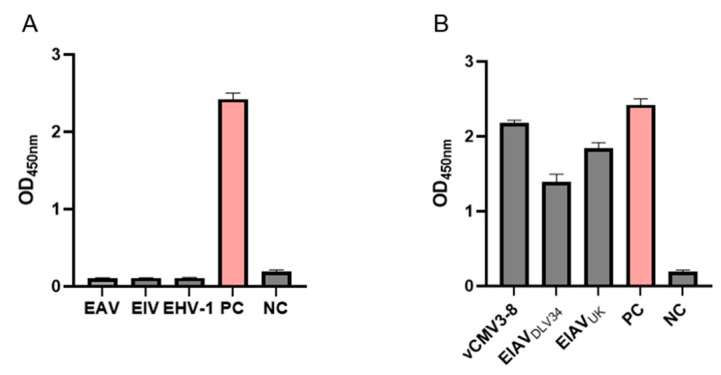 Figure 6
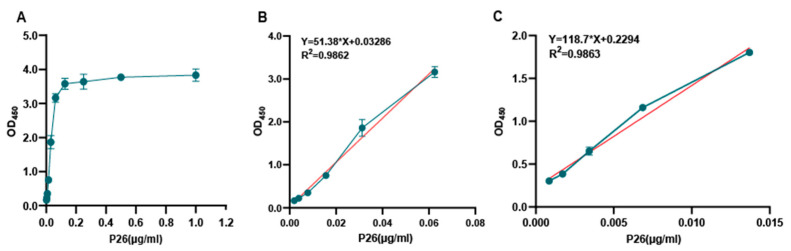 Figure 7
 Figure 8
Peer Reviews
No public reviews on file for this paper yet. If you reviewed it on a platform where reviews are public (OpenReview, ICLR, NeurIPS, ICML), you can paste yours below so the community can read it here.
Videos
No videos yet. Explain this paper in a talk, walkthrough, or lecture? Add one.
Taxonomy
TopicsVirus-based gene therapy research · Animal Virus Infections Studies · Herpesvirus Infections and Treatments