Characterization of a Novel Lentzea Species Isolated from the Kumtagh Desert and Genomic Insights into the Secondary Metabolite Potential of the Genus
Ying Wen, Jiahui Li, Fujun Qiao, Wanyin Luo, Tuo Chen, Guangxiu Liu, Wei Zhang

TL;DR
Scientists discovered a new species of bacteria in a dry desert and found it has potential to produce useful natural compounds.
Contribution
A new Lentzea species is proposed based on genomic and phenotypic data, revealing its biosynthetic potential.
Findings
Strain E54T is a novel Lentzea species with distinct genomic and phenotypic traits.
The genome contains 39 biosynthetic gene clusters, suggesting potential for complex natural product synthesis.
Comparative analysis highlights the biosynthetic diversity within the Lentzea genus.
Abstract
A novel actinobacterial strain, designated E54T, was isolated from a hyper-arid desert soil sample collected from the Kumtagh Desert in Dunhuang, Gansu Province, China. Phylogenetic analysis based on 16S rRNA gene sequences placed strain E54T within the genus Lentzea, showing highest similarity to Lentzea waywayandensis DSM 44232T (98.9%) and Lentzea flava NBRC 15743T (98.5%). However, whole-genome comparisons revealed that the average nucleotide identity (ANI) and digital DNA–DNA hybridization (dDDH) values between E54T and these related strains were below the thresholds for species delineation. Strain E54T exhibited typical morphological characteristics of the genus Lentzea, forming a branched substrate. It grew optimally at 28–30 °C, pH 7.0–9.0, and tolerated up to 10% NaCl. The cell wall contained meso-diaminopimelic acid, the predominant menaquinone was MK-9(H4), and major fatty…
Genes, proteins, chemicals, diseases, species, mutations and cell lines named across the full text — each resolved to its canonical identifier and authoritative record.
Click any figure to enlarge with its caption.
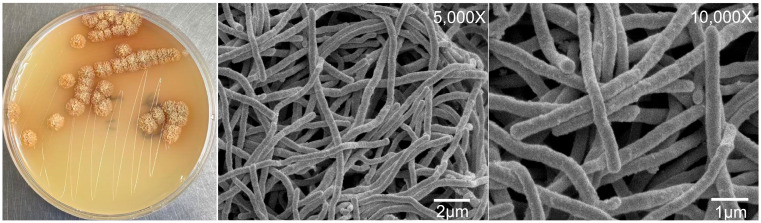 Figure 1
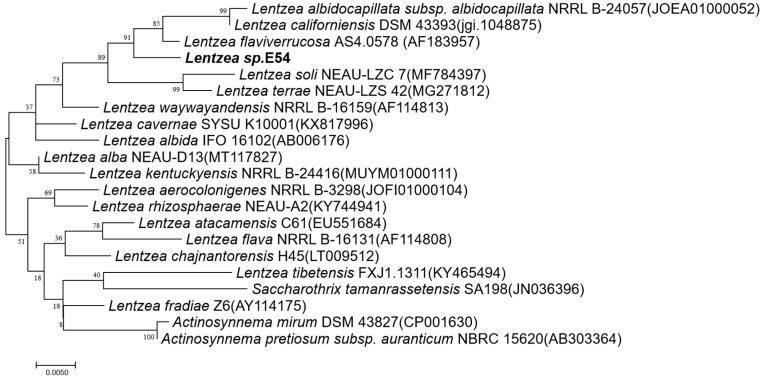 Figure 2
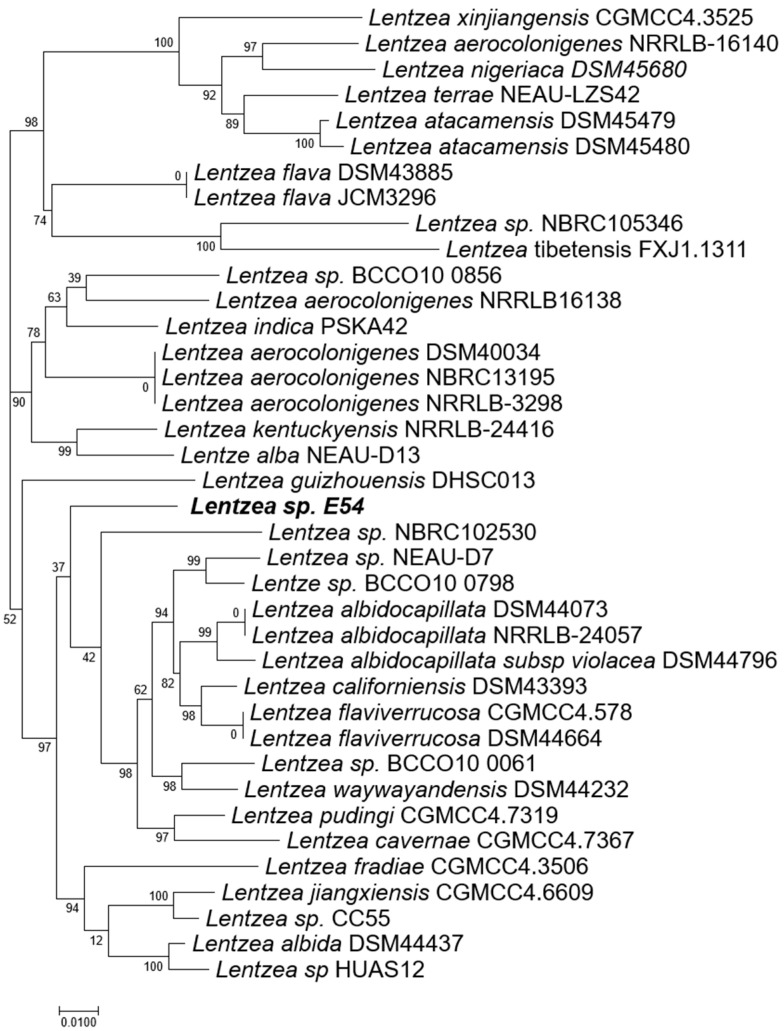 Figure 3
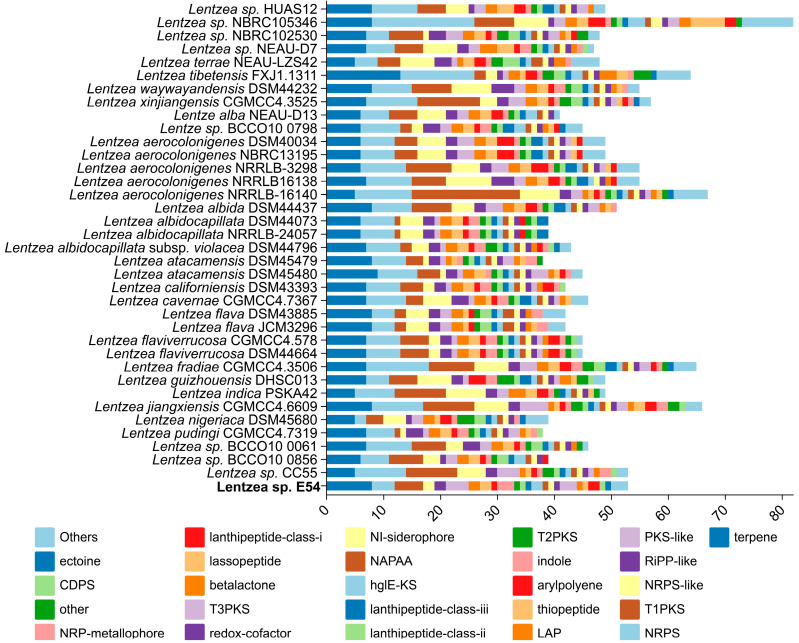 Figure 4
Peer Reviews
No public reviews on file for this paper yet. If you reviewed it on a platform where reviews are public (OpenReview, ICLR, NeurIPS, ICML), you can paste yours below so the community can read it here.
Videos
No videos yet. Explain this paper in a talk, walkthrough, or lecture? Add one.
Taxonomy
TopicsGenomics and Phylogenetic Studies · Metabolomics and Mass Spectrometry Studies · Microbial Natural Products and Biosynthesis