Investigation of the Mouse Infection Model for Echovirus 18
Lei Xiang, Linlin Zhai, Guanyong Ou, Wei Zhao, Yang Yang, Chenguang Shen

TL;DR
Researchers developed a mouse model to study Echovirus 18, which causes meningitis and encephalitis in children, using two-day-old IFNAR1 knockout mice to observe symptoms and pathology.
Contribution
The study introduces a novel mouse model using IFNAR1 knockout mice to investigate Echovirus 18 pathogenicity and potential antibody protection.
Findings
Two-day-old IFNAR1 knockout mice infected with E18 showed severe symptoms like lethargy and paralysis.
Skeletal muscle had the highest viral load among infected tissues.
The model can help study E18's pathogenic mechanisms and antibody protective effects.
Abstract
Echovirus 18, a member of the B group of enteroviruses, is a significant etiological agent of aseptic meningitis and viral encephalitis in children. In this study, we investigated the pathogenicity of E18 by establishing a mouse infection model after comparing various mouse strains and injection methods. Two-day-old IFNAR1 knockout mice infected with clinical isolates of E18 exhibited symptoms such as lethargy, hind limb paralysis, and even mortality. Similarly, some two-day-old C57BL/6J mice displayed comparable symptoms; however, the incidence was lower than that observed in IFNAR1 knockout mice. No similar symptoms were noted in any Balb/c mice. Significant pathological changes were observed in skeletal muscle, brain tissue, and other organs of symptomatic mice; among these tissues, skeletal muscle demonstrated the highest viral load. The established infection model using two-day-old…
Genes, proteins, chemicals, diseases, species, mutations and cell lines named across the full text — each resolved to its canonical identifier and authoritative record.
Click any figure to enlarge with its caption.
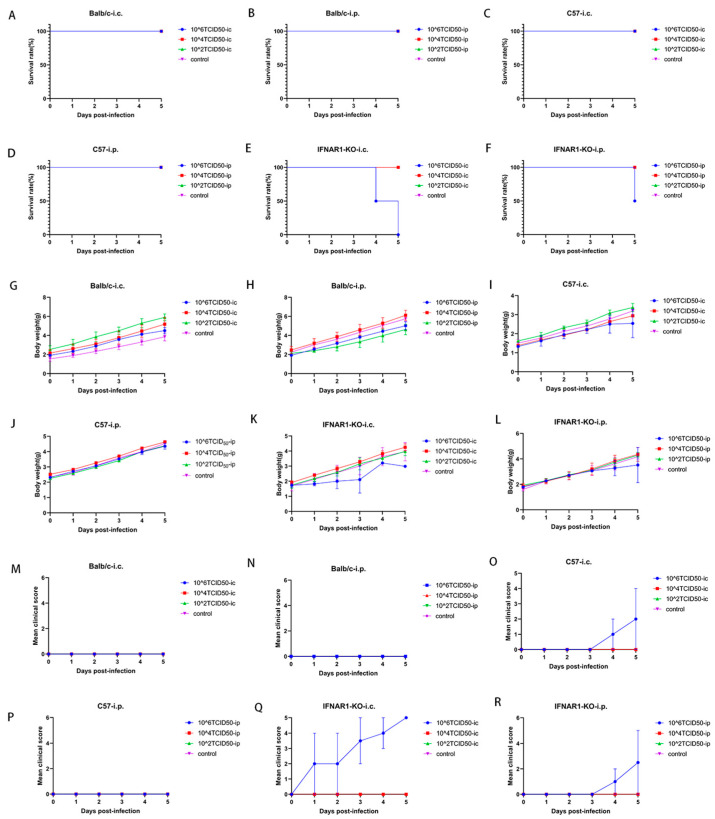 Figure 1
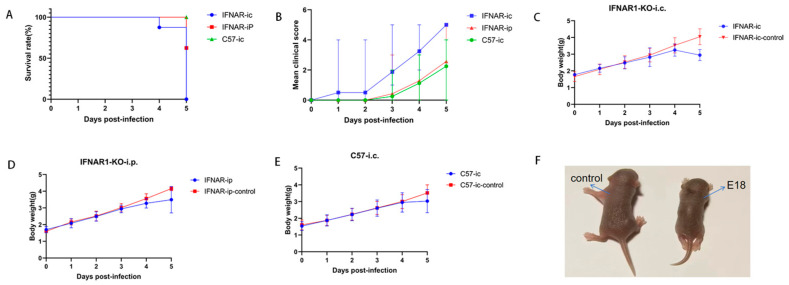 Figure 2
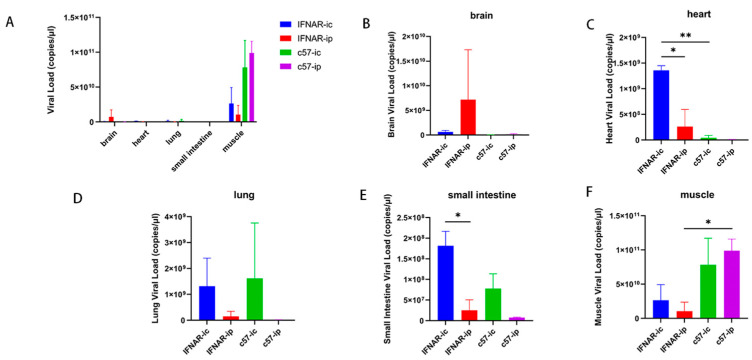 Figure 3
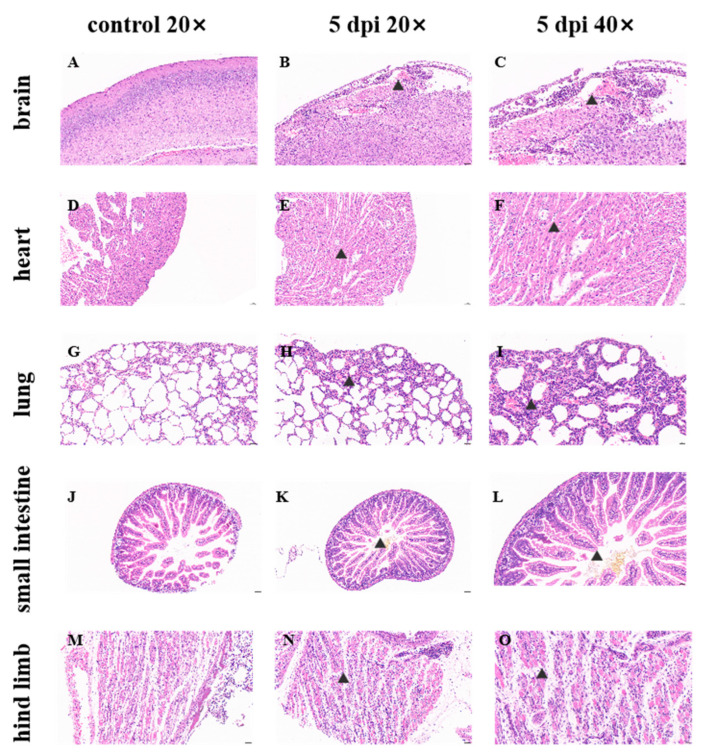 Figure 4
Peer Reviews
No public reviews on file for this paper yet. If you reviewed it on a platform where reviews are public (OpenReview, ICLR, NeurIPS, ICML), you can paste yours below so the community can read it here.
Videos
No videos yet. Explain this paper in a talk, walkthrough, or lecture? Add one.
Taxonomy
TopicsViral Infections and Immunology Research · Respiratory viral infections research · RNA regulation and disease