Hybrid Sensor Placement Framework Using Criterion-Guided Candidate Selection and Optimization
Se-Hee Kim, JungHyun Kyung, Jae-Hyoung An, Hee-Chang Eun

TL;DR
This paper introduces a new framework for placing sensors in structures by combining selection criteria with optimization algorithms to improve accuracy and robustness.
Contribution
The novel contribution is integrating the Udwadia–Kalaba generalized inverse to enforce physical constraints during sensor data reconstruction.
Findings
The U–K generalized inverse improves reconstruction accuracy by incorporating physical constraints from partial mode shapes.
Monte Carlo simulations confirm the framework's robustness under various noise levels.
The hybrid approach offers a flexible and effective solution for sensor placement in structural health monitoring.
Abstract
This study presents a hybrid sensor placement methodology that combines criterion-based candidate selection with advanced optimization algorithms. Four established selection criteria—modal kinetic energy (MKE), modal strain energy (MSE), modal assurance criterion (MAC) sensitivity, and mutual information (MI)—are used to evaluate DOF sensitivity and generate candidate pools. These are followed by one of four optimization algorithms—greedy, genetic algorithm (GA), particle swarm optimization (PSO), or simulated annealing (SA)—to identify the optimal subset of sensor locations. A key feature of the proposed approach is the incorporation of constraint dynamics using the Udwadia–Kalaba (U–K) generalized inverse formulation, which enables the accurate expansion of structural responses from sparse sensor data. The framework assumes a noise-free environment during the initial sensor design…
Genes, proteins, chemicals, diseases, species, mutations and cell lines named across the full text — each resolved to its canonical identifier and authoritative record.
Click any figure to enlarge with its caption.
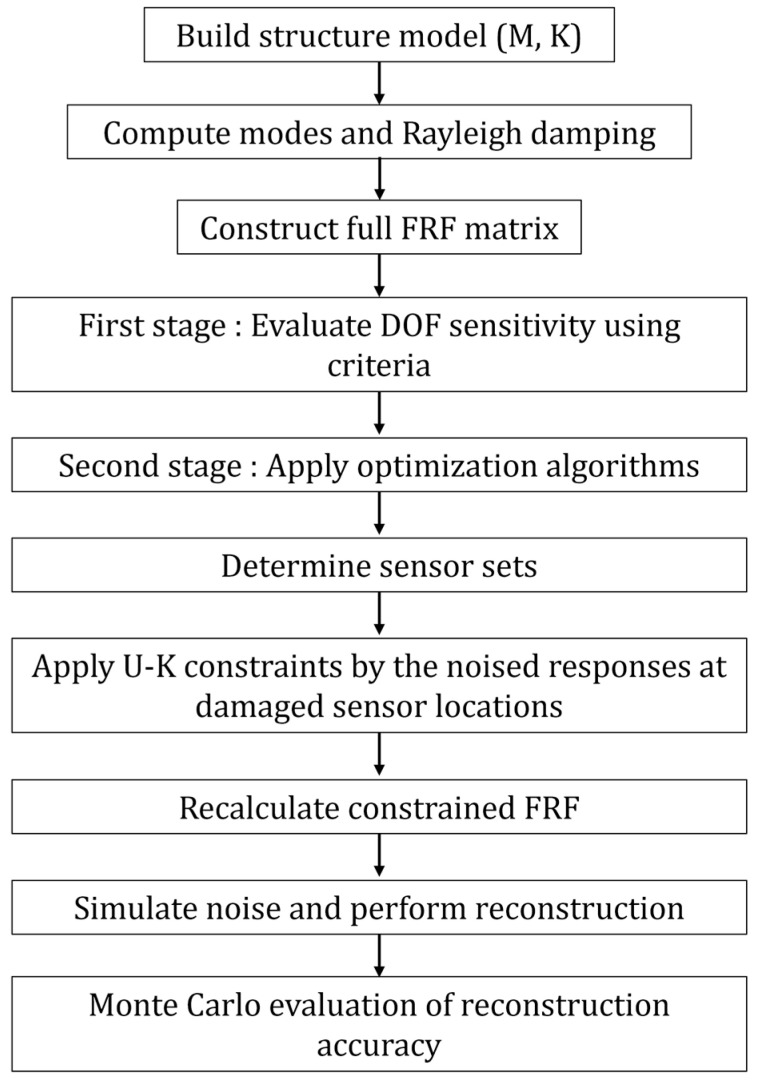 Figure 1
 Figure 2
 Figure 3
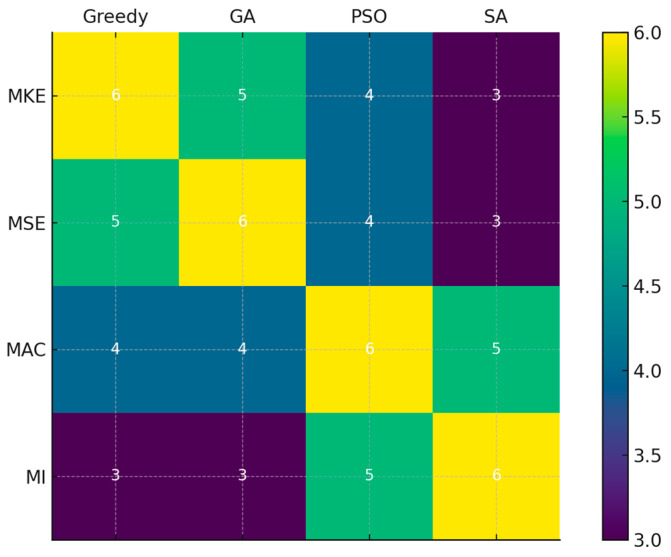 Figure 4
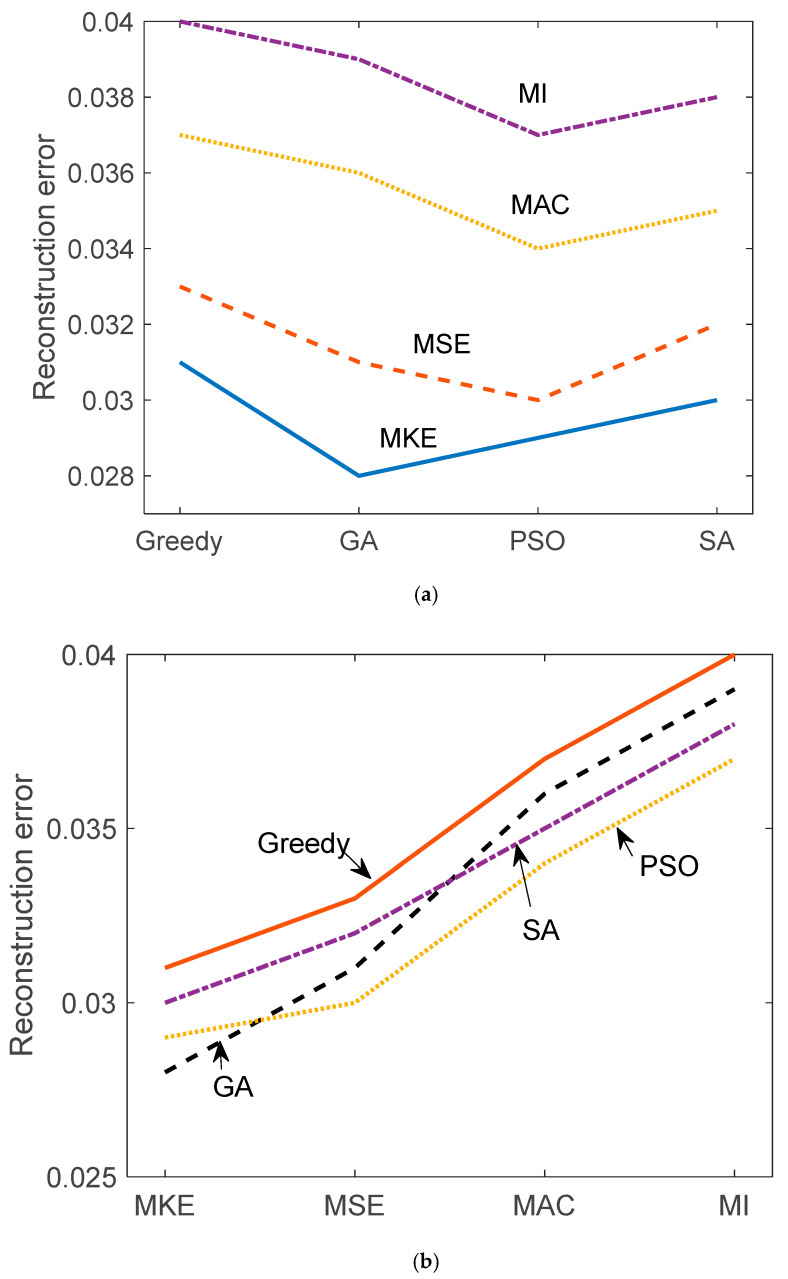 Figure 5
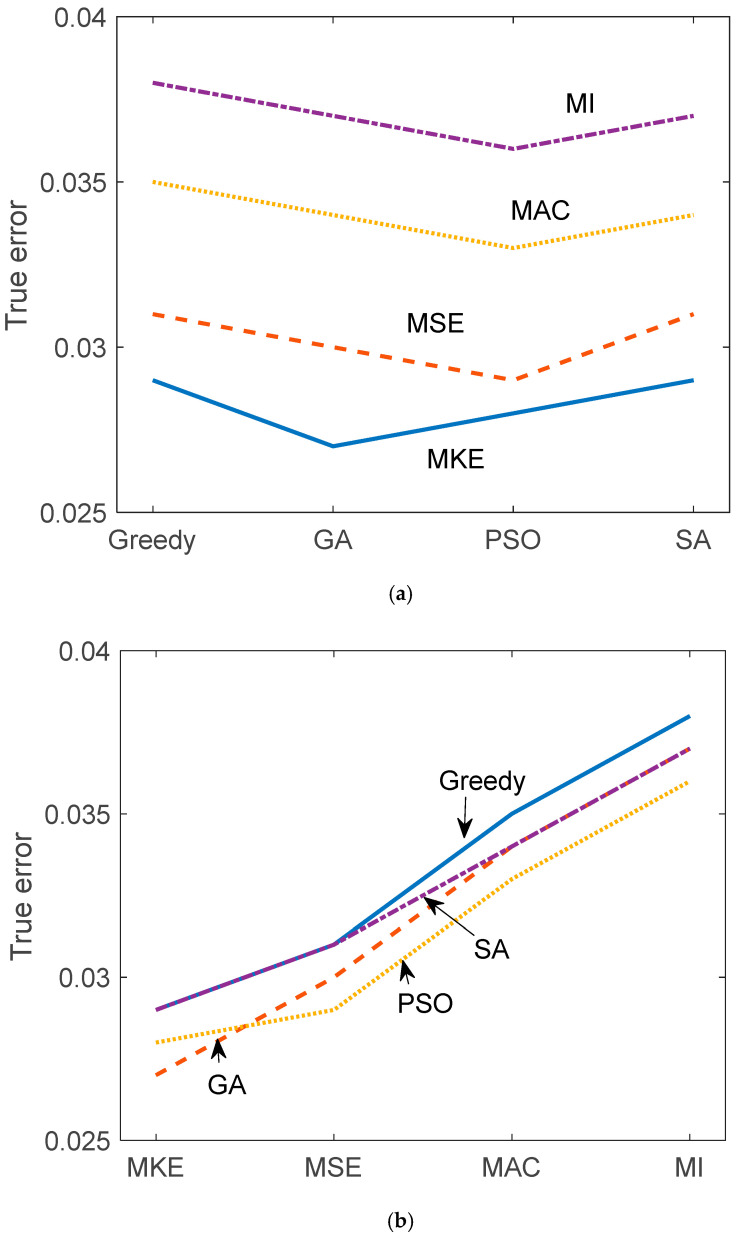 Figure 6
Peer Reviews
No public reviews on file for this paper yet. If you reviewed it on a platform where reviews are public (OpenReview, ICLR, NeurIPS, ICML), you can paste yours below so the community can read it here.
Videos
No videos yet. Explain this paper in a talk, walkthrough, or lecture? Add one.
Taxonomy
TopicsStructural Health Monitoring Techniques · Probabilistic and Robust Engineering Design · Advanced Multi-Objective Optimization Algorithms