Streptococcus suis: A Review of Its Effects on Immune Organs
Siyu Pan, Haijuan He, Tong-Qing An, Shujie Wang

TL;DR
Streptococcus suis harms immune organs in pigs and humans, causing immune suppression through cell death and dysfunction.
Contribution
The paper reveals a new virulence mechanism of S. suis involving apoptosis and pyroptosis in immune cells.
Findings
S. suis causes thymic atrophy, splenomegaly, and lymphadenectasis in immune organs.
The pathogen triggers apoptosis in T and B cells and pyroptosis in macrophages.
Immunosuppression results from abnormal T cell subsets and dysregulated cytokine expression.
Abstract
Streptococcus suis (S. suis) is a major pathogen in pigs and an emerging zoonotic agent which causes serious infections in humans. It is also an immunosuppressive pathogen that exerts detrimental effects on the thymus, spleen, lymph nodes, and macrophages, impairing their ability to perform their normal physiological functions. S. suis induces thymic atrophy, splenomegaly, and lymphadenectasis and triggers apoptosis in T cells and B cells, as well as pyroptosis in macrophages within immune organs. Subsequently, T cell subsets in peripheral blood become abnormal, and the expression of cytokines becomes dysregulated, which leads to host immunosuppression, suggesting a new virulence mechanism of S. suis.
Genes, proteins, chemicals, diseases, species, mutations and cell lines named across the full text — each resolved to its canonical identifier and authoritative record.
Click any figure to enlarge with its caption.
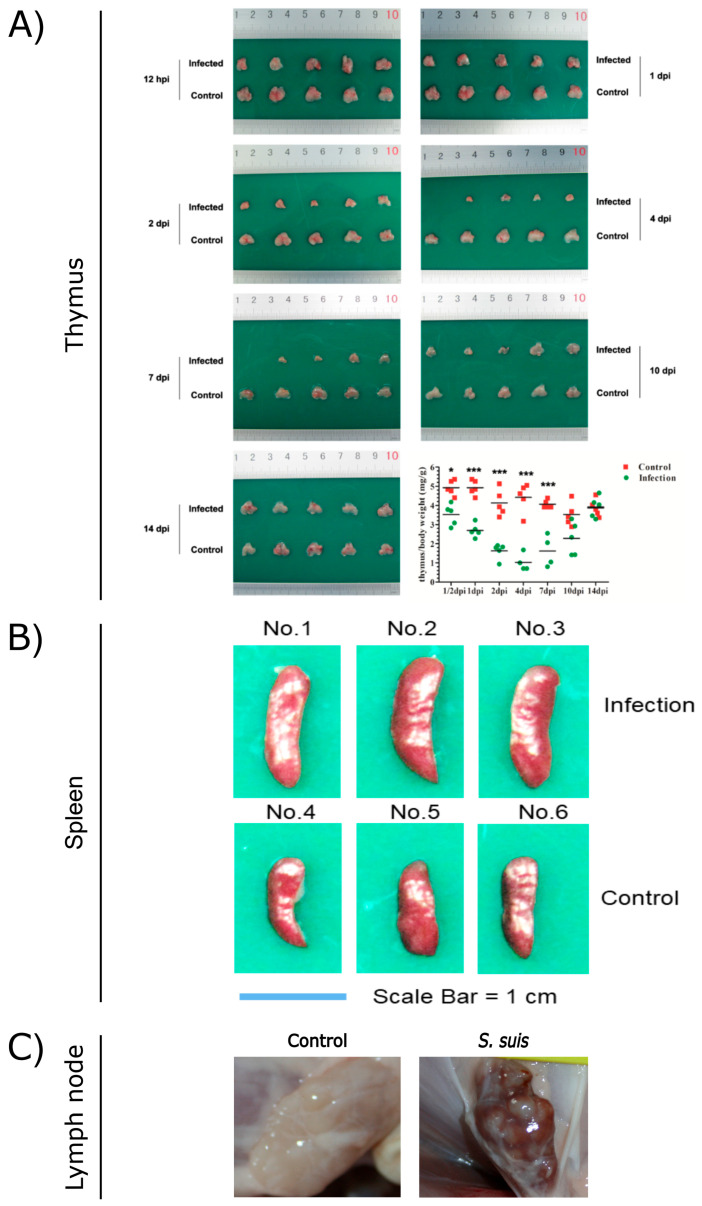 Figure 1
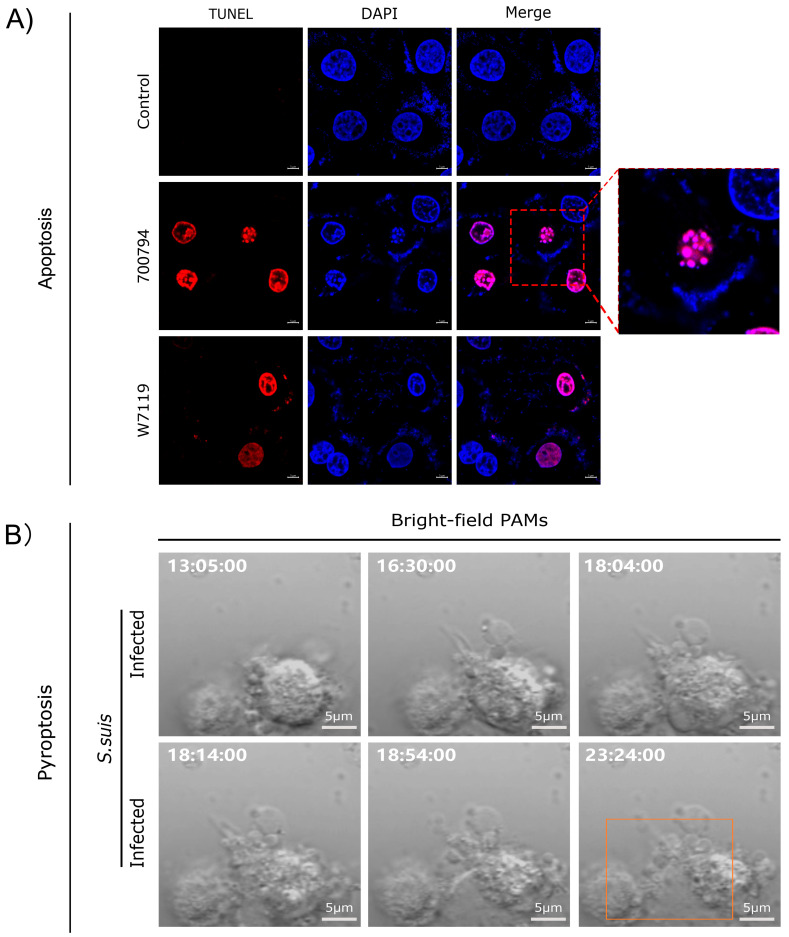 Figure 2
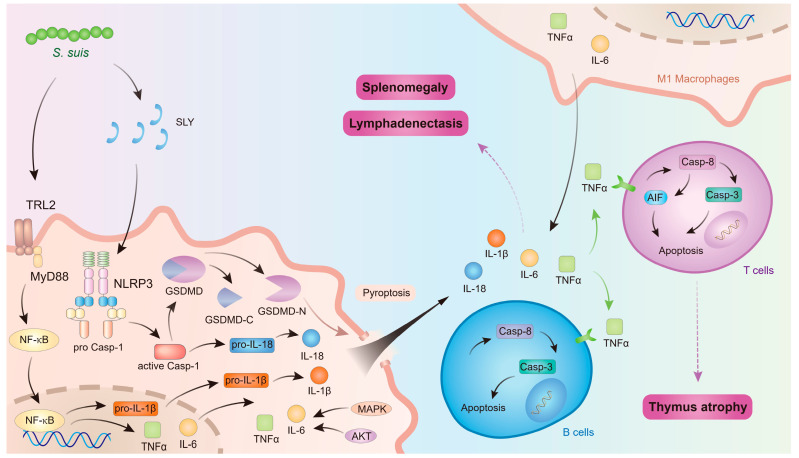 Figure 3
Peer Reviews
No public reviews on file for this paper yet. If you reviewed it on a platform where reviews are public (OpenReview, ICLR, NeurIPS, ICML), you can paste yours below so the community can read it here.
Videos
No videos yet. Explain this paper in a talk, walkthrough, or lecture? Add one.
Taxonomy
TopicsStreptococcal Infections and Treatments · Inflammasome and immune disorders · Dermatological and COVID-19 studies