Advancing Semiochemical Tools for Mountain Pine Beetle Management: Dendroctonus ponderosae Responses to Saprophytic Fungal Volatiles
Leah Crandall, Rashaduz Zaman, Guncha Ishangulyyeva, Nadir Erbilgin

TL;DR
This study explores how fungal volatiles from Trichoderma atroviride can repel mountain pine beetles, offering potential for new beetle management tools.
Contribution
The study identifies specific fungal volatiles from Trichoderma atroviride that repel mountain pine beetles and could be used as anti-attraction lures.
Findings
FVOCs from Trichoderma atroviride repel mountain pine beetles in bioassays.
Four compounds from T. atroviride show potential as anti-attraction lures for MPBs.
FVOCs from T. atroviride mildly reduce MPB feeding activity.
Abstract
Background/Objectives: Within their host trees, mountain pine beetles (MPBs, Dendroctonus ponderosae) interact with many fungal species, each releasing a unique profile of volatile organic compounds (VOCs). The FVOCs released by the two primary symbionts of MPBs, Grosmannia clavigera and Ophiostoma montium, have been found to enhance MPB attraction in the field and laboratory studies. Opportunistic, saprophytic fungal species, such as Aspergillus sp. and Trichoderma atroviride, are also common in MPB galleries and can negatively impact MPB fitness. However, little is known about the FVOCs produced by these fungal species and how they may impact MPB feeding and attraction. Methods: To address this knowledge gap, we characterized the FVOC profile of T. atroviride, and performed bioassays to test the effects of its FVOCs on MPB attraction and feeding activity. Results: Our chemical…
Genes, proteins, chemicals, diseases, species, mutations and cell lines named across the full text — each resolved to its canonical identifier and authoritative record.
Click any figure to enlarge with its caption.
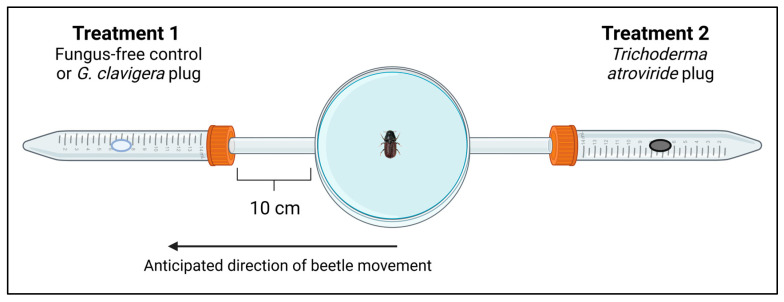 Figure 1
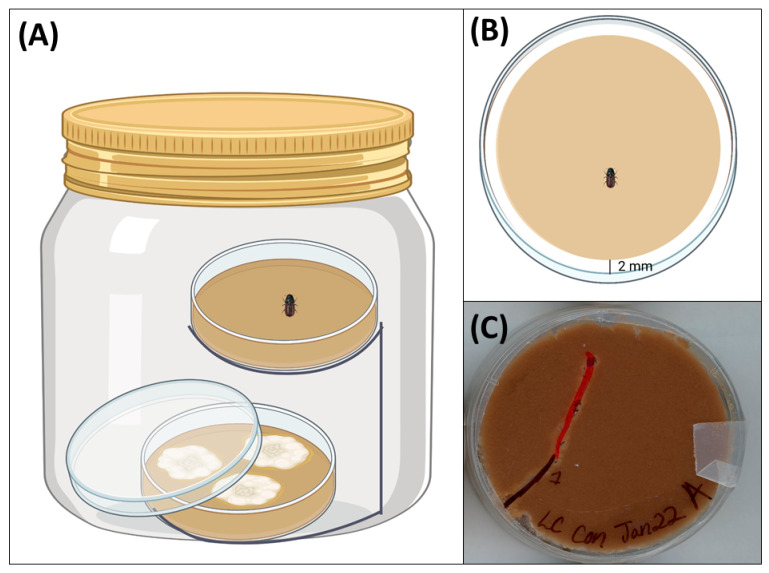 Figure 2
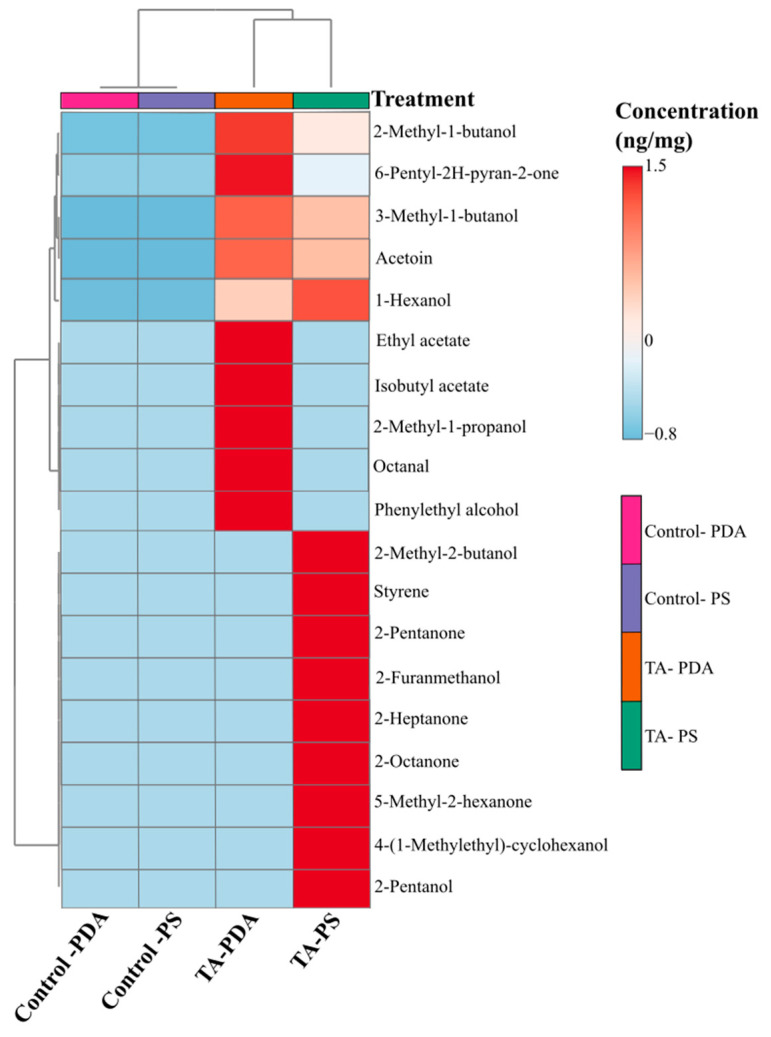 Figure 3
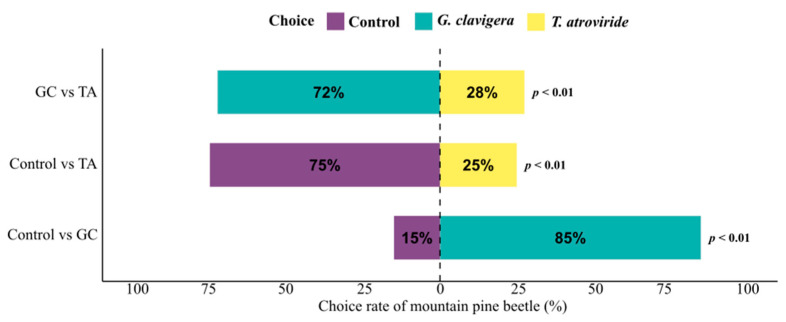 Figure 4
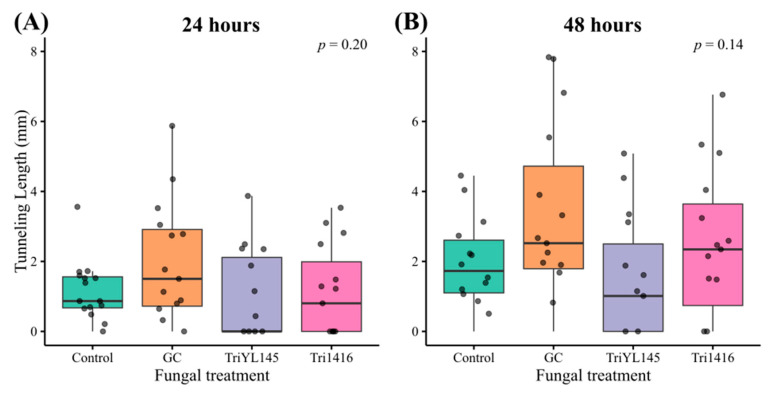 Figure 5
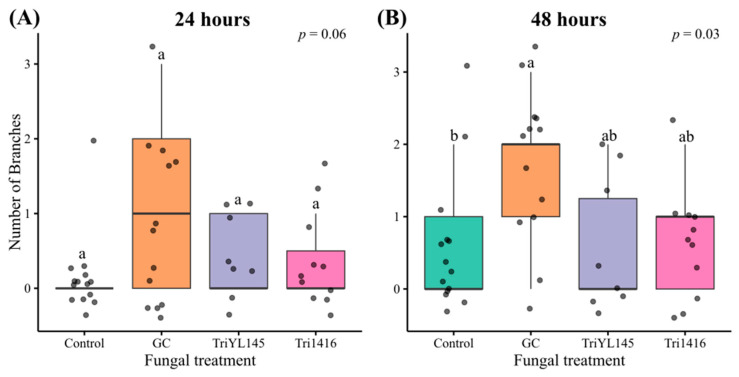 Figure 6
Peer Reviews
No public reviews on file for this paper yet. If you reviewed it on a platform where reviews are public (OpenReview, ICLR, NeurIPS, ICML), you can paste yours below so the community can read it here.
Videos
No videos yet. Explain this paper in a talk, walkthrough, or lecture? Add one.
Taxonomy
TopicsForest Insect Ecology and Management · Insect and Pesticide Research · Plant and animal studies