Revisiting the Genomic Epidemiology of Distinct Phage-Type Vibrio cholerae Strains Reveals Restricted Spatiotemporal Dissemination During an Epidemic
Yu Jiang, Wenxuan Zhao, Xiaorong Yang, Fenxia Fan, Zhenpeng Li, Bo Pang, Biao Kan

TL;DR
This study uses genome sequencing to track the spread and evolution of a specific cholera strain during an epidemic in China, revealing how it adapted to resist a phage.
Contribution
The study provides new insights into the genomic epidemiology and adaptive mutations of phage-resistant Vibrio cholerae strains during an epidemic.
Findings
PT6 strains formed an independent clone during the four-year epidemic and emerged in wave 2.
Most PT6 strains carried multiple CTXclassΦ genome copies and two copies each of RS1ET and RS1-4**.
Spontaneous mutations in the ompW gene were observed, enabling resistance to the VP5 phage.
Abstract
The El Tor biotype of Vibrio cholerae caused the seventh cholera pandemic (7CP). Although V. cholerae variants of this biotype frequently emerge, studies on their microevolution and spatiotemporal transmission in epidemics caused by a single clone are limited. During the cholera outbreak in Sichuan Province, China, in the 1990s, strains belonging to phage type 6 (PT6) but resistant to typing phage VP5 due to a deletion mutation in ompW, which is the gene associated with the VP5 receptor were identified. In this study, we analyzed PT6 strains using genome sequencing to reveal the genomic and transmission characteristics of such a transient phage type in China’s cholera epidemic history. The findings revealed that the PT6 strains formed an independent clone during the four-year epidemic and emerged in wave 2. Most of them carried multiple CTXclassΦ genome copies on chromosome 2 (Chr. 2)…
Genes, proteins, chemicals, diseases, species, mutations and cell lines named across the full text — each resolved to its canonical identifier and authoritative record.
Click any figure to enlarge with its caption.
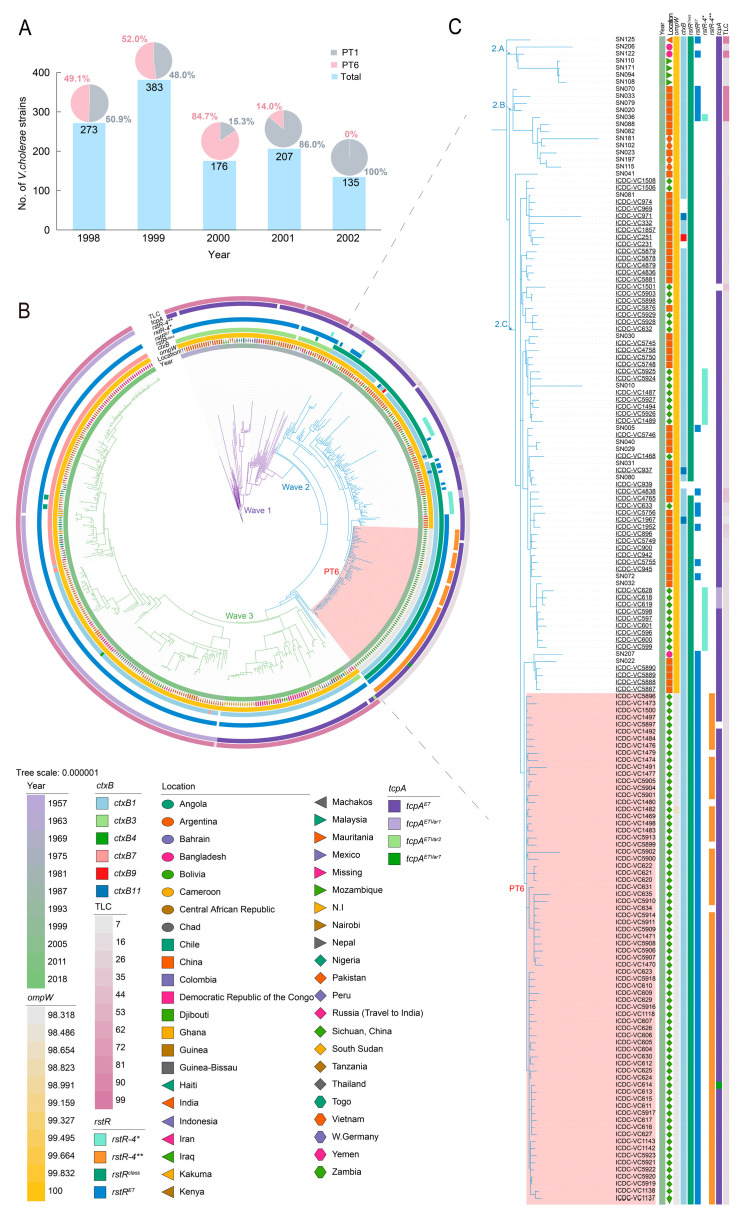 Figure 1
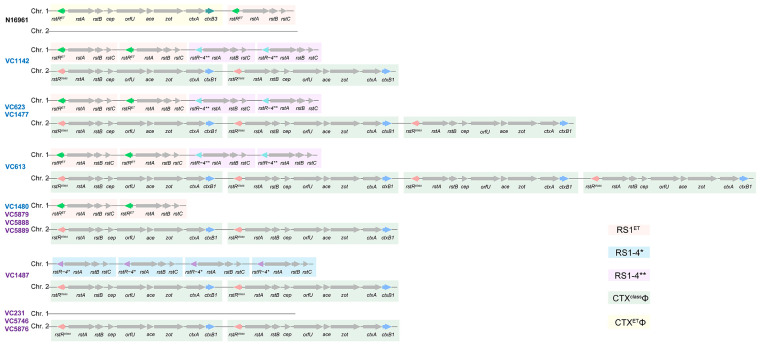 Figure 2
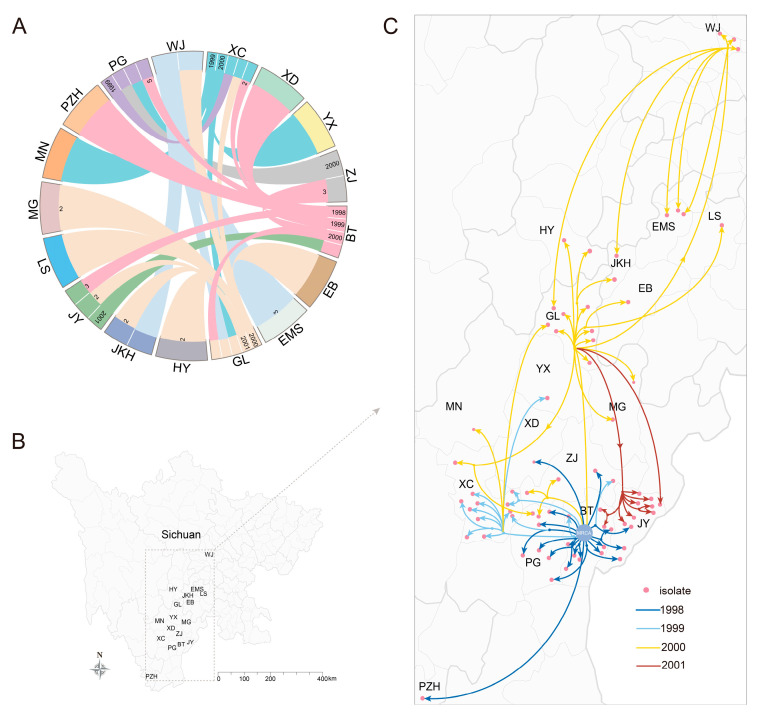 Figure 3
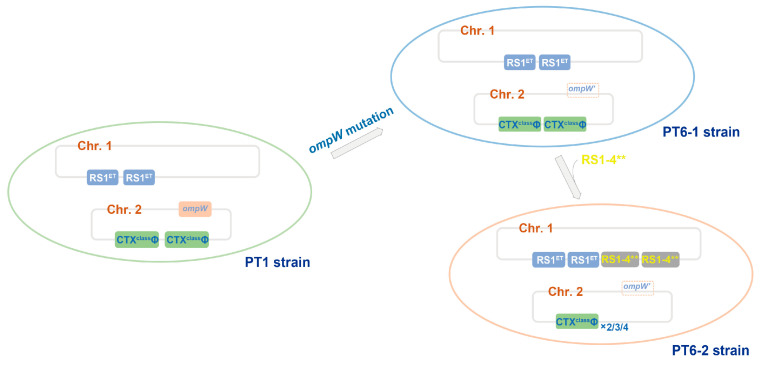 Figure 4
Peer Reviews
No public reviews on file for this paper yet. If you reviewed it on a platform where reviews are public (OpenReview, ICLR, NeurIPS, ICML), you can paste yours below so the community can read it here.
Videos
No videos yet. Explain this paper in a talk, walkthrough, or lecture? Add one.
Taxonomy
TopicsVibrio bacteria research studies · Aquaculture disease management and microbiota · Salmonella and Campylobacter epidemiology