Epidemiological Profile and Risk Factors for Malaria in Rural Communities Before the Operationalization of the Singrobo–Ahouaty Dam, Southern Côte d’Ivoire
Taki Jean Deles Avenié, Kigbafori Dieudonné Silué, Négnorogo Guindo-Coulibaly, Naférima Koné, Sadikou Touré, Kouamé Laurent Valian, Kouassi Séraphin Kouadio, Alloua Marie Joelle Bédia, Boza Fulgence Déabo, Klotcholman Diabagaté, Christian Nsanzabana, Jean Tenena Coulibaly

TL;DR
This study examines malaria prevalence and risk factors in rural Côte d'Ivoire communities before a dam's operation, highlighting the need for better control strategies.
Contribution
The study provides baseline epidemiological data on malaria in communities near a hydroelectric dam, identifying key risk factors and vulnerable groups.
Findings
Malaria prevalence was 43.1% with school-age children showing the highest infection rate.
Young children (0–5 years) had the highest parasite density (1218.0 parasites/µL).
Informal workers and those in raw material sectors faced higher malaria risk.
Abstract
Malaria remains a major public health issue, especially near hydroelectric dams that often promote mosquito breeding. This study aimed to establish baseline epidemiological data during the construction of the Singrobo–Ahouaty dam to support assessment and decision-making for short- and long-term health impacts on surrounding communities. A cross-sectional survey was carried out in randomly selected households. Blood samples were analyzed using thick/thin smears and rapid diagnostic tests, while sociodemographic and behavioral data were collected via questionnaires. Statistical analyses included chi-square, Mann–Whitney, Kruskal–Wallis tests, and logistic regression. The malaria prevalence was 43.1% (394/915). The parasite density averaged 405.7 parasites/µL. School-age children (6–13 years) showed the highest prevalence (74.3%, p < 0.0001), while younger children (0–5 years) had the…
Genes, proteins, chemicals, diseases, species, mutations and cell lines named across the full text — each resolved to its canonical identifier and authoritative record.
Click any figure to enlarge with its caption.
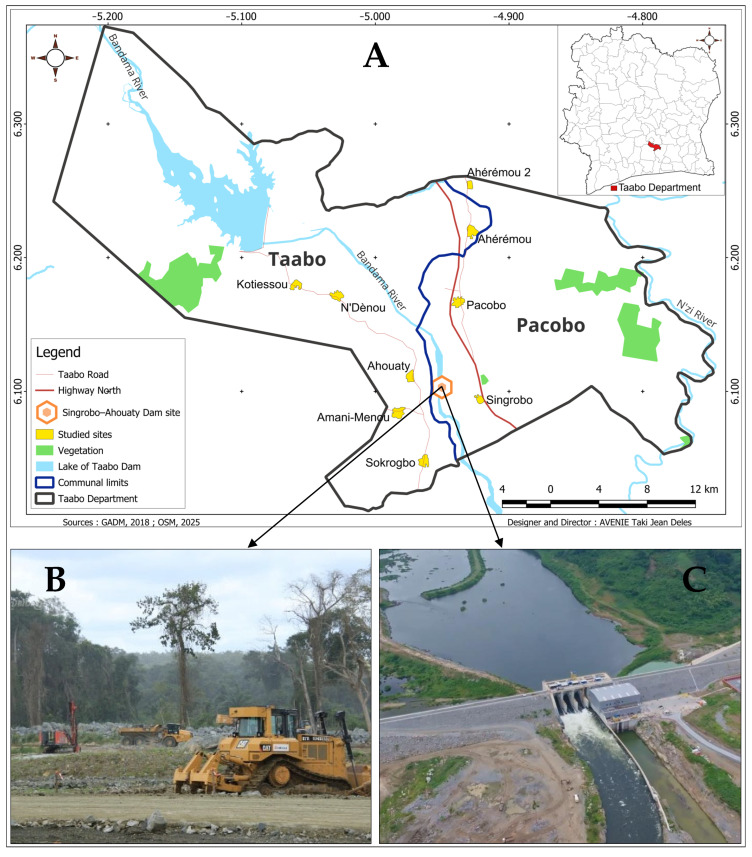 Figure 1
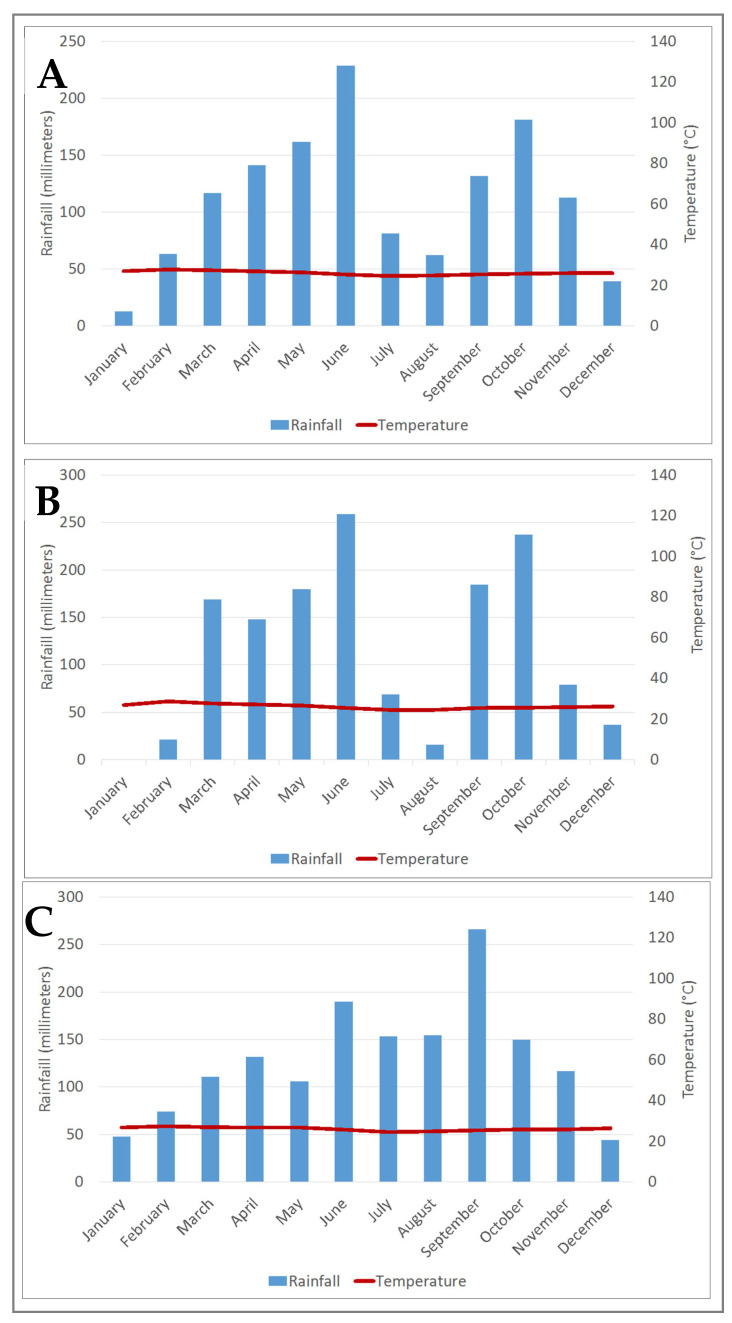 Figure 2
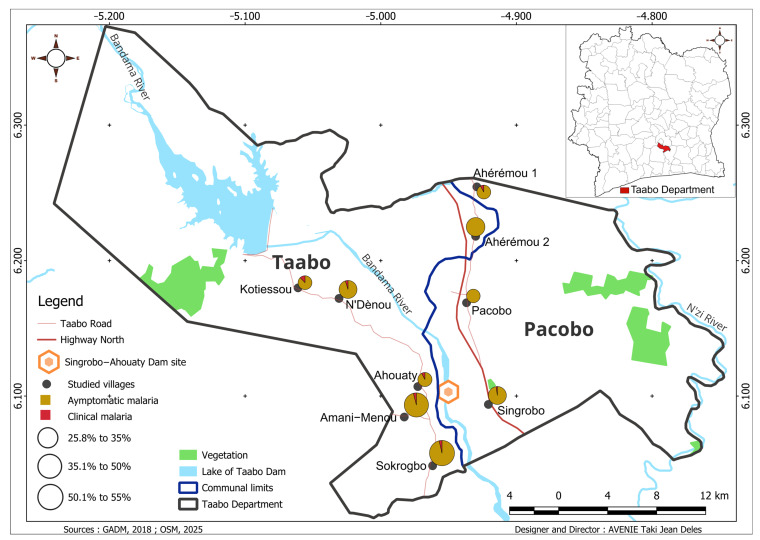 Figure 3
Peer Reviews
No public reviews on file for this paper yet. If you reviewed it on a platform where reviews are public (OpenReview, ICLR, NeurIPS, ICML), you can paste yours below so the community can read it here.
Videos
No videos yet. Explain this paper in a talk, walkthrough, or lecture? Add one.
Taxonomy
TopicsMalaria Research and Control · Mosquito-borne diseases and control · Vibrio bacteria research studies