Healing with Risks: How Zoonotic Potential Influences the Use of Wild Mammals in Traditional Medicine
Heliene Mota Pereira, Mayara Guimarães Beltrão, Anna Karolina Martins Borges, Weslley Ruan Guimarães da Silva, Danilo Vicente Batista Oliveira, Rômulo Romeu Nóbrega Alves

TL;DR
This study explores how the risk of disease transmission influences the use of wild mammals in traditional medicine globally.
Contribution
The study reveals that zoonotic potential significantly influences the selection of wild mammals for traditional medicine.
Findings
Species with higher zoonotic potential are less likely to be used in traditional medicine.
Over half of the pathogens from these mammals can infect humans, with viruses being the most common.
High therapeutic versatility is observed in 4.3% of the species used for medicinal purposes.
Abstract
Most infectious diseases affecting humans are zoonotic in origin, with mammals serving as the main reservoirs. Frequent interactions between humans and animals, especially in the context of their use for food, medicine, and other purposes, pose significant public health risks, as recently demonstrated by the SARS-CoV-2 pandemic. In traditional medicine, many species—some of which are also used as food—are valued for their therapeutic versatility, that is, the diversity of medicinal uses attributed to each species. This study investigates the role of zoonotic potential in the selection of mammals used in traditional medicine at a global scale. We compiled data on 411 wild mammal species across 17 orders, identifying 5.146 associated pathogens, of which 2.778 (53.9%) also infect humans. Most diseases transmitted by these species are caused by viruses (33.4%), bacteria (23.3%), and…
Genes, proteins, chemicals, diseases, species, mutations and cell lines named across the full text — each resolved to its canonical identifier and authoritative record.
Click any figure to enlarge with its caption.
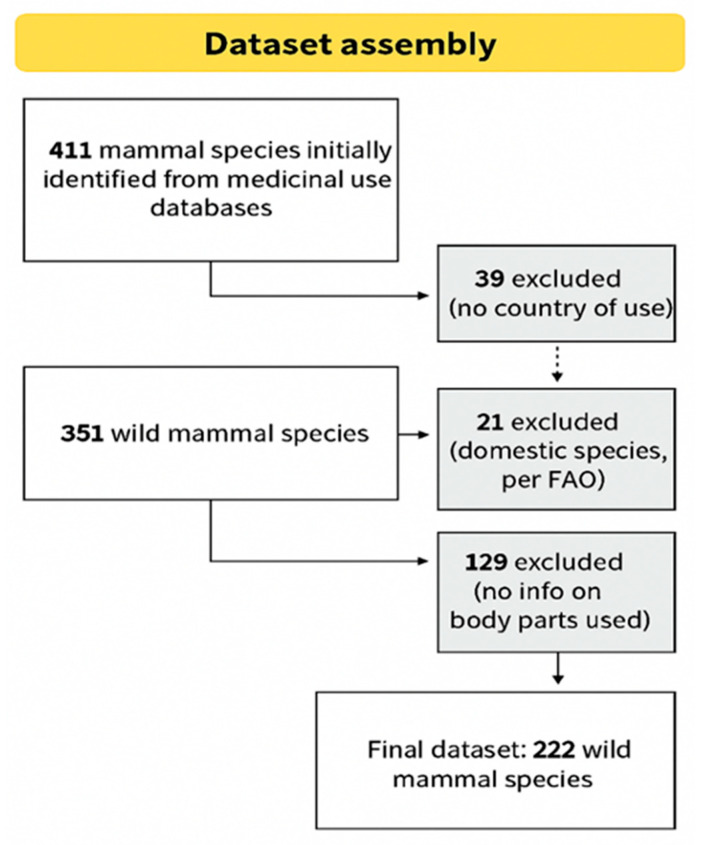 Figure 1
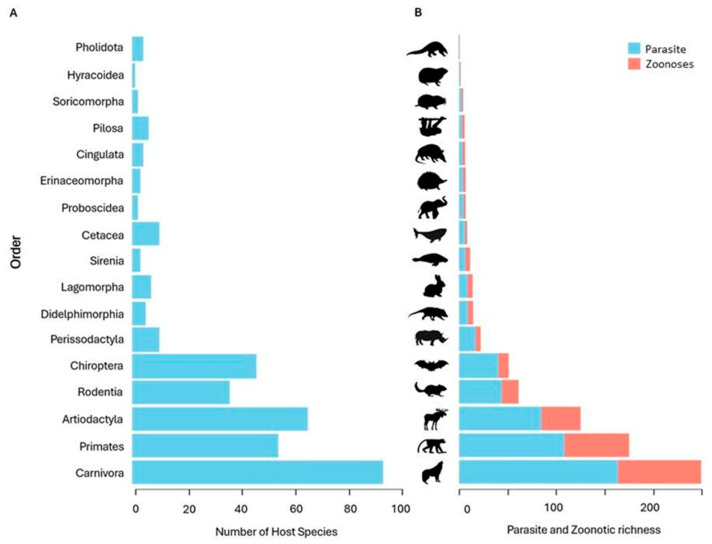 Figure 2
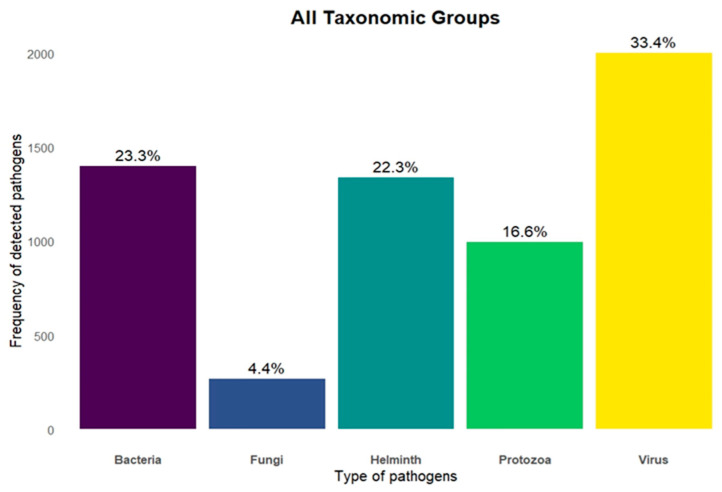 Figure 3
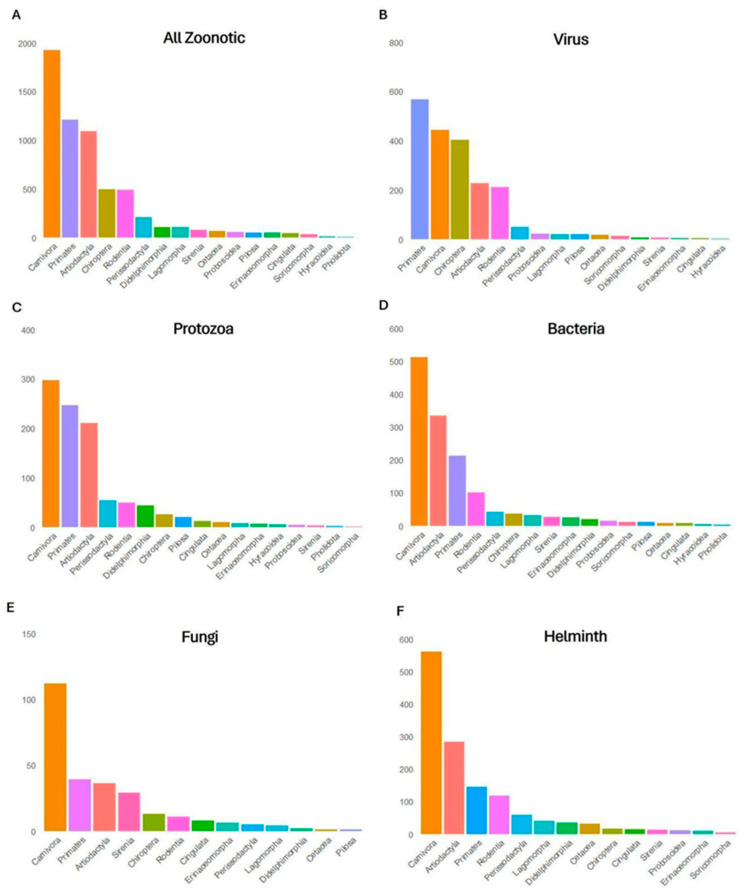 Figure 4
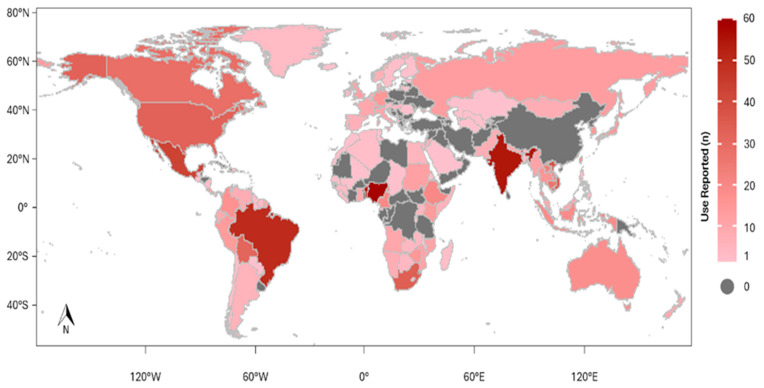 Figure 5
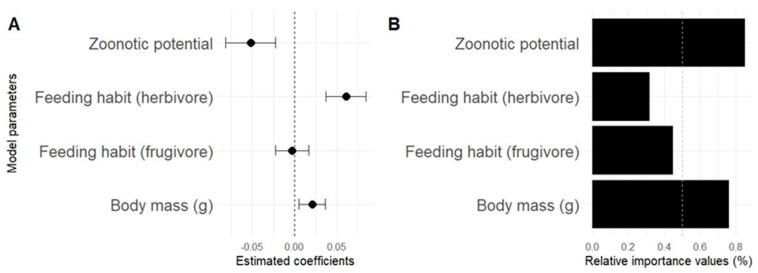 Figure 6
Peer Reviews
No public reviews on file for this paper yet. If you reviewed it on a platform where reviews are public (OpenReview, ICLR, NeurIPS, ICML), you can paste yours below so the community can read it here.
Videos
No videos yet. Explain this paper in a talk, walkthrough, or lecture? Add one.
Taxonomy
TopicsZoonotic diseases and public health · Animal Disease Management and Epidemiology · Yersinia bacterium, plague, ectoparasites research