High-Risk PNPLA3 rs738409 Genotype Is Associated with Higher Concentrations of CCL2 in Liver Transplant Candidates with Alcoholic End-Stage Liver Disease
Ivan Budimir Bekan, Dino Šisl, Alan Šućur, Ana Bainrauch, Valerija Bralić Lang, Pavao Planinić, Nataša Kovačić, Danka Grčević, Anna Mrzljak, Tomislav Kelava

TL;DR
People with a specific genetic variant (PNPLA3 GG) have higher levels of a protein called CCL2 in their blood, which may explain why they are more likely to develop severe liver disease complications.
Contribution
The study identifies a novel association between the PNPLA3 GG genotype and elevated CCL2 levels in patients with alcoholic liver disease.
Findings
GG genotype carriers had significantly higher CCL2 concentrations compared to CC/CG carriers.
GG carriers also showed higher AST and ALT levels and lower platelet counts.
CCL2 levels were not significantly different between ALD patients with and without HCC.
Abstract
Background and Objectives: Patients with GG rs738409 patatin-like phospholipase domain-containing protein 3 (PNPLA3) genotype (148M variant) have greater risk to develop end-stage liver disease and its associated clinical complications, including hepatocellular carcinoma (HCC). We aimed to analyze the association between the PNPLA3 genotype and augmented inflammatory response in transplant candidates with end-stage alcoholic liver disease (ALD). Materials and Methods: Concentrations of 13 cytokines were measured in 106 end-stage ALD patients without HCC (40 with CC, 40 with CG, and 26 with GG genotype), 35 end-stage ALD patients with HCC, and 19 control patients by cytometric bead array. Results: We found significantly higher concentrations of IL-1, IFN-α, IFN-γ, TNF-α, IL-6, CXCL8, IL-10, IL-12, IL-32, and IL-33 in patients with ALD compared to controls, while the concentration of CCL2…
Genes, proteins, chemicals, diseases, species, mutations and cell lines named across the full text — each resolved to its canonical identifier and authoritative record.
Click any figure to enlarge with its caption.
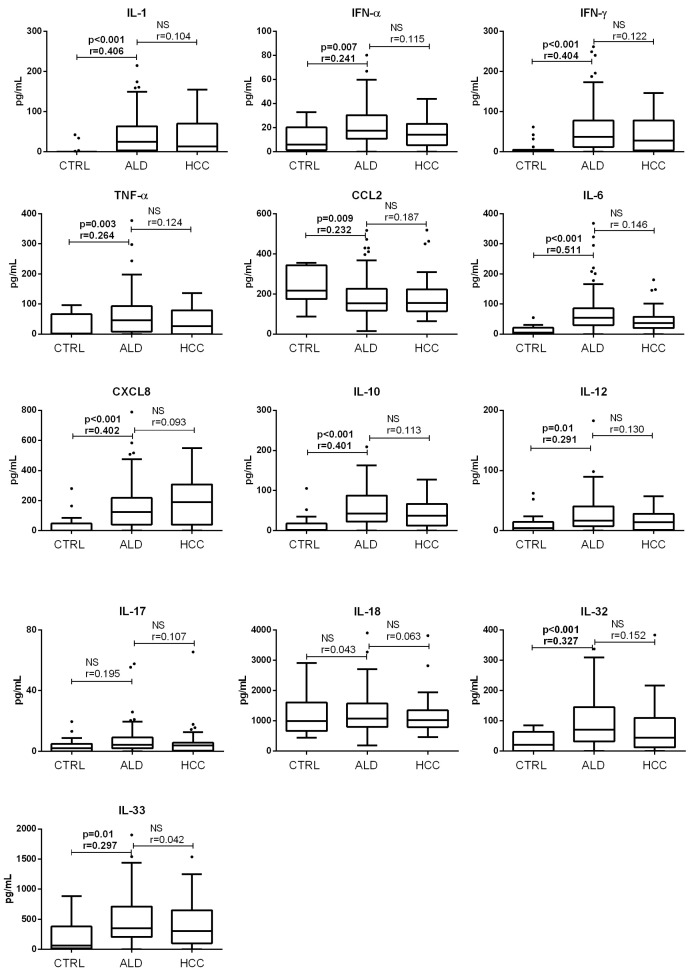 Figure 1
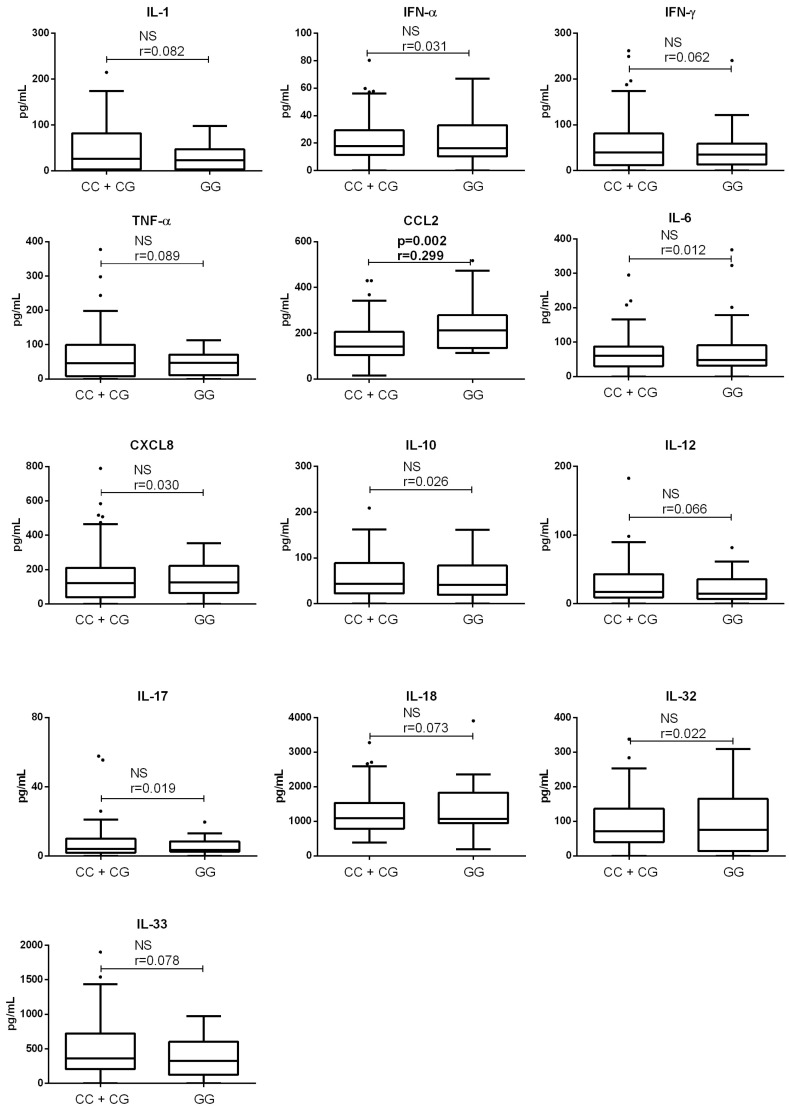 Figure 2
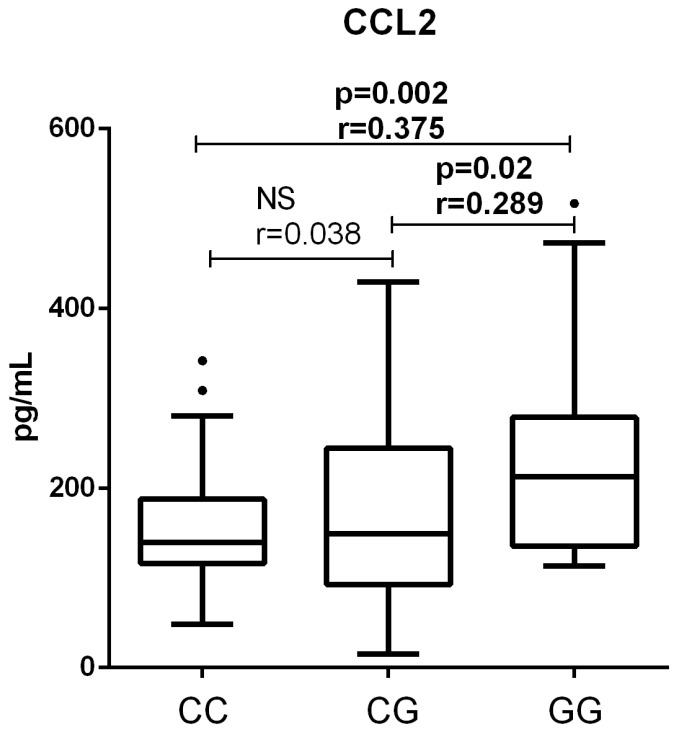 Figure 3
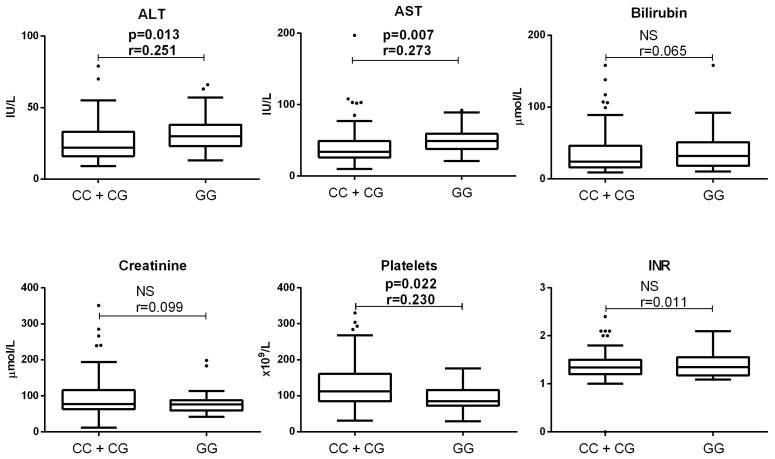 Figure 4
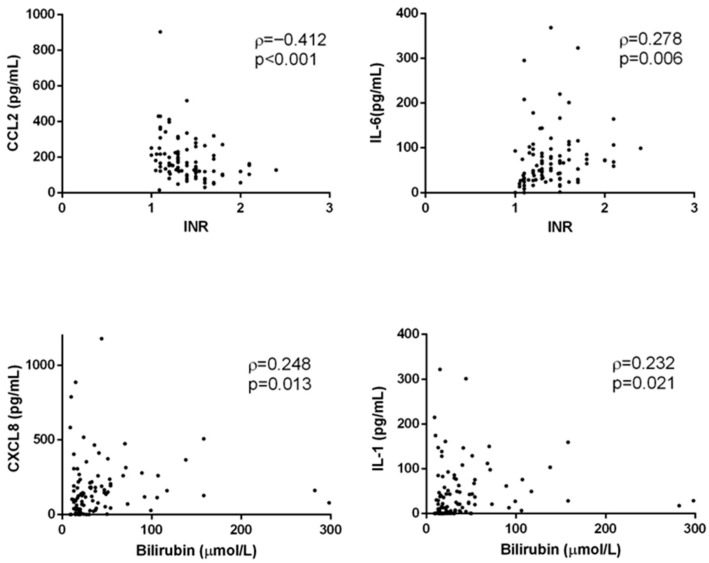 Figure 5
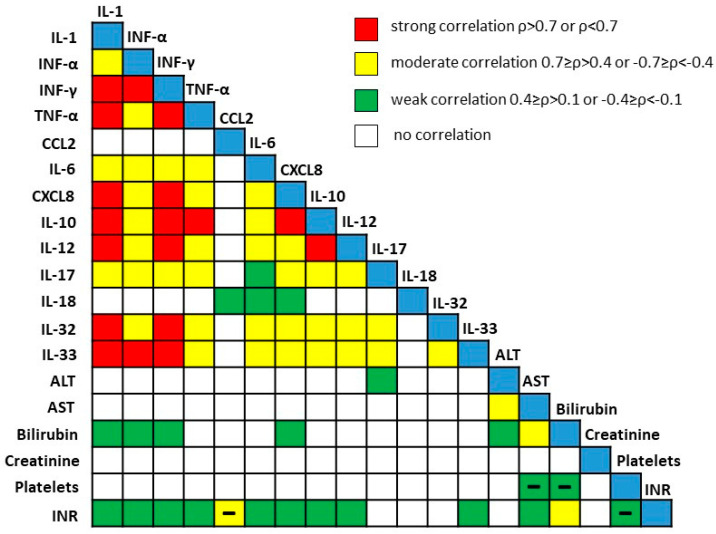 Figure 6
Peer Reviews
No public reviews on file for this paper yet. If you reviewed it on a platform where reviews are public (OpenReview, ICLR, NeurIPS, ICML), you can paste yours below so the community can read it here.
Videos
No videos yet. Explain this paper in a talk, walkthrough, or lecture? Add one.
Taxonomy
TopicsLiver Disease Diagnosis and Treatment · Alcohol Consumption and Health Effects · Endoplasmic Reticulum Stress and Disease