Pediatric Genetic Dystonias: Current Diagnostic Approaches and Treatment Options
Graziana Ceraolo, Giulia Spoto, Carla Consoli, Elena Modafferi, Gabriella Di Rosa, Antonio Gennaro Nicotera

TL;DR
This review discusses the diagnosis and treatment of genetic dystonias in children, emphasizing the importance of early detection and personalized care.
Contribution
The paper provides an updated overview of pediatric genetic dystonias, focusing on differential diagnosis and treatment strategies.
Findings
Over 250 genes are associated with pediatric dystonias, with TOR1A, SGCE, and KMT2B being the most frequently reported.
Whole-exome and whole-genome sequencing have improved early identification of causative genetic variants.
Symptomatic treatments and emerging gene therapies, like those for AADC deficiency, show promise in managing dystonias.
Abstract
Genetic dystonias are a heterogeneous group of movement disorders characterized by involuntary, sustained muscle contractions that cause repetitive movements and abnormal postures. Often beginning in childhood, they can significantly affect quality of life. Although individually rare, genetic causes are collectively relevant in pediatric dystonias, with over 250 associated genes. Among these, TOR1A, SGCE, and KMT2B are the most frequently reported in pediatric forms. Diagnosis is challenging due to the wide clinical and genetic variability. Recent advances in genetic testing, including whole-exome and whole-genome sequencing, have improved the early identification of causative variants. Functional data on selected mutations are helping to refine genotype–phenotype correlations. Management typically requires a multidisciplinary approach. Symptomatic treatments include anticholinergics,…
Genes, proteins, chemicals, diseases, species, mutations and cell lines named across the full text — each resolved to its canonical identifier and authoritative record.
Click any figure to enlarge with its caption.
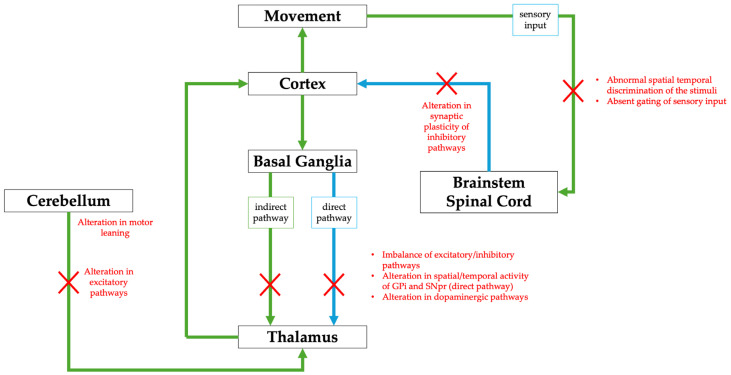 Figure 1
Peer Reviews
No public reviews on file for this paper yet. If you reviewed it on a platform where reviews are public (OpenReview, ICLR, NeurIPS, ICML), you can paste yours below so the community can read it here.
Videos
No videos yet. Explain this paper in a talk, walkthrough, or lecture? Add one.
Taxonomy
TopicsGenetic Neurodegenerative Diseases · Neurological disorders and treatments · Neurological diseases and metabolism