Genebank Management Through Microsatellite Markers: A Case Study in Two Italian Peach Germplasm Collections
Elisa Vendramin, Cássia da Silva Linge, Daniele Bassi, Sabrina Micali, Giorgiana Chietera, Maria Teresa Dettori, Valeria Aramini, Jessica Giovinazzi, Igor Pacheco, Laura Rossini, Ignazio Verde

TL;DR
This study uses microsatellite markers to analyze peach germplasm collections in Italy, identifying mislabeled accessions and revealing population structure to improve genebank management.
Contribution
The study introduces a detailed microsatellite-based analysis to identify mislabeling and population structure in peach germplasm collections.
Findings
DNA fingerprinting data distinguished 80.95% of peach accessions.
161 accessions were found to be mislabeled, with a 16.56% error rate.
Three subpopulations were identified: modern peaches, modern nectarines, and traditional peaches.
Abstract
Two germplasm collections, comprising 1026 peach accessions located in Italy, were analyzed with 12 simple sequence repeat (SSR) markers. SSR reactions were performed using the multiplex-ready PCR protocol, and 147 alleles were amplified with an average of 12 alleles per locus. BPPCT001 was the most informative marker displaying the highest discrimination power (0.734). The observed heterozygosity showed an average of 0.45 alleles per locus, lower than expected (0.61). The fixation index (F) values were positive in all loci, with an average of 0.27 alleles per locus, suggesting the presence of endogamy. The DNA fingerprinting data allowed the discrimination of 80.95% of the analyzed accessions. If we exclude known sport mutations, known synonymies, and cultivars with the same pedigree, 161 accessions are mislabeled, with an error rate of 16.56% within or between collections. Population…
Genes, proteins, chemicals, diseases, species, mutations and cell lines named across the full text — each resolved to its canonical identifier and authoritative record.
Click any figure to enlarge with its caption.
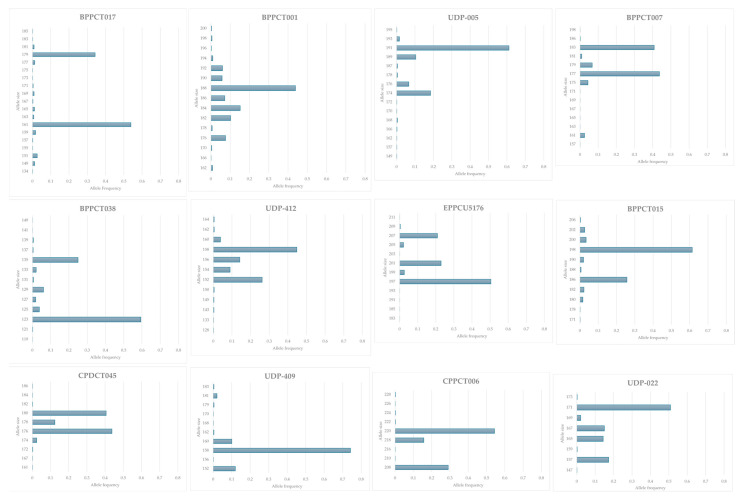 Figure 1
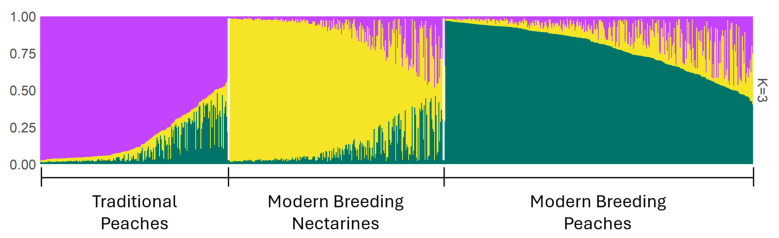 Figure 2
Peer Reviews
No public reviews on file for this paper yet. If you reviewed it on a platform where reviews are public (OpenReview, ICLR, NeurIPS, ICML), you can paste yours below so the community can read it here.
Videos
No videos yet. Explain this paper in a talk, walkthrough, or lecture? Add one.
Taxonomy
TopicsPlant Pathogens and Fungal Diseases · Fungal Plant Pathogen Control · Powdery Mildew Fungal Diseases