Development and Validation of a Standardized Pseudotyped Virus-Based Neutralization Assay for Assessment of Anti-Nipah Virus Neutralizing Activity in Candidate Nipah Vaccines
Muntasir Alam, Md Jowel Rana, Asma Salauddin, Emma Bentley, Gathoni Kamuyu, Dipok Kumer Shill, Shafina Jahan, Mohammad Mamun Alam, Md Abu Raihan, Mohammed Ziaur Rahman, Rubhana Raqib, Ali Azizi, Mustafizur Rahman

TL;DR
Researchers developed a safe and reliable test to measure antibodies against Nipah virus, which can be used in lower biosafety labs to support vaccine development and outbreak response.
Contribution
A standardized pseudotyped virus-based neutralization assay for Nipah virus was developed and validated for use in BSL-2 laboratories.
Findings
The assay showed 100% sensitivity and specificity with strong correlation to a reference assay (R2 = 0.8461).
Dilutional linearity (R2 = 0.9940) and high accuracy (98.18%) were confirmed across a wide antibody titer range.
The assay demonstrated high precision and robustness across varying experimental conditions.
Abstract
Background: An effective vaccine against Nipah virus (NiV) is crucial due to its high fatality rate and recurrent outbreaks in South and Southeast Asia. Vaccine development is challenged by the lack of validated accessible neutralization assays, as virus culture requires BSL-4 facilities, restricting implementation in resource-limited settings. To address this, we standardized and validated a pseudotyped virus neutralization assay (PNA) for assessing NiV-neutralizing antibodies in BSL-2 laboratories. Methods: The NiV-PNA was validated following international regulatory standards, using a replication-defective recombinant Vesicular stomatitis virus (rVSV) backbone dependent pseudotyped virus. Assessments included sensitivity, specificity, dilutional linearity, relative accuracy, precision, and robustness. The assay was calibrated using the WHO International Standard for anti-NiV…
Genes, proteins, chemicals, diseases, species, mutations and cell lines named across the full text — each resolved to its canonical identifier and authoritative record.
Click any figure to enlarge with its caption.
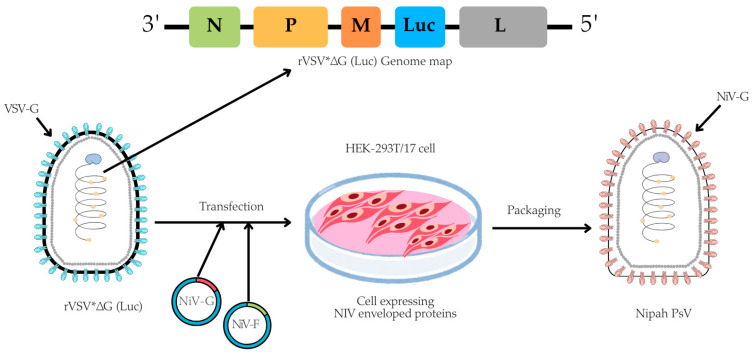 Figure 1
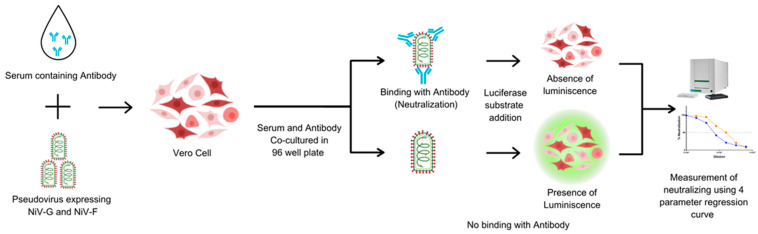 Figure 2
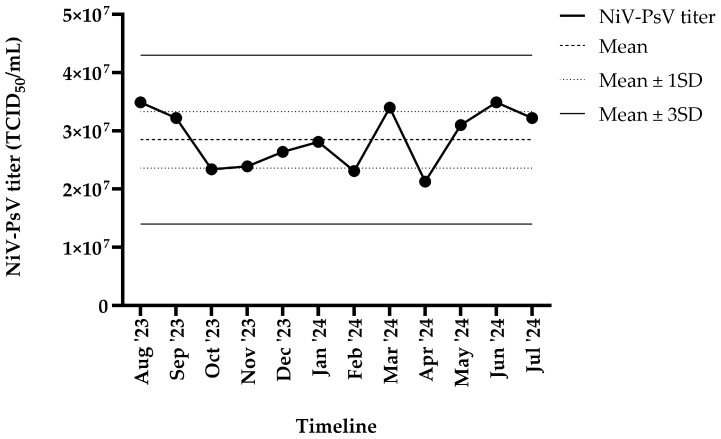 Figure 3
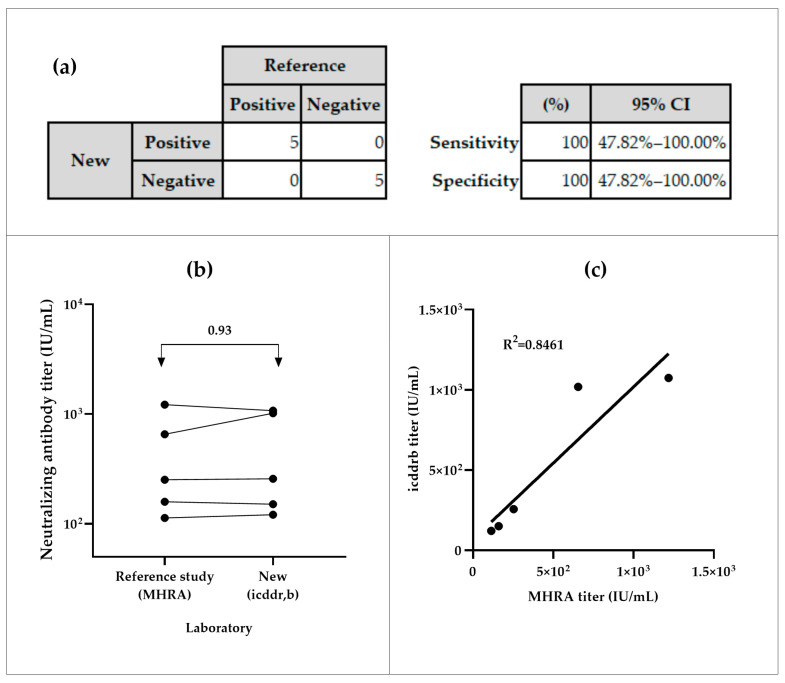 Figure 4
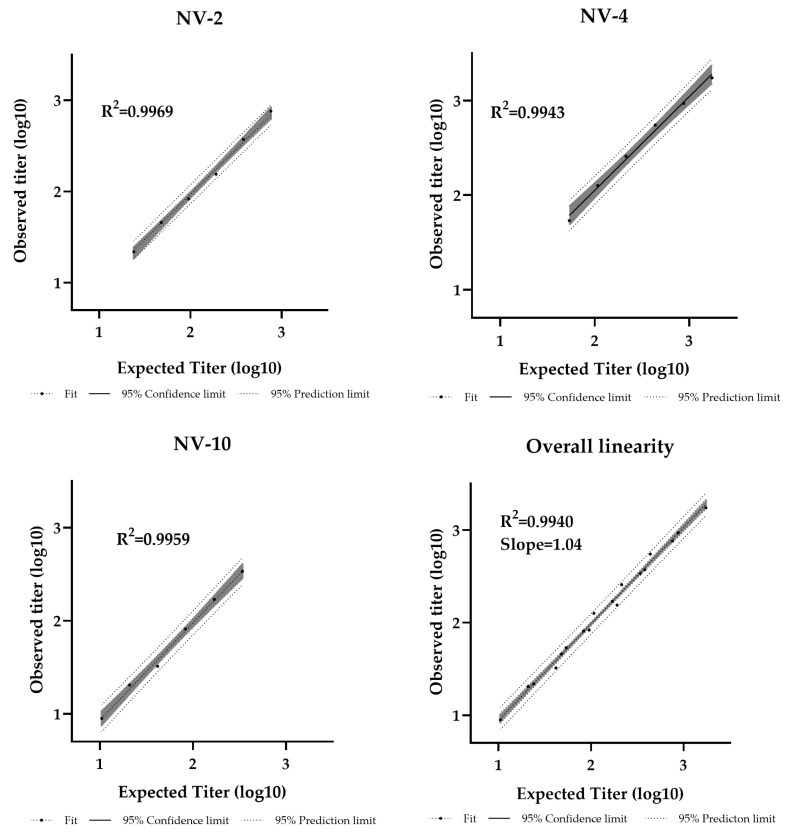 Figure 5
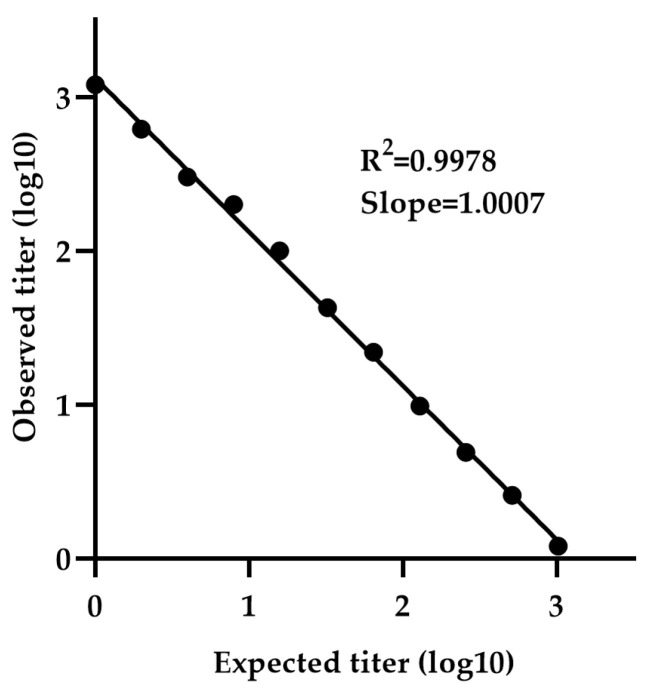 Figure 6
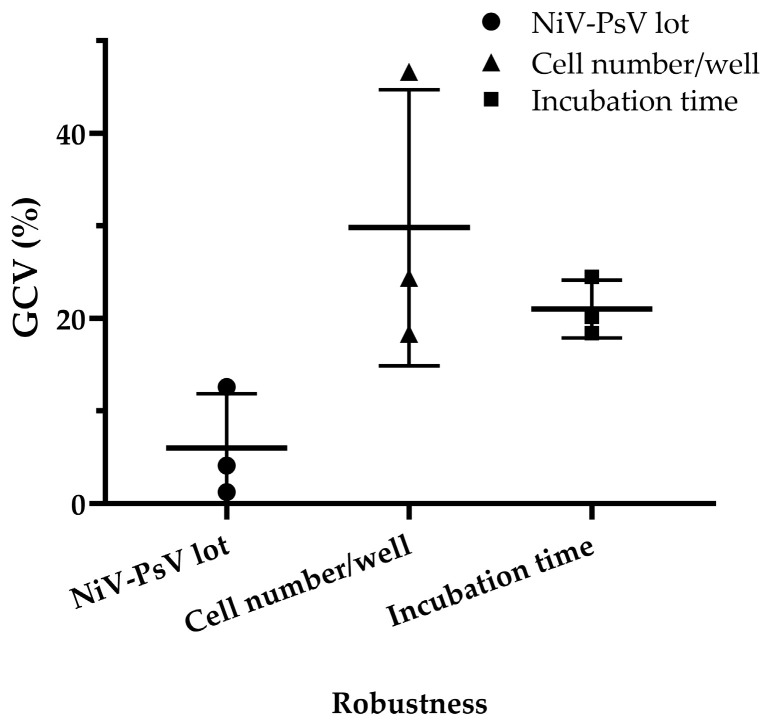 Figure 7
Peer Reviews
No public reviews on file for this paper yet. If you reviewed it on a platform where reviews are public (OpenReview, ICLR, NeurIPS, ICML), you can paste yours below so the community can read it here.
Videos
No videos yet. Explain this paper in a talk, walkthrough, or lecture? Add one.
Taxonomy
TopicsVirology and Viral Diseases · Mosquito-borne diseases and control · Viral Infections and Vectors