Tissue-Specific Expression Analysis and Functional Validation of SiSCR Genes in Foxtail Millet (Setaria italica) Under Hormone and Drought Stresses, and Heterologous Expression in Arabidopsis
Yingying Qin, Ruifu Wang, Shuwan Chen, Qian Gao, Yiru Zhao, Shuo Chang, Mao Li, Fangfang Ma, Xuemei Ren

TL;DR
This study explores the role of SiSCR genes in foxtail millet under stress and their expression in Arabidopsis, revealing their impact on plant development and stress responses.
Contribution
The study identifies and functionally validates SiSCR genes in foxtail millet, highlighting their role in abiotic stress adaptation and morphogenesis.
Findings
SiSCR genes show conserved structure and expression patterns across developmental stages and stress conditions.
Ectopic expression of SiSCR genes in Arabidopsis leads to ABA hypersensitivity and altered root development.
SiSCR2 is upregulated in leaves under drought stress, indicating a role in abiotic stress adaptation.
Abstract
The SCARECROW (SCR) transcription factor governs cell-type patterning in plant roots and Kranz anatomy of leaves, serving as a master regulator of root and shoot morphogenesis. Foxtail millet (Setaria italica), characterized by a compact genome, self-pollination, and a short growth cycle, has emerged as a C4 model plant. Here, we revealed two SCR paralogs in foxtail millet—SiSCR1 and SiSCR2—which exhibit high sequence conservation with ZmSCR1/1h (Zea mays), OsSCR1/2 (Oryza sativa), and AtSCR (Arabidopsis thaliana), particularly within the C-terminal GRAS domain. Both SiSCR genes exhibited nearly identical secondary structures and physicochemical profiles, with promoter analyses revealing five conserved cis-regulatory elements. Robust phylogenetic reconstruction resolved SCR orthologs into monocot- and dicot-specific clades, with SiSCR genes forming a sister branch to SvSCR from its…
Genes, proteins, chemicals, diseases, species, mutations and cell lines named across the full text — each resolved to its canonical identifier and authoritative record.
Click any figure to enlarge with its caption.
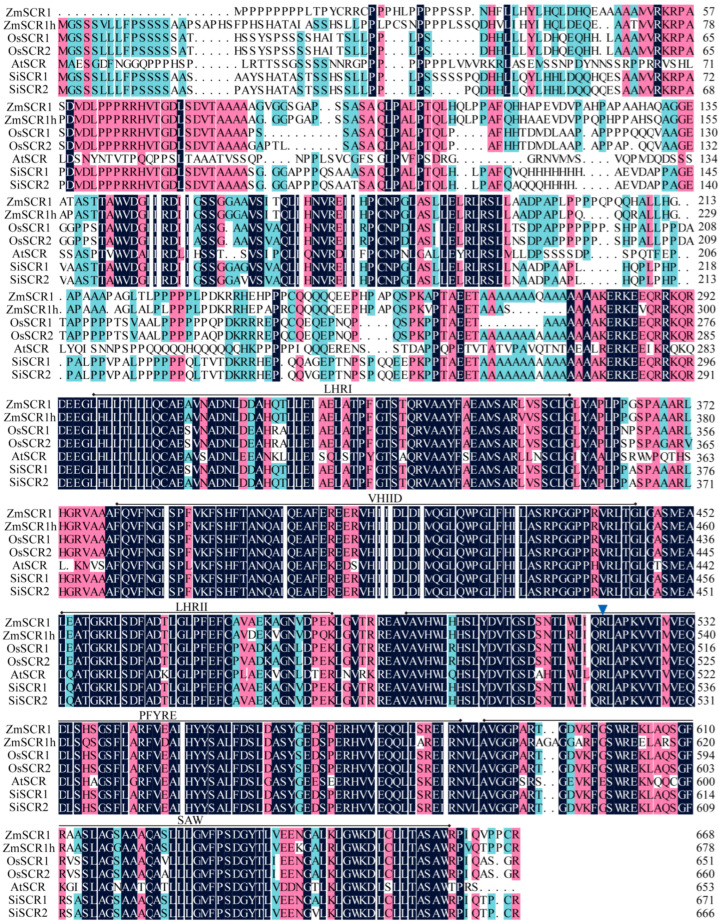 Figure 1
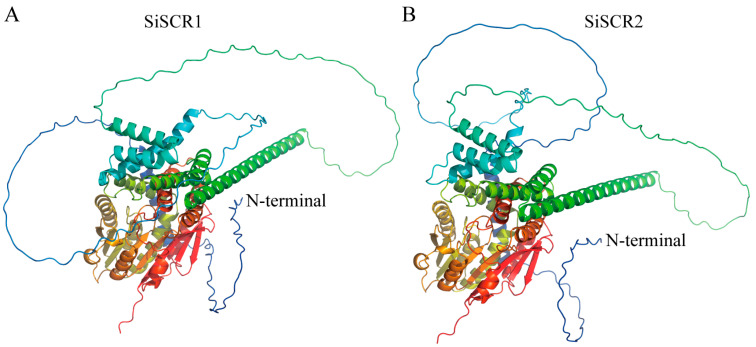 Figure 2
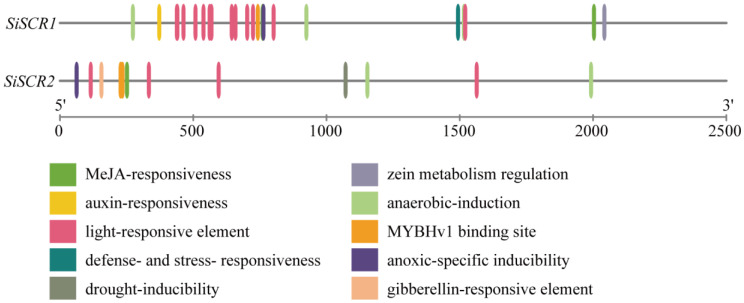 Figure 3
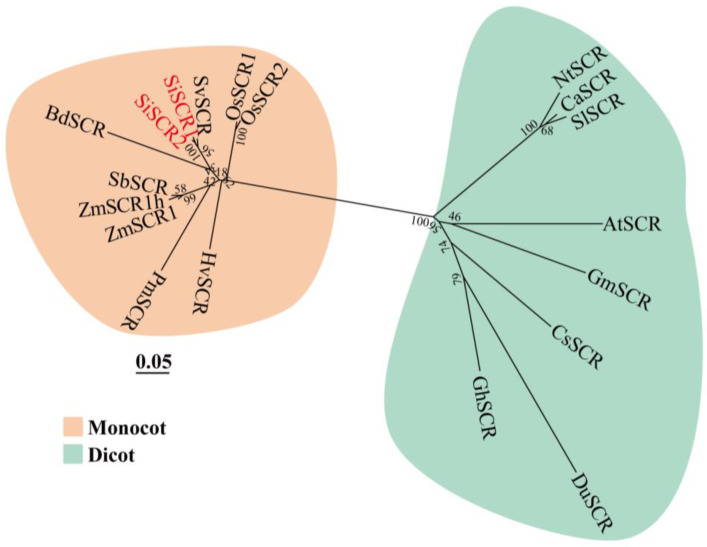 Figure 4
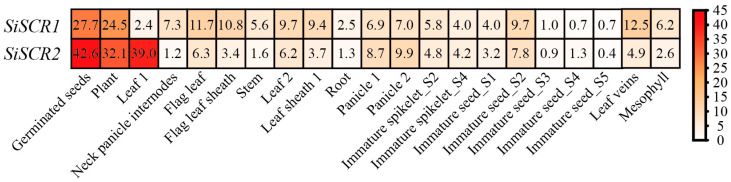 Figure 5
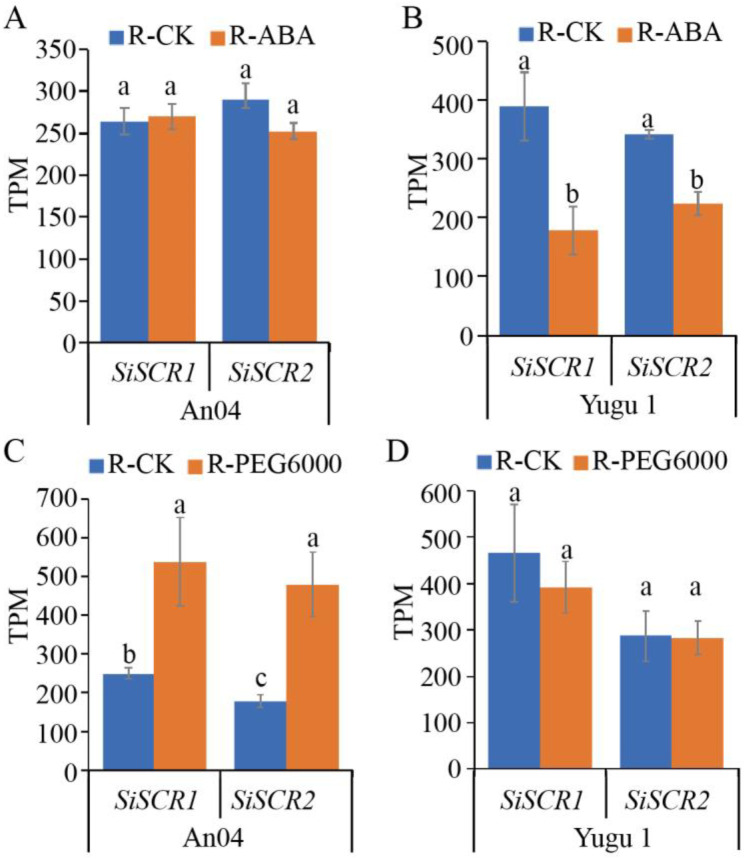 Figure 6
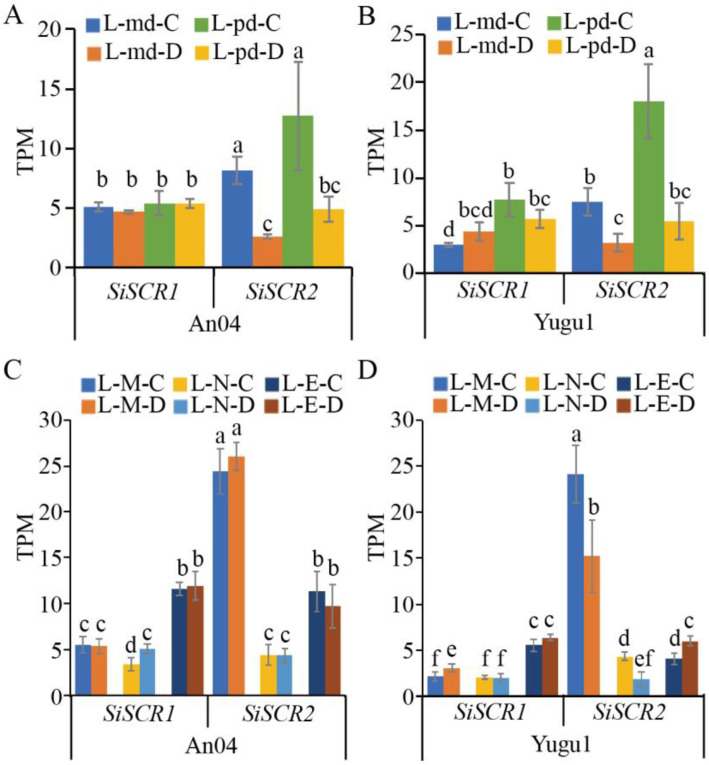 Figure 7
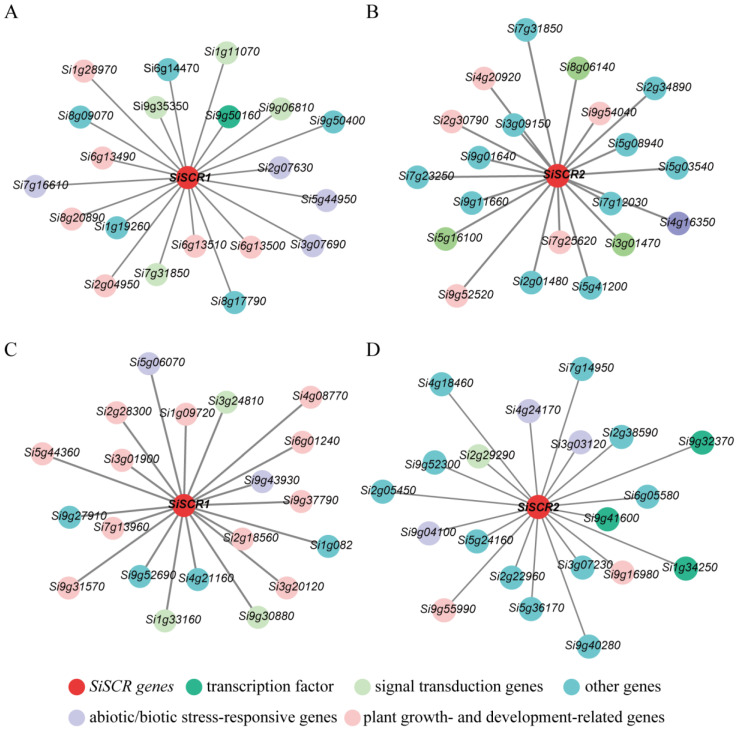 Figure 8
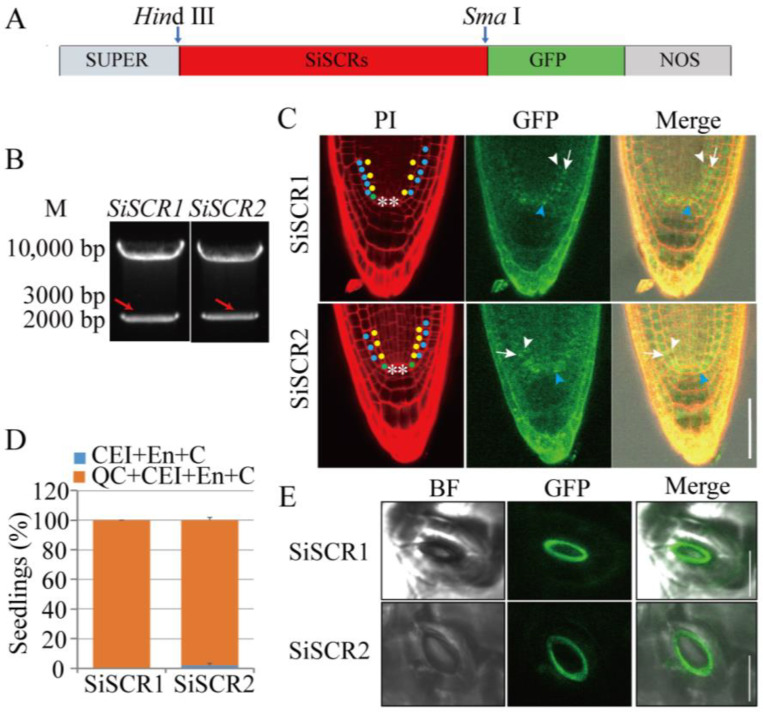 Figure 9
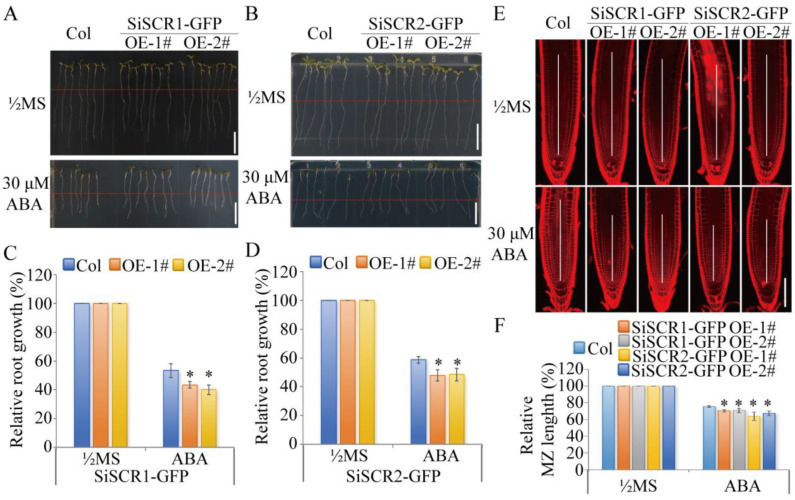 Figure 10
Peer Reviews
No public reviews on file for this paper yet. If you reviewed it on a platform where reviews are public (OpenReview, ICLR, NeurIPS, ICML), you can paste yours below so the community can read it here.
Videos
No videos yet. Explain this paper in a talk, walkthrough, or lecture? Add one.
Taxonomy
TopicsPlant Molecular Biology Research · Plant nutrient uptake and metabolism · Plant tissue culture and regeneration