Step-Wise Ethanol Adaptation Drives Cell-Wall Remodeling and ROM2/KNR4 Activation in Brettanomyces bruxellensis
Leslie Hernandez-Cabello, Nachla Rojas-Torres, Liliana Godoy, Camila G-Poblete, Yarabi Concha, Verónica Plaza, Luis Castillo, Héctor M. Mora-Montes, María Angélica Ganga

TL;DR
This study explores how Brettanomyces bruxellensis adapts to ethanol stress by changing its cell wall and gene activity, which helps it survive in wine.
Contribution
The study reveals a novel ethanol adaptation mechanism involving cell wall remodeling and gene activation in B. bruxellensis.
Findings
B. bruxellensis shows increased resistance to β-1,3-glucanase at 5% and 10% ethanol.
Ethanol exposure leads to progressive increases in wall-associated proteins and overexpression of ROM2 and KNR4/SMI1 genes.
Cell wall polysaccharides and chitin levels initially rise at 1% ethanol but return to normal at higher concentrations.
Abstract
Brettanomyces bruxellensis has been described as the main spoilage microorganism in wines due to its ability to produce volatile phenols, which negatively impact the final product’s organoleptic properties. This yeast can grow and survive in environments that are too nutritionally poor and stressful for other microorganisms, and one of the stressful conditions it can endure is the high alcohol content in wine. In this study, cell wall morphology and the expression of some genes related to its composition were characterized under increasing ethanol concentrations to establish a possible ethanol resistance mechanism. B. bruxellensis LAMAP2480 showed greater resistance to β-1,3-glucanase activity when grown in media supplemented with 5% or 10% ethanol compared with the control assay (without ethanol). Transmission electron microscopy showed no significant differences in cell wall thickness…
Genes, proteins, chemicals, diseases, species, mutations and cell lines named across the full text — each resolved to its canonical identifier and authoritative record.
Click any figure to enlarge with its caption.
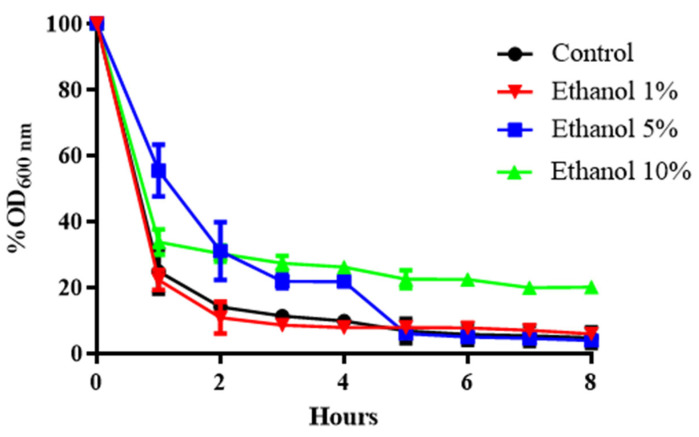 Figure 1
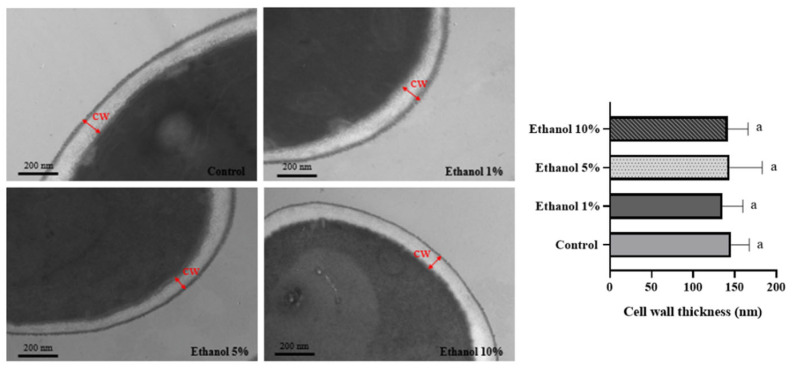 Figure 2
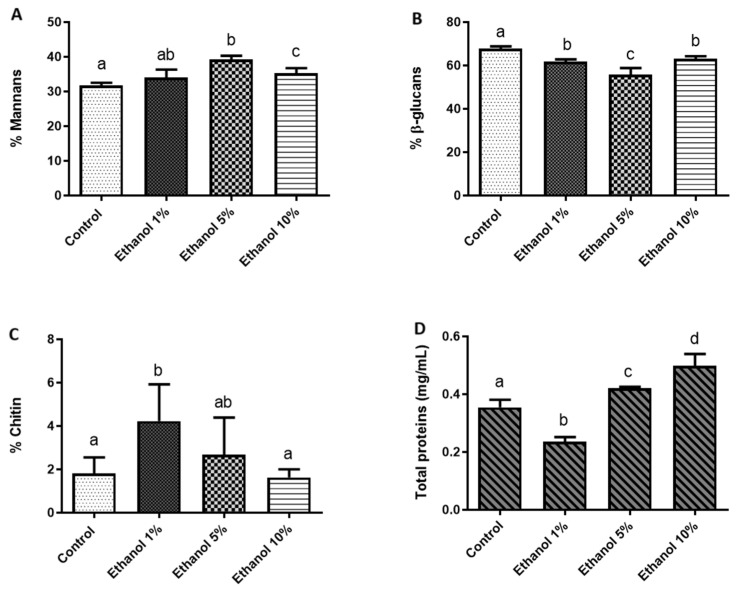 Figure 3
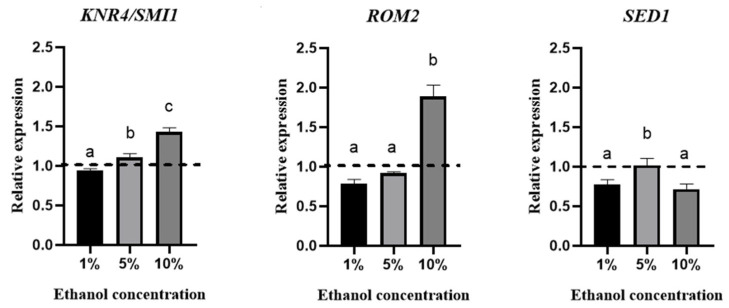 Figure 4
Peer Reviews
No public reviews on file for this paper yet. If you reviewed it on a platform where reviews are public (OpenReview, ICLR, NeurIPS, ICML), you can paste yours below so the community can read it here.
Videos
No videos yet. Explain this paper in a talk, walkthrough, or lecture? Add one.
Taxonomy
TopicsFungal and yeast genetics research · Fermentation and Sensory Analysis · Biofuel production and bioconversion