Discovery of Secondary Metabolites from the Sponge-Derived Fungus Aspergillus templicola
Kai Li, Yue Zhang, Lei Li, Sen Wang, Cili Wang, Pinglin Li

TL;DR
Researchers isolated new compounds from a sponge-derived fungus, some of which show anti-inflammatory and cancer-fighting properties.
Contribution
Discovery of four new cytochalasins and a novel cyclic pentapeptide from Aspergillus templicola.
Findings
Compound 2 showed strong anti-inflammatory activity in zebrafish assays.
Compounds 4 and 6 displayed modest cytotoxicity against human cancer cells.
Structures of new compounds were confirmed using advanced analytical methods.
Abstract
Combining biosynthetic gene cluster analysis with the OSMAC strategy, fractionation of the fermentation extract of Aspergillus templicola from the sponge Agelas sp. led to the isolation of four novel cytochalasins, colachalasins J–M (1–4), a novel cyclic pentapeptide, avellanin P (5), together with five known compounds (6–10). The structures of 1–9 were elucidated using spectroscopic data, single crystal X-ray diffraction, and Marfey’s analysis. Compound 2 exhibited potent anti-inflammatory activity in zebrafish assays. Additionally, Compounds 4 and 6 showed modest cytotoxicity against several human cancer cell lines with IC50 values ranging from 2.6 to 11.2 μm.
Genes, proteins, chemicals, diseases, species, mutations and cell lines named across the full text — each resolved to its canonical identifier and authoritative record.
Click any figure to enlarge with its caption.
 Figure 1
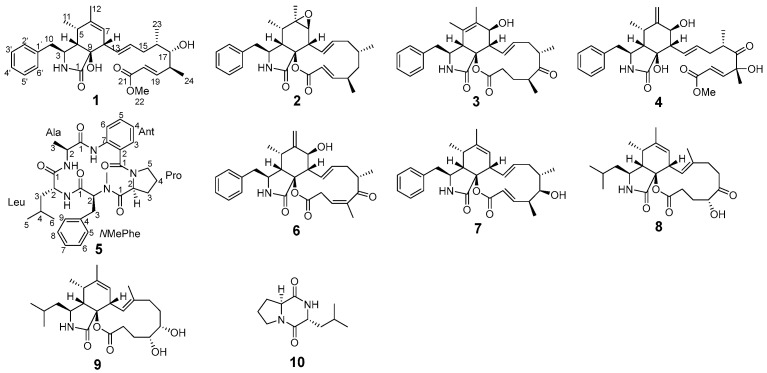 Figure 2
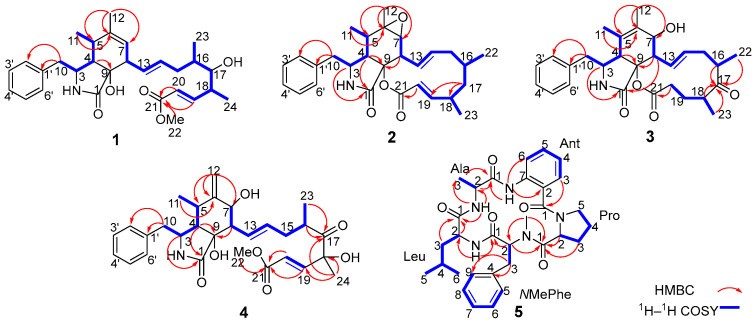 Figure 3
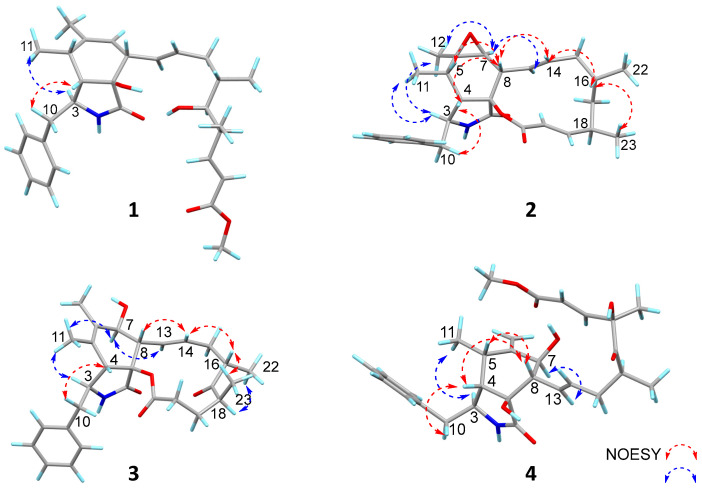 Figure 4
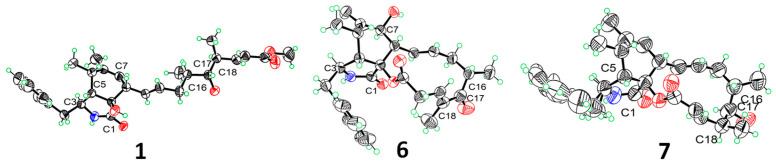 Figure 5
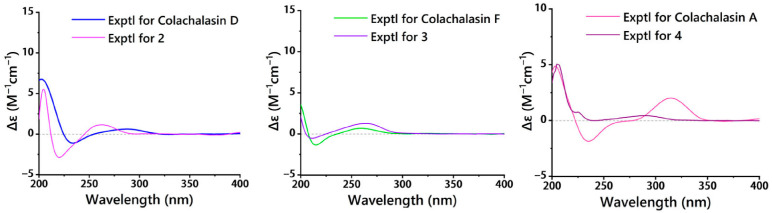 Figure 6
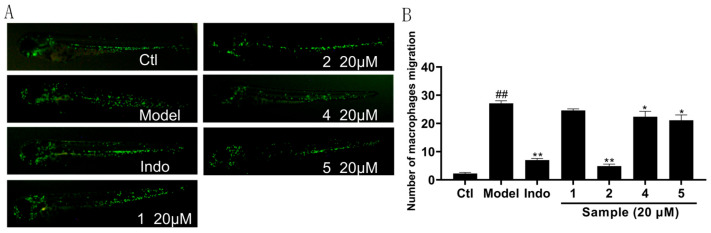 Figure 7
Peer Reviews
No public reviews on file for this paper yet. If you reviewed it on a platform where reviews are public (OpenReview, ICLR, NeurIPS, ICML), you can paste yours below so the community can read it here.
Videos
No videos yet. Explain this paper in a talk, walkthrough, or lecture? Add one.
Taxonomy
TopicsMicrobial Natural Products and Biosynthesis · Fungal Biology and Applications · Marine Sponges and Natural Products