Towards Improved Eye Movement Biometrics: Investigating New Features with Neural Networks
Katarzyna Harezlak, Ewa Pluciennik

TL;DR
This paper explores new eye movement features and neural networks to improve biometric identification accuracy.
Contribution
The study introduces two novel methods using LSTM and dense networks with different eye movement features for biometric identification.
Findings
An LSTM model achieved 96% accuracy using a 100-element time series feature vector.
A dense network achieved 76% accuracy using statistical features from the same time series.
Results were consistent across a three-year dataset with varying stimulus positions and time periods.
Abstract
Providing protected access to many everyday-used resources is becoming increasingly necessary. Research on applying eye movement for this purpose has been conducted for many years. However, due to technological advancements and the lack of stable solutions, subsequent explorations remain valid. The presented work is one of such studies. Two methods of biometric identification based on eye movements that utilize neural networks have been developed. In the first case, a feature vector was constructed from a 100-element time series depicting eye movement dynamics, which included velocity, acceleration, jerk, their point-to-point percentage changes, and frequency-domain representations. The same eye movement dynamic features were used in the second method, but this time, statistical values were calculated based on the previously defined time series. Long Short-Term Memory (LSTM) and dense…
Genes, proteins, chemicals, diseases, species, mutations and cell lines named across the full text — each resolved to its canonical identifier and authoritative record.
Click any figure to enlarge with its caption.
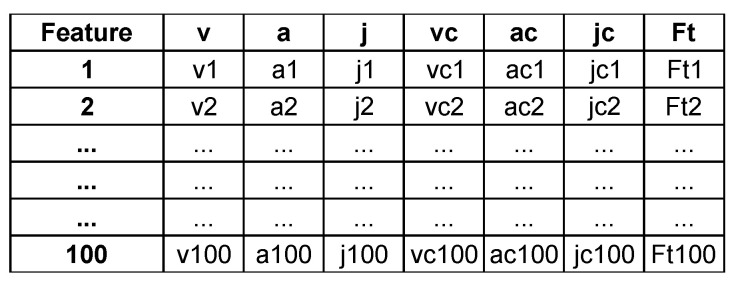 Figure 1
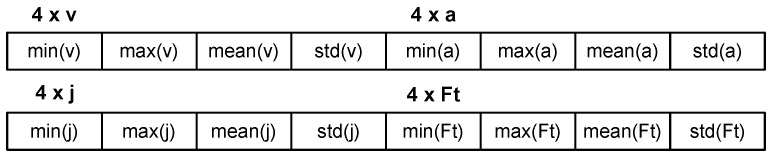 Figure 2
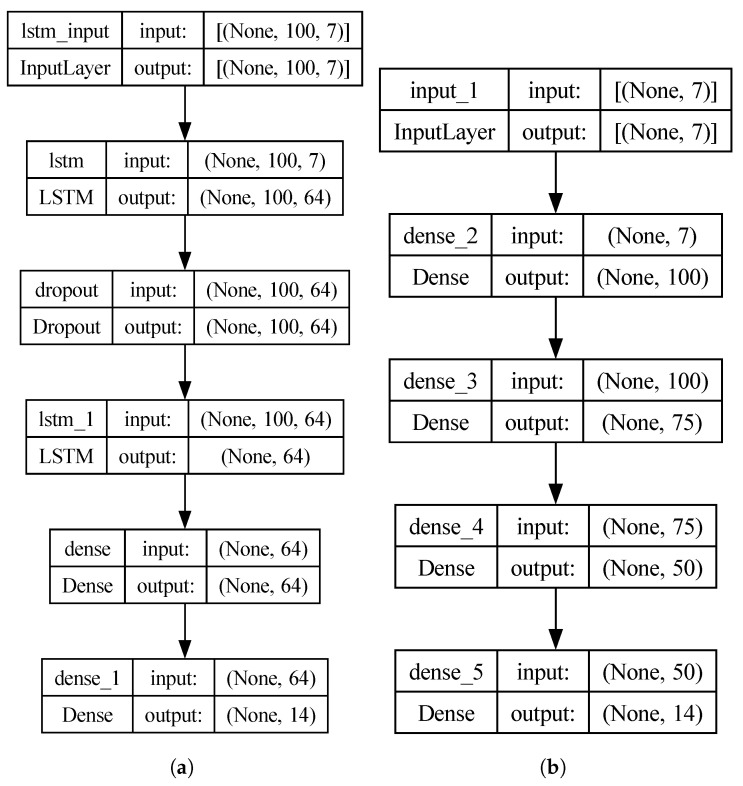 Figure 3
Peer Reviews
No public reviews on file for this paper yet. If you reviewed it on a platform where reviews are public (OpenReview, ICLR, NeurIPS, ICML), you can paste yours below so the community can read it here.
Videos
No videos yet. Explain this paper in a talk, walkthrough, or lecture? Add one.
Taxonomy
TopicsGaze Tracking and Assistive Technology · Glaucoma and retinal disorders · EEG and Brain-Computer Interfaces