Machine Learning-Based Prediction of Time Required to Reach the Melting Temperature of Metals in Domestic Microwaves Using Dimensionless Modeling and XGBoost
Juan José Moreno Labella, Milagrosa González Fernández de Castro, Víctor Saiz Sevilla, Miguel Panizo Laiz, Yolanda Martín Álvarez

TL;DR
This paper introduces a machine learning model to predict how long it takes for metals to melt in a microwave, using a novel approach that is accurate and cost-effective for educational and research purposes.
Contribution
A novel hybrid model combining dimensionless modeling and XGBoost for accurate melting time prediction in domestic microwaves is proposed.
Findings
The model achieves high accuracy with a relative error below 5% and strong metrics (MAE = 4.8 s, RMSE = 6.1 s, R2 = 0.9996).
The model generalizes well to microwave powers between 600–1100 W without additional experiments.
A Python application with a graphical interface is developed for educational and research use.
Abstract
A novel and cost-effective methodology is introduced for the precise prediction of the melting time of metals and alloys in a 700 W domestic microwave oven, using a hybrid SiC–graphite susceptor to ensure efficient heating without direct interaction with microwaves. The study includes experimental trials with multiple alloys (Sn–Bi, Zn, Zamak, and Al–Si, among others) and variable masses, whose results made it possible to construct a dimensionless model, trained with XGBoost on easily measurable thermophysical properties (specific heat, density, thermal conductivity, mass, and melting temperature). The model achieves high accuracy, with a relative error below 5%, and metrics of MAE = 4.8 s, RMSE = 6.1 s, and R2 = 0.9996. The generalization of the model to different microwave powers (600–1100 W) is also validated through analytical adjustment, without the need for additional experiments.…
Genes, proteins, chemicals, diseases, species, mutations and cell lines named across the full text — each resolved to its canonical identifier and authoritative record.
Click any figure to enlarge with its caption.
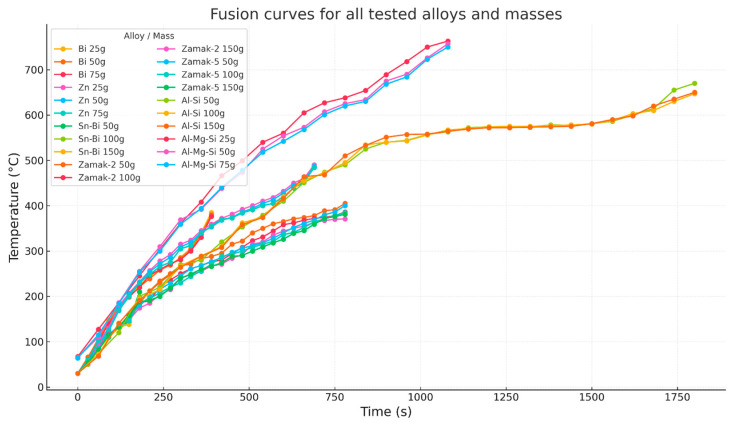 Figure 1
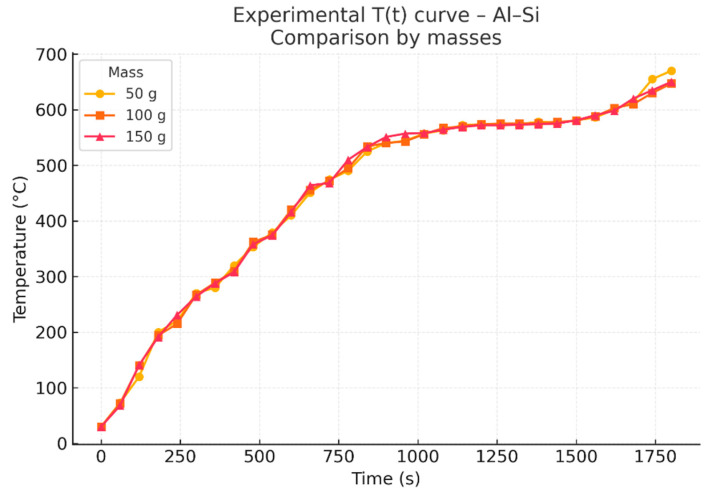 Figure 2
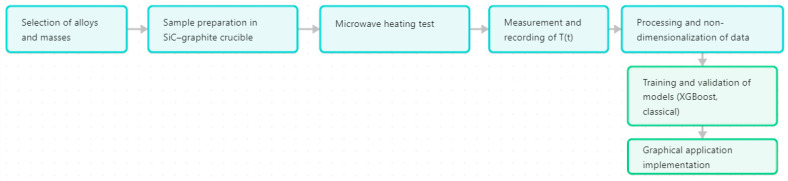 Figure 3
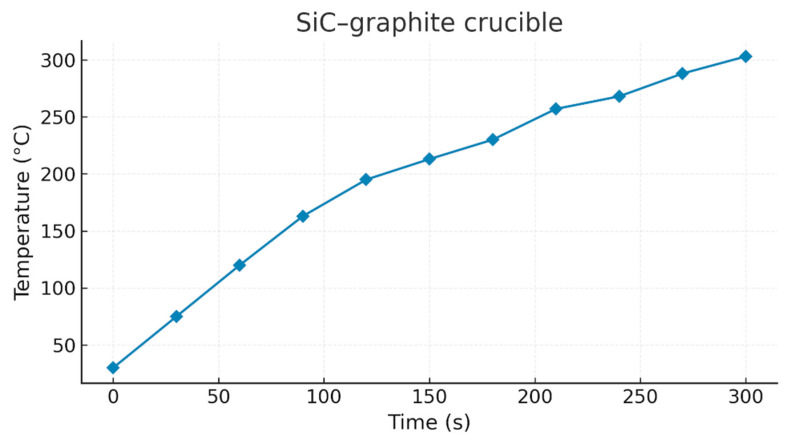 Figure 4
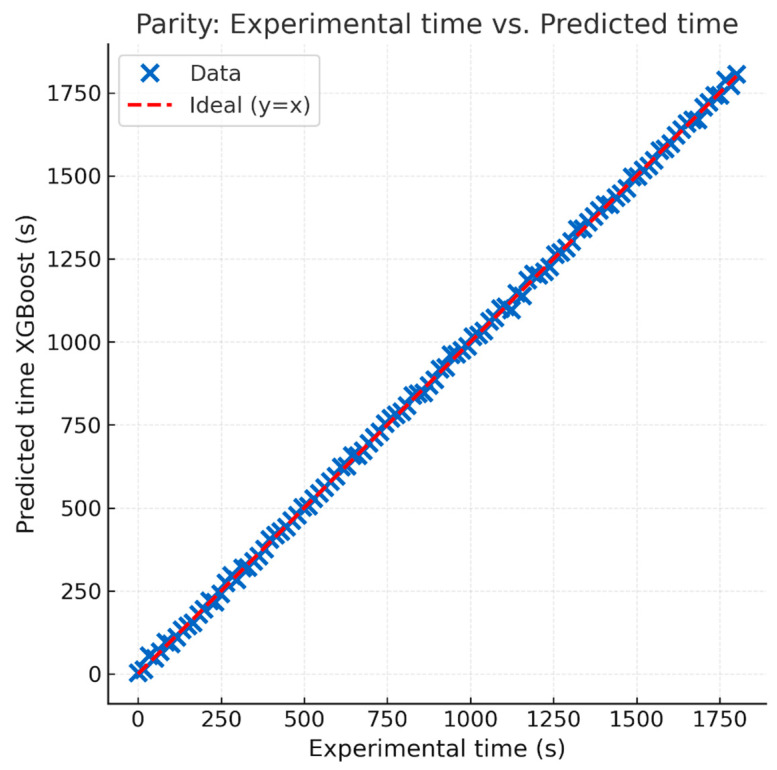 Figure 5
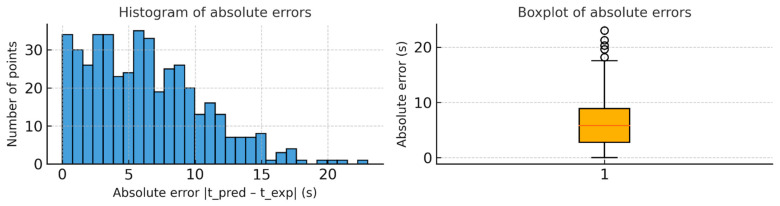 Figure 6
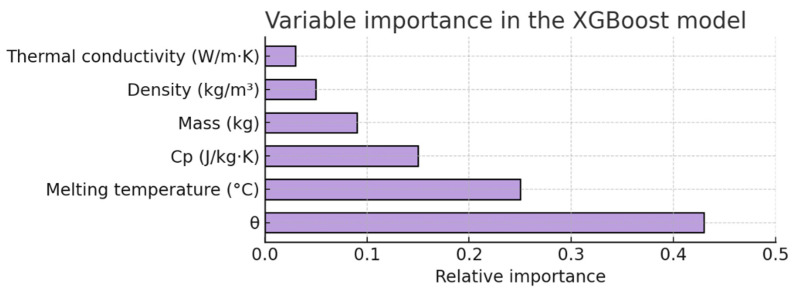 Figure 7
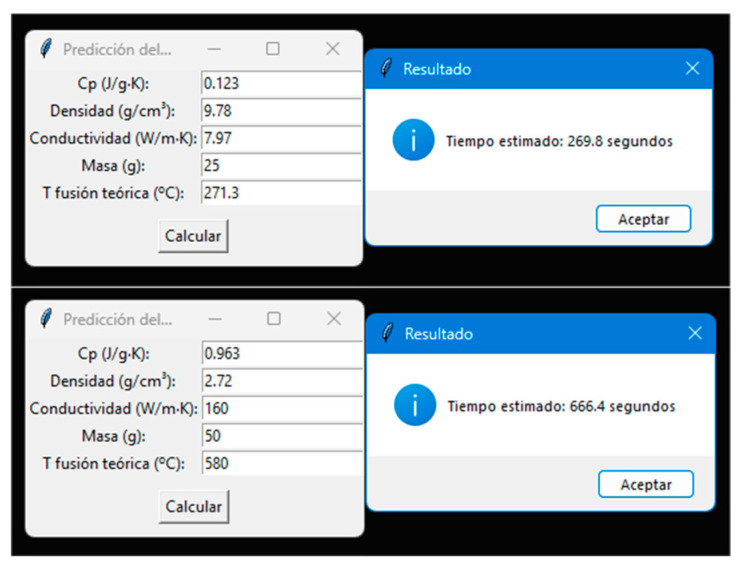 Figure 8
Peer Reviews
No public reviews on file for this paper yet. If you reviewed it on a platform where reviews are public (OpenReview, ICLR, NeurIPS, ICML), you can paste yours below so the community can read it here.
Videos
No videos yet. Explain this paper in a talk, walkthrough, or lecture? Add one.
Taxonomy
TopicsMachine Learning in Materials Science