Long-Term Effectiveness of Onabotulinum Toxin-A in a Combined Total Endoscopic Management of Pediatric Vesicoureteral Reflux in Neurogenic Bladder Dysfunction
Claudio Paratore, Chiara Pellegrino, Noemi Deanesi, Rebecca Pulvirenti, Maria Luisa Capitanucci, Giovanni Mosiello

TL;DR
This study shows that a minimally invasive treatment combining two injections can help manage a urinary condition in children with neurogenic bladder dysfunction, though results vary and some may need further surgery.
Contribution
The study provides long-term data on the effectiveness of a combined endoscopic treatment for vesicoureteral reflux in children with neurogenic bladder dysfunction.
Findings
TEM was effective in 57.9% of patients, with VUR resolution in 58.3% of treated ureters.
Non-responders often required additional surgeries like bladder augmentation or ureteral reimplantation.
All responders needed repeated Onabotulinum Toxin-A injections for continued effectiveness.
Abstract
Vesicoureteral reflux (VUR) management in children with neurogenic bladder dysfunction (NBD) remains a clinical challenge. Total endoscopic management (TEM), combining intradetrusor Onabotulinum Toxin-A (BTX-A) and subureteric dextranomer/hyaluronic acid (Deflux(R)) injection, offers a minimally invasive alternative. The aim of this retrospective study is to evaluate the long-term effectiveness of TEM. Inclusion criteria: symptomatic II–V grade VUR (also I in bilateral VUR) in NBD children with follow-up ≥12 months. Nineteen patients were enrolled, 24 ureters (grade I–II: 2, grade III–V: 22); 5 patients (20.8%) had bilateral VUR. Mean age at surgery: 7.6 years (1.3–17). No complications were reported. TEM was effective in 11 patients (57.9%), 3/11 requiring a second TEM treatment. VUR resolution appeared in 14 ureters (58.3%), downgrading in 6 (42.9%), persistence in 4 (28.6%). Among…
Genes, proteins, chemicals, diseases, species, mutations and cell lines named across the full text — each resolved to its canonical identifier and authoritative record.
Click any figure to enlarge with its caption.
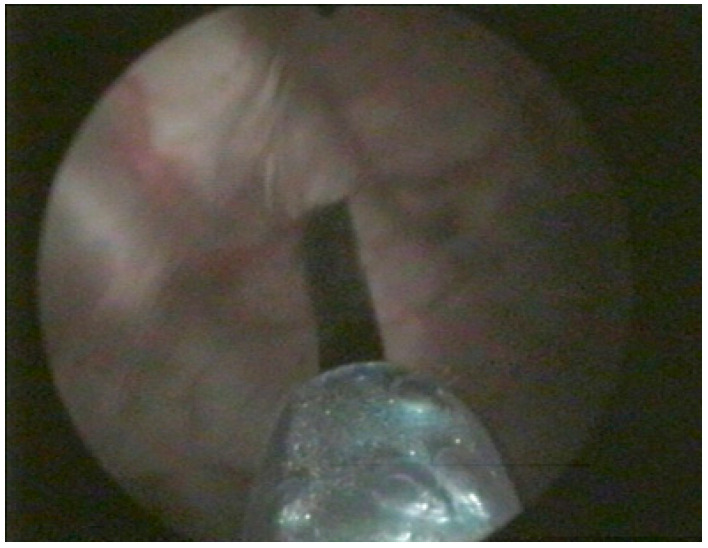 Figure 1
Peer Reviews
No public reviews on file for this paper yet. If you reviewed it on a platform where reviews are public (OpenReview, ICLR, NeurIPS, ICML), you can paste yours below so the community can read it here.
Videos
No videos yet. Explain this paper in a talk, walkthrough, or lecture? Add one.
Taxonomy
TopicsUrinary Bladder and Prostate Research · Pediatric Urology and Nephrology Studies · Urological Disorders and Treatments