Linear Actuation of Dielectrophoretic Formed Multi-Walled Carbon Nanotube Fiber with Carbide-Derived Carbon in Polar Aprotic and Polar Protic Solvents
Chau B. Tran, Quoc Bao Le, Rudolf Kiefer

TL;DR
This study shows that adding carbide-derived carbon to carbon nanotube fibers improves their actuation and energy storage performance in different solvents.
Contribution
The novel contribution is the enhanced linear actuation and energy storage in CNT fibers with CDC in polar solvents.
Findings
CNTCDC fibers showed better expansion and stress in polar aprotic and protic solvents compared to pristine CNT fibers.
CNTCDC fibers achieved a high specific capacitance of 223 ± 17 F g−1 in aqueous media with good capacity retention.
SEM, EDX, and Raman confirmed the structural and compositional properties of the CNTCDC fibers.
Abstract
Carbon nanotube (CNT) fiber research focuses on developing functional fabrics with dual or multifunctional capabilities. This study investigates CNT fibers fabricated via dielectrophoresis (DEP) with the incorporation of 10 wt.% carbide-derived carbon (CDC), referred to as CNTCDC fibers. The linear actuation behavior of the CNT and the CNTCDC fibers is compared using identical electrolyte concentrations in both a polar aprotic solvent (propylene carbonate, PC) and a polar protic solvent (aqueous solution, aq). Electromechanical deformation (EMD) is studied through cyclic voltammetry and chronoamperometry. The CNTCDC fiber outperformed the pristine CNT fiber, exhibiting primary expansion during discharge in PC (stress: 1.64 kPa, strain: 0.1%) and during charge in water (stress: 1.32 kPa, strain: 0.047%). By contrast, the pristine CNT fibers showed mixed actuation responses in both…
Genes, proteins, chemicals, diseases, species, mutations and cell lines named across the full text — each resolved to its canonical identifier and authoritative record.
Click any figure to enlarge with its caption.
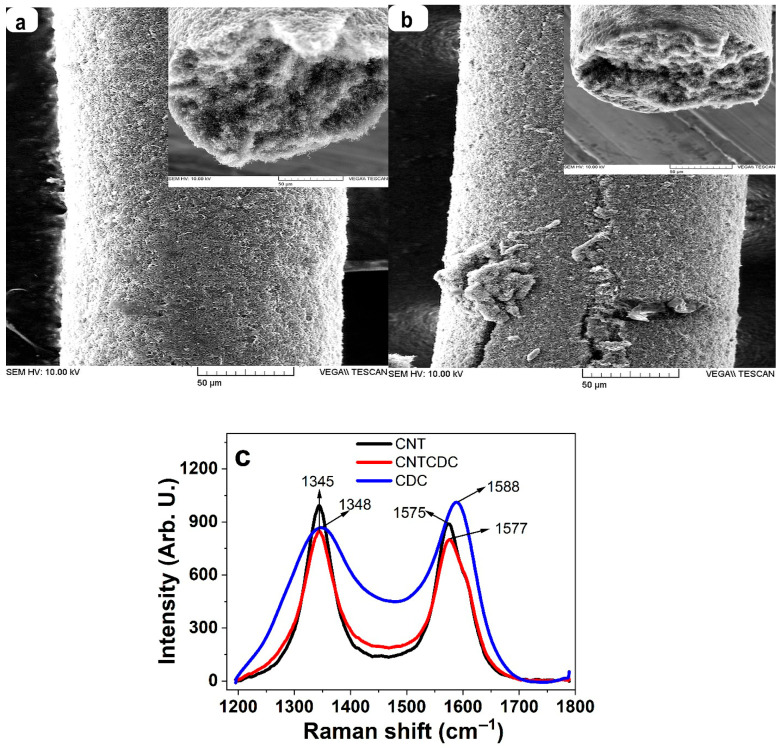 Figure 1
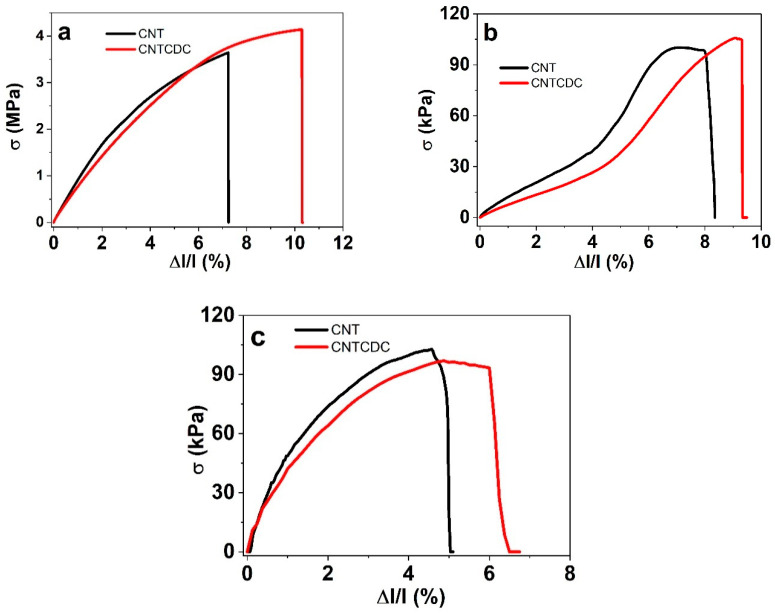 Figure 2
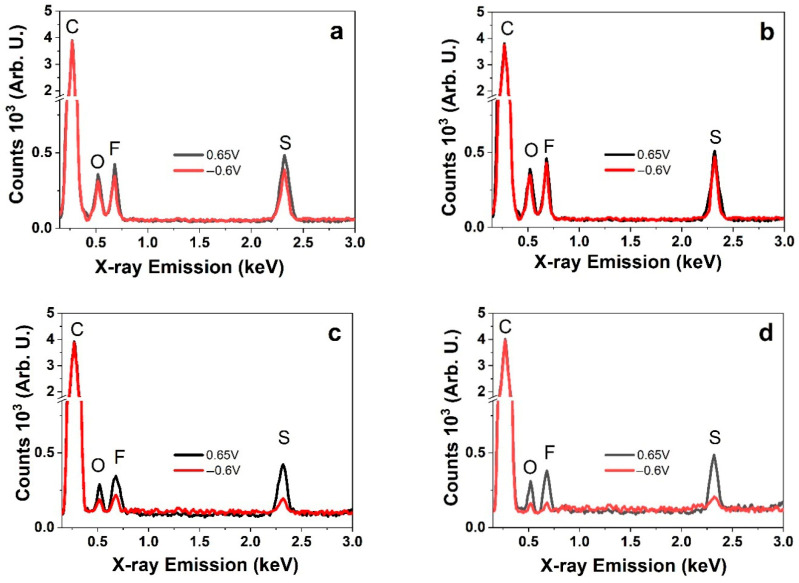 Figure 3
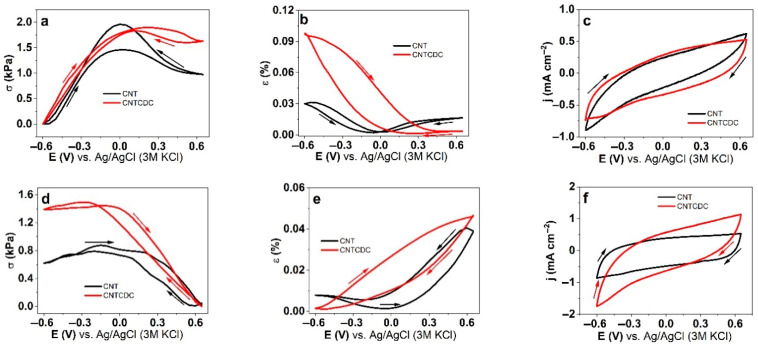 Figure 4
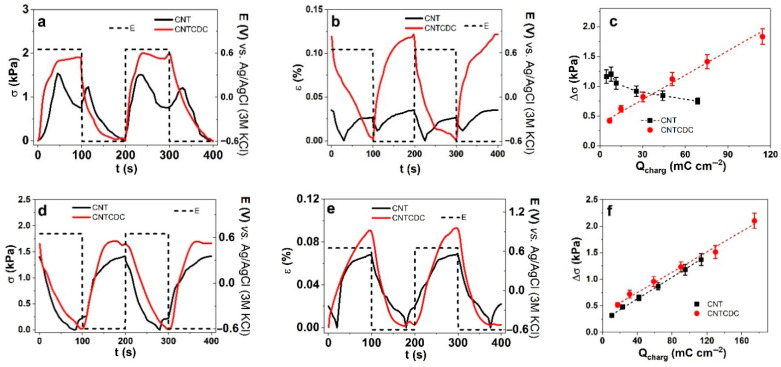 Figure 5
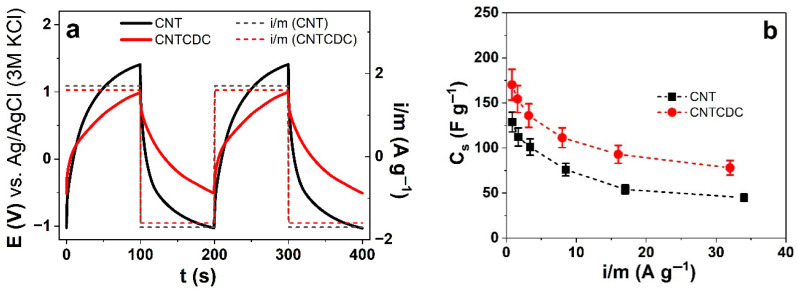 Figure 6
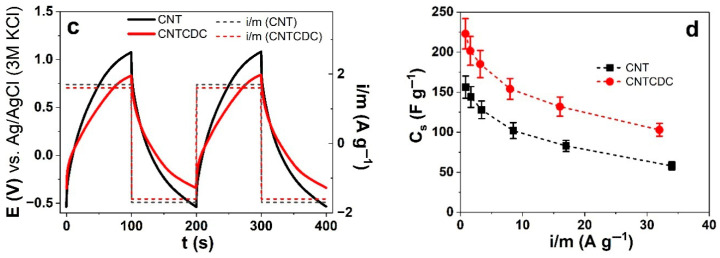 Figure 7
Peer Reviews
No public reviews on file for this paper yet. If you reviewed it on a platform where reviews are public (OpenReview, ICLR, NeurIPS, ICML), you can paste yours below so the community can read it here.
Videos
No videos yet. Explain this paper in a talk, walkthrough, or lecture? Add one.
Taxonomy
TopicsSupercapacitor Materials and Fabrication · Advanced Sensor and Energy Harvesting Materials · Conducting polymers and applications