Phylogroup Homeostasis of Escherichia coli in the Human Gut Reflects the Physiological State of the Host
Maria S. Frolova, Sergey S. Kiselev, Valery V. Panyukov, Olga N. Ozoline

TL;DR
This study shows how different types of Escherichia coli in the gut change based on the health and treatments of the host, offering new insights into gut microbiome dynamics.
Contribution
The study introduces a novel application of k-mer barcoding to track E. coli phylogroups in gut microbiomes and links their abundance to host physiological states.
Findings
E. coli phylogroups show bidirectional abundance shifts in response to host physiological changes.
Phylogroup patterns can statistically distinguish between different host physiological states using machine learning.
Correlations with Prevotella and Bacteroides suggest E. coli phylogroups influence gut microbial networks.
Abstract
The advent of alignment-free k-mer barcoding has revolutionized taxonomic analysis, enabling bacterial identification at phylogroup resolution within natural communities. We applied this approach to characterize Escherichia coli intraspecific diversity in human gut microbiomes using publicly available datasets representing diverse human physiological states. By estimating the relative abundance of eight E. coli phylogroups defined by their 18-mer markers in 558 fecal samples, we compared their distribution between gut microbiomes of healthy individuals, patients with chronic bowel diseases and volunteers subjected to various external interventions. Across all datasets, phylogroups exhibited bidirectional abundance shifts in response to host physiological changes, indicating an inherent bimodality in their adaptive strategies. Correlation analysis of phylogroup persistence revealed…
Genes, proteins, chemicals, diseases, species, mutations and cell lines named across the full text — each resolved to its canonical identifier and authoritative record.
Click any figure to enlarge with its caption.
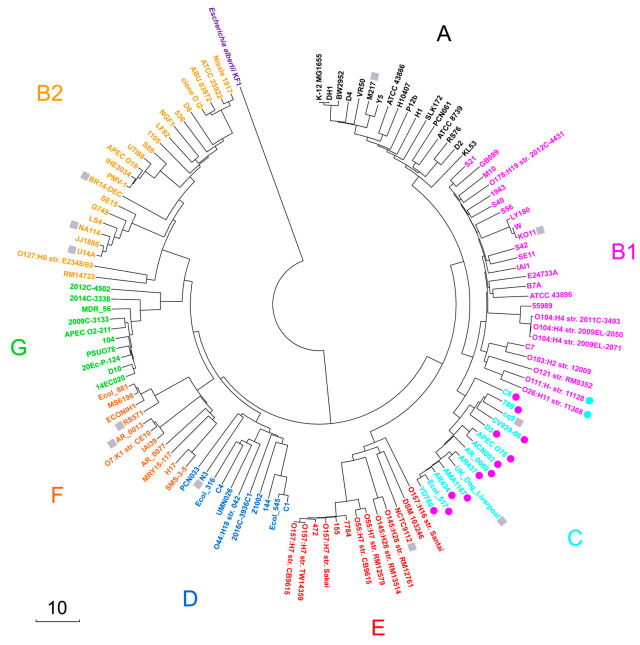 Figure 1
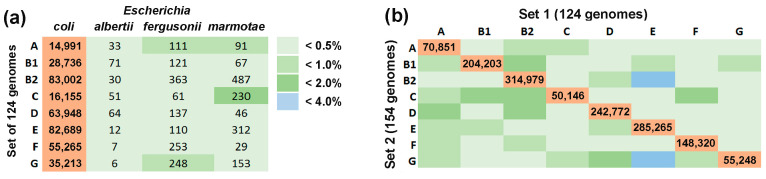 Figure 2
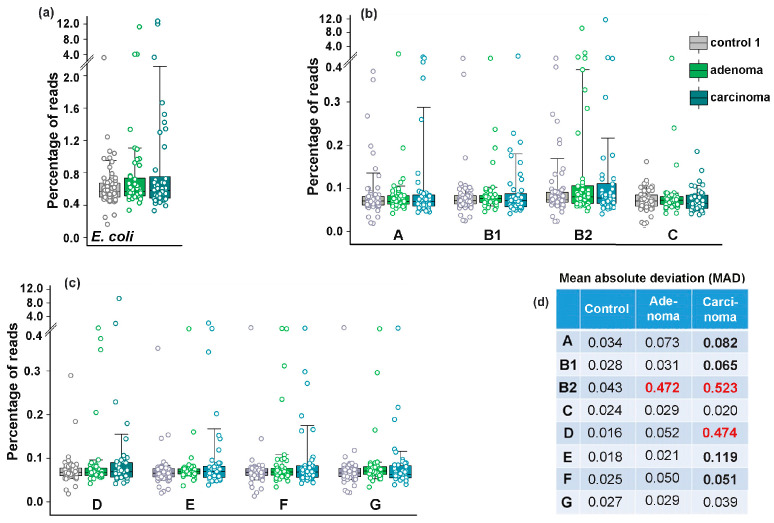 Figure 3
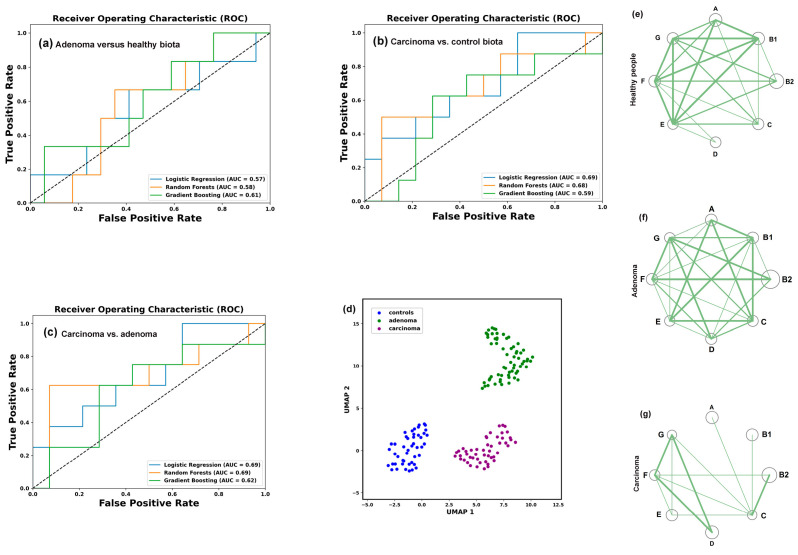 Figure 4
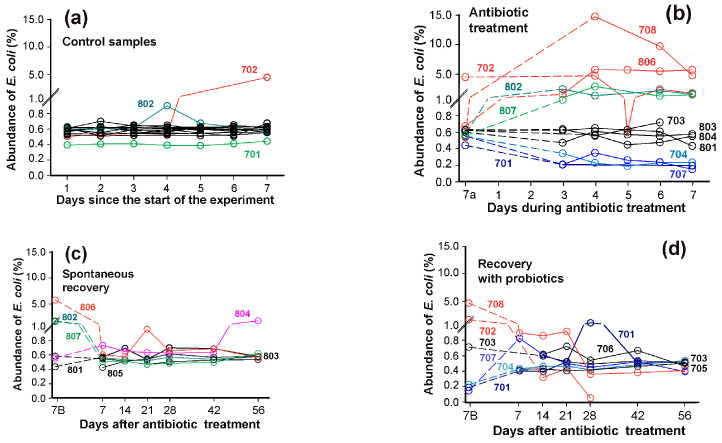 Figure 5
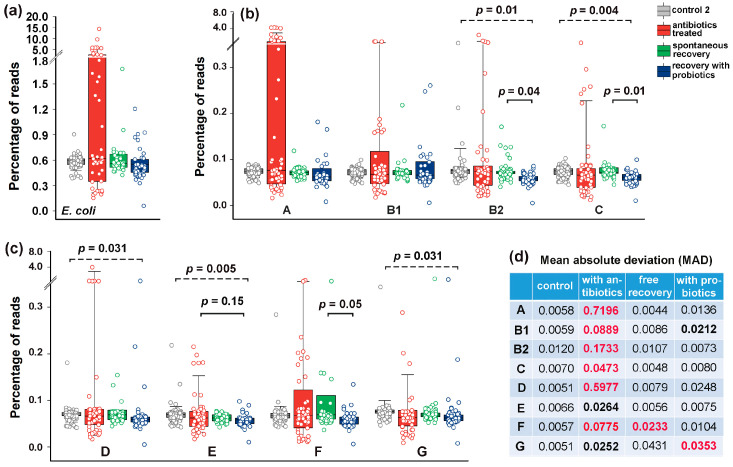 Figure 6
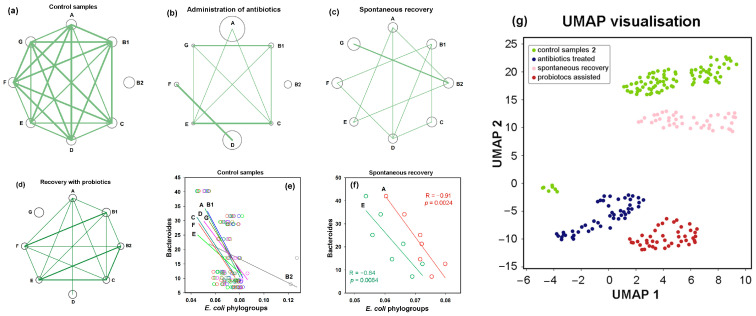 Figure 7
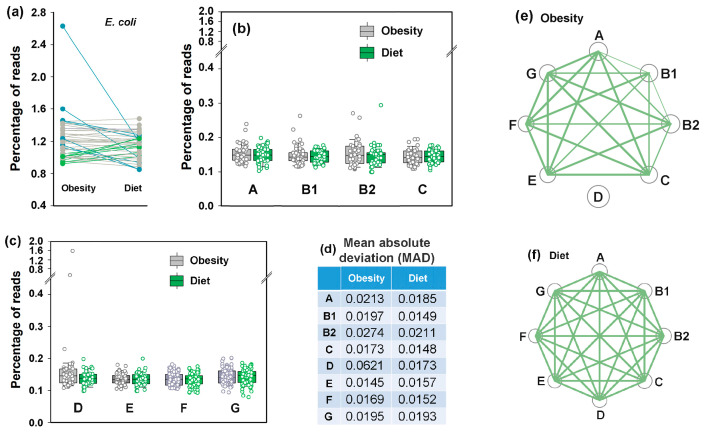 Figure 8
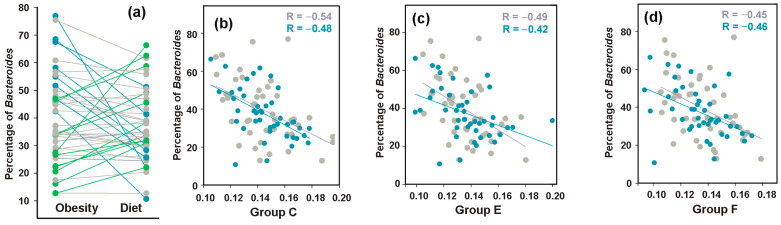 Figure 9
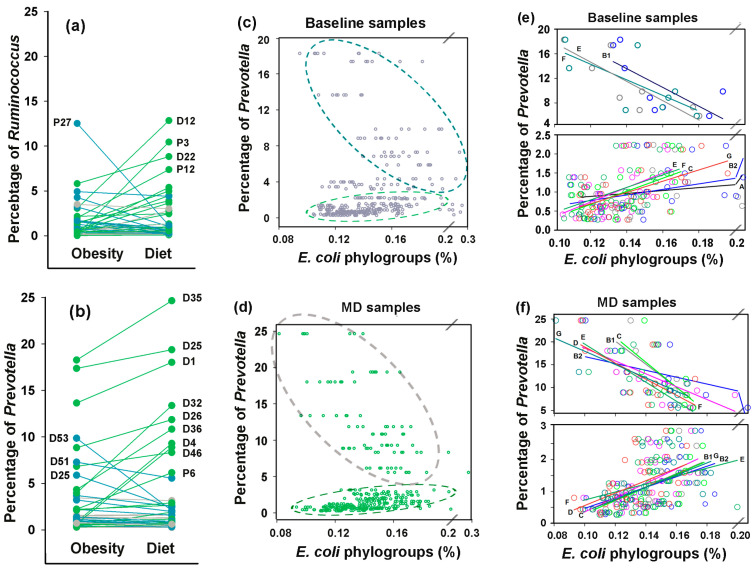 Figure 10
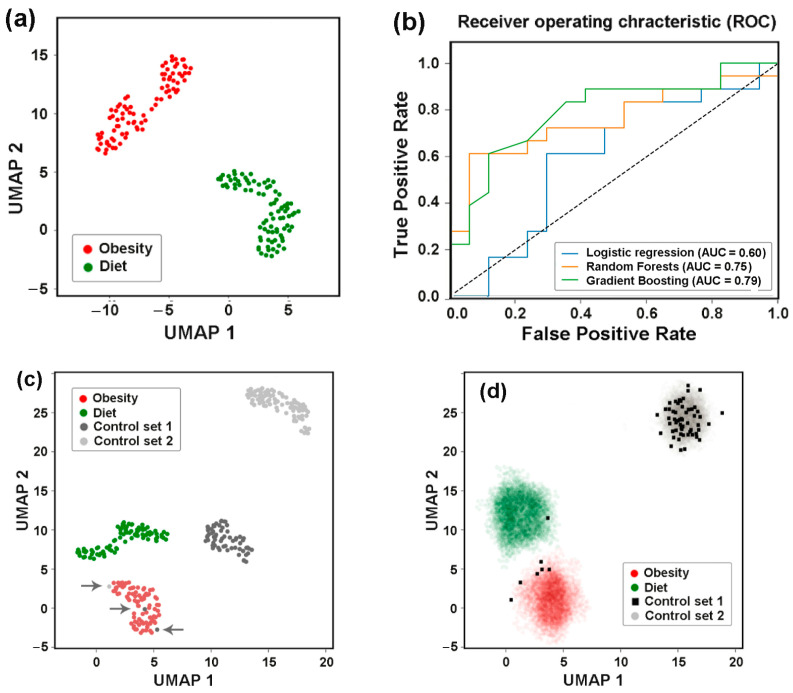 Figure 11
Peer Reviews
No public reviews on file for this paper yet. If you reviewed it on a platform where reviews are public (OpenReview, ICLR, NeurIPS, ICML), you can paste yours below so the community can read it here.
Videos
No videos yet. Explain this paper in a talk, walkthrough, or lecture? Add one.
Taxonomy
TopicsGut microbiota and health · Genomics and Phylogenetic Studies · Evolution and Genetic Dynamics