Exploratory Metabolomic and Lipidomic Profiling in a Manganese-Exposed Parkinsonism-Affected Population in Northern Italy
Freeman Lewis, Daniel Shoieb, Somaiyeh Azmoun, Elena Colicino, Yan Jin, Jinhua Chi, Hari Krishnamurthy, Donatella Placidi, Alessandro Padovani, Andrea Pilotto, Fulvio Pepe, Marinella Tula, Patrizia Crippa, Xuexia Wang, Haiwei Gu, Roberto Lucchini

TL;DR
This study finds that manganese exposure and Parkinsonism are linked to specific changes in blood metabolites and lipids, suggesting potential biomarkers for environmentally caused Parkinsonism.
Contribution
The study identifies novel metabolomic and lipidomic biomarkers associated with manganese exposure and Parkinsonism in a population-based setting.
Findings
Whole-blood manganese levels were significantly higher in Parkinsonism cases compared to controls.
Metabolomic changes included elevated 3-sulfoxy-L-tyrosine and disrupted glutamate metabolism in Parkinsonism cases.
Lipidomic profiles showed altered triacylglycerols and phosphatidylethanolamines, with enriched ferroptosis and endocannabinoid signaling.
Abstract
Background/Objectives: Chronic manganese (Mn) exposure is a recognized environmental contributor to Parkinsonian syndromes, including Mn-induced Parkinsonism (MnIP). This study aimed to evaluate whole-blood Mn levels and investigate disease/exposure-status-related alterations in metabolomic and lipidomic profiles. Methods: A case–control study (N = 97) was conducted in Brescia, Italy, stratifying participants by Parkinsonism diagnosis and residential Mn exposure. Whole-blood Mn was quantified using ICP-MS. Untargeted metabolomic and lipidomic profiling was conducted using LC-MS. Statistical analyses included Mann–Whitney U tests, conditional logistic regression, ANCOVA, and pathway analysis. Results: Whole-blood Mn levels were significantly elevated in Parkinsonism cases vs. controls (median: 1.55 µg/dL [IQR: 0.75] vs. 1.02 µg/dL [IQR: 0.37]; p = 0.001), with Mn associated with…
Genes, proteins, chemicals, diseases, species, mutations and cell lines named across the full text — each resolved to its canonical identifier and authoritative record.
Click any figure to enlarge with its caption.
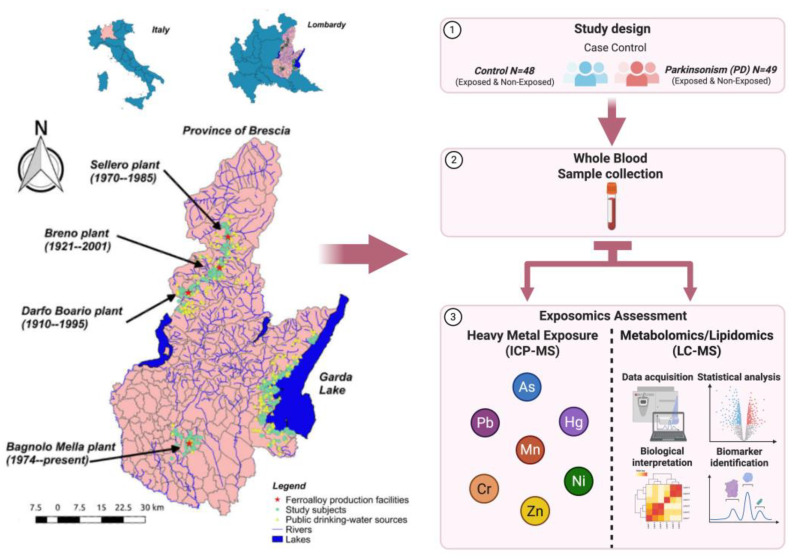 Figure 1
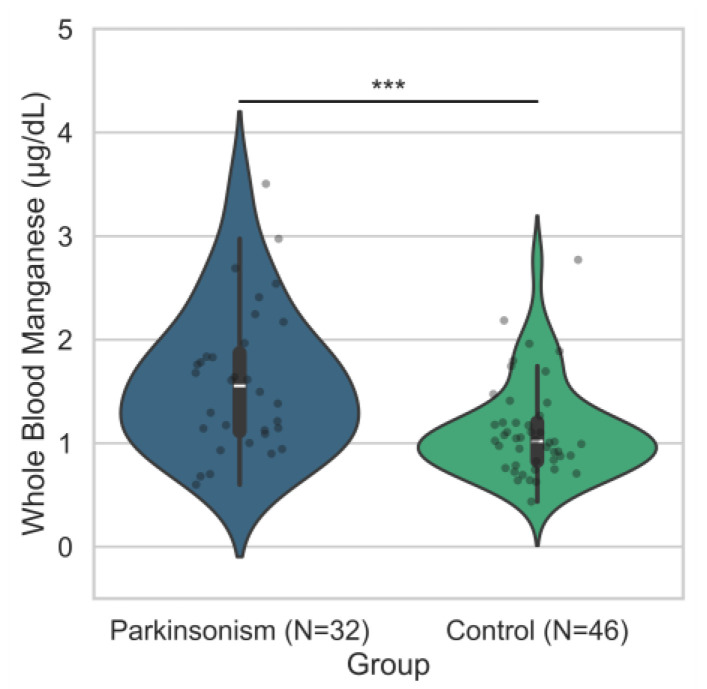 Figure 2
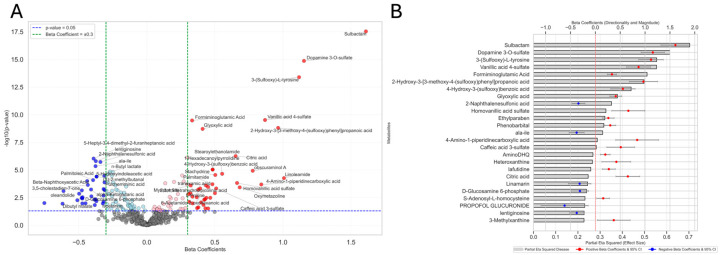 Figure 3
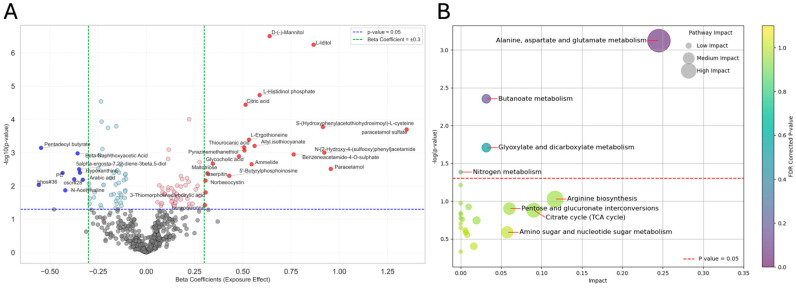 Figure 4
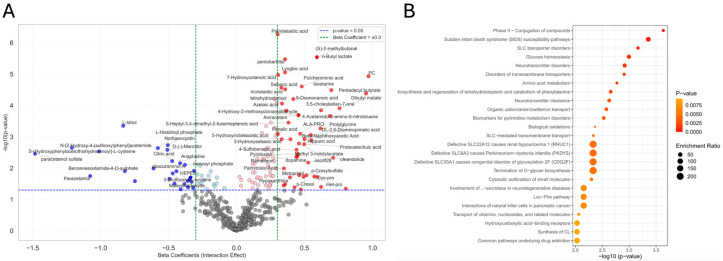 Figure 5
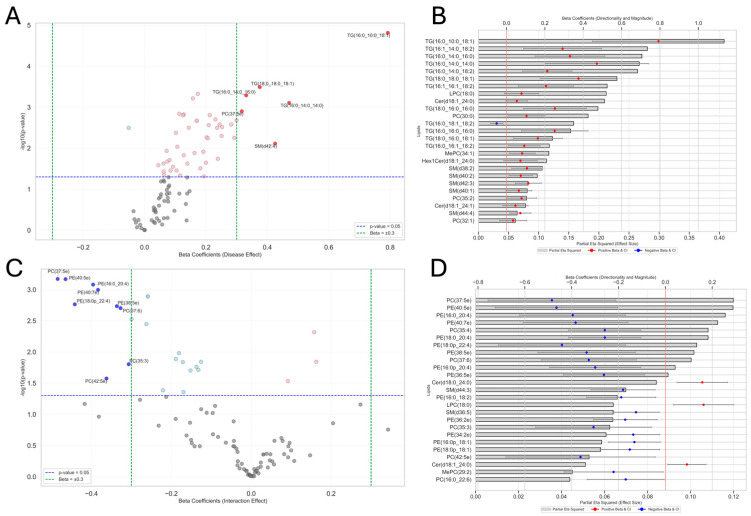 Figure 6
Peer Reviews
No public reviews on file for this paper yet. If you reviewed it on a platform where reviews are public (OpenReview, ICLR, NeurIPS, ICML), you can paste yours below so the community can read it here.
Videos
No videos yet. Explain this paper in a talk, walkthrough, or lecture? Add one.
Taxonomy
TopicsParkinson's Disease Mechanisms and Treatments · Metabolomics and Mass Spectrometry Studies · Alzheimer's disease research and treatments