Abundance and Diversity of Endolithic Fungal Assemblages in Granite and Sandstone from Victoria Land, Antarctica
Gerardo A. Stoppiello, Carmen Del Franco, Lucia Muggia, Caterina Ripa, Laura Selbmann

TL;DR
This study explores how different rock types in Antarctica affect the diversity and abundance of fungi living inside them.
Contribution
The paper is the first to investigate how rock typology influences fungal endolithic colonization in Antarctica.
Findings
Granite supports more diverse fungal communities due to structural heterogeneity and fissures.
Sandstone hosts specialized fungi adapted to pore spaces, with distinct dominant species.
Geographic location and substrate type both influence fungal community composition differently.
Abstract
The Antarctic continent hosts highly specialized microbial ecosystems, particularly within endolithic habitats, where microorganisms colonize the interior of rocks in order to withstand conditions that otherwise cannot support life. Previous studies have characterized the composition and abundance of these communities, as well as their different degrees of stress power; furthermore, the effect of different lithic substrates in shaping their associated bacterial assemblages has been extensively investigated. By contrast, how rock typology exerts fungal endolithic colonization still remains unexplored. In this study, we have considered and compared fungal communities inhabiting granite and sandstone rocks collected across Victoria Land, Antarctica, using high-throughput sequencing of the Internal Transcribed Spacer (ITS) region. Our analyses revealed that both rock types were dominated by…
Genes, proteins, chemicals, diseases, species, mutations and cell lines named across the full text — each resolved to its canonical identifier and authoritative record.
Click any figure to enlarge with its caption.
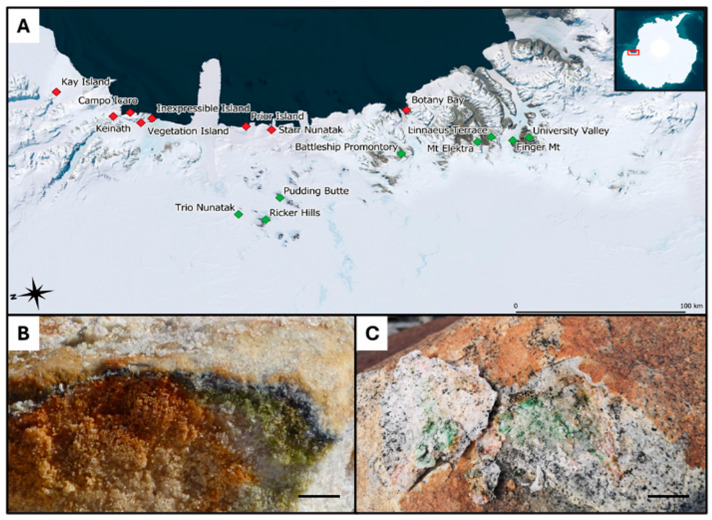 Figure 1
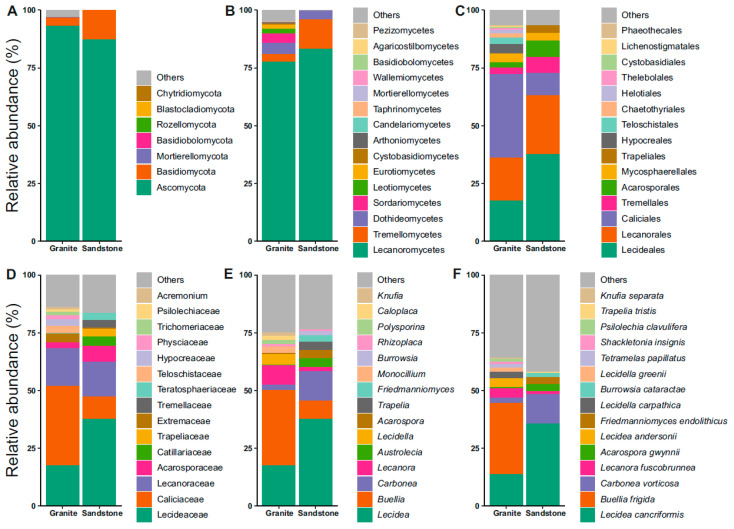 Figure 2
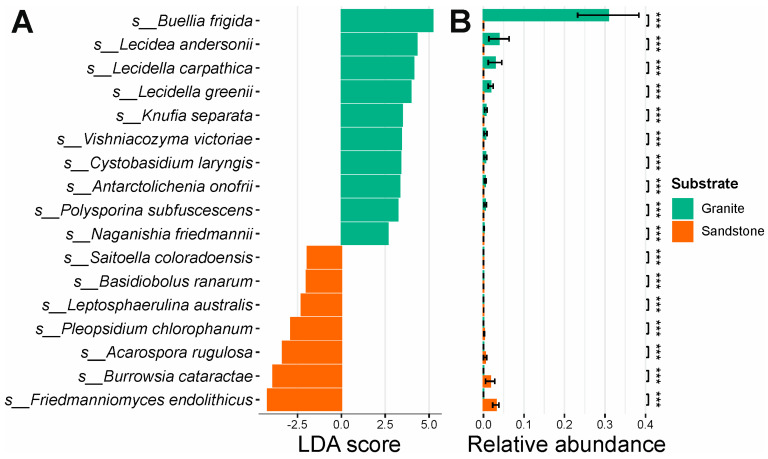 Figure 3
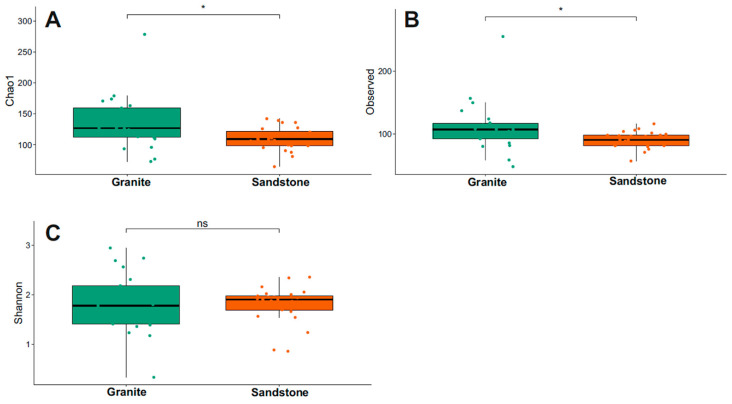 Figure 4
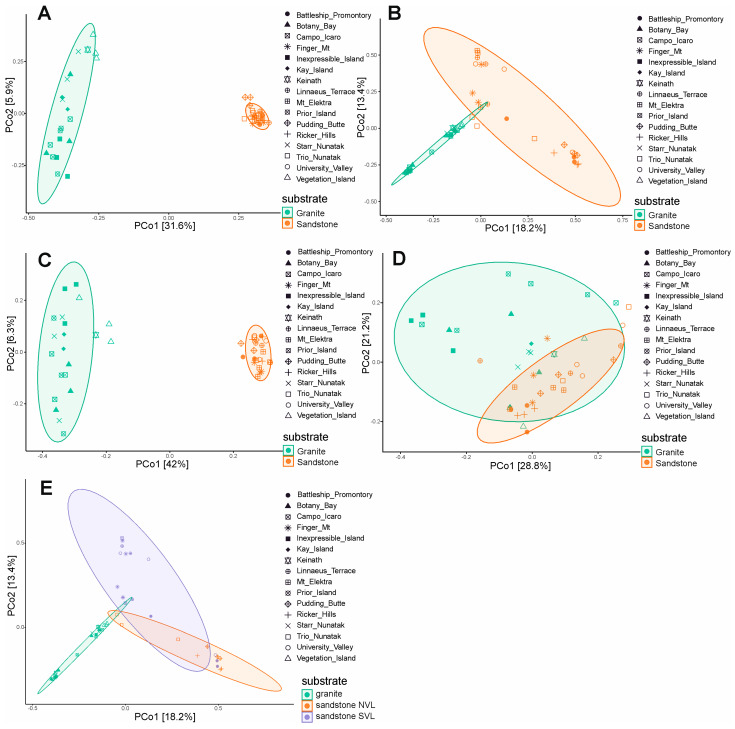 Figure 5
Peer Reviews
No public reviews on file for this paper yet. If you reviewed it on a platform where reviews are public (OpenReview, ICLR, NeurIPS, ICML), you can paste yours below so the community can read it here.
Videos
No videos yet. Explain this paper in a talk, walkthrough, or lecture? Add one.
Taxonomy
TopicsPolar Research and Ecology · Microbial Community Ecology and Physiology · Lichen and fungal ecology