From Challenge to Cure: A Look at Feline Infectious Peritonitis and Emerging Treatment Strategies and Breakthroughs
Sheema Mir, Mykah Peters, Gloria Penny, Alexis Agsaoa, Mohammad Mir

TL;DR
Feline infectious peritonitis (FIP) is a deadly disease in cats caused by a mutated coronavirus, and this review highlights the need for better detection, treatment, and prevention strategies.
Contribution
This review emphasizes the gaps in FIP understanding and the urgent need for improved diagnostics and therapies.
Findings
FIP is caused by a mutated form of feline coronavirus, which is usually harmless.
Current diagnostic and treatment options for FIP are limited and require further research.
The review highlights the importance of continued research to improve FIP outcomes.
Abstract
Feline infectious peritonitis (FIP) is a deadly disease that affects cats and is caused by a mutation of feline coronavirus, a virus that many cats carry without ever falling seriously ill. In rare cases, the virus changes inside the cat’s body and leads to FIP, which is often fatal. This article looks at how FIP develops, how it spreads between cats, and why it is so hard to diagnose. It also covers the current tools and treatments available to help cats with FIP, though they are still limited. The review emphasizes how much more we need to learn about this disease and highlights the importance of research in finding better ways to detect, treat, and hopefully prevent FIP in the future. Background: Feline infectious peritonitis (FIP) is a complex and devastating viral disease in cats caused by feline coronavirus (FCoV). While FCoV is commonly encountered and typically innocuous, the…
Genes, proteins, chemicals, diseases, species, mutations and cell lines named across the full text — each resolved to its canonical identifier and authoritative record.
Click any figure to enlarge with its caption.
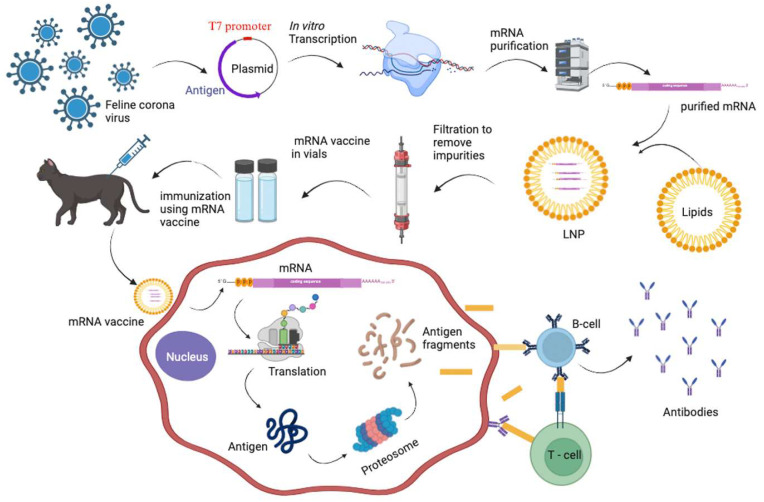 Figure 1
Peer Reviews
No public reviews on file for this paper yet. If you reviewed it on a platform where reviews are public (OpenReview, ICLR, NeurIPS, ICML), you can paste yours below so the community can read it here.
Videos
No videos yet. Explain this paper in a talk, walkthrough, or lecture? Add one.
Taxonomy
TopicsAnimal Virus Infections Studies