Paeoniflorin Improves Stroke by Modulating the ESR1 Pathway: Data Mining and Validation Based on Network Approaches
Zhenshan Sun, Junjie Peng, Jiangbangrui Chu, Zhengyi Wang, Kefan Hu, Zhanpeng Feng, Mingfeng Zhou, Xingqin Wang, Songtao Qi, Zhu Zhang, Ken Kin Lam Yung

TL;DR
This study identifies paeoniflorin as a key compound in traditional Chinese herbs that may help treat stroke by boosting ESR1 protein levels.
Contribution
The study introduces a new method combining data mining and experimental validation to identify stroke treatment patterns in traditional Chinese herbs.
Findings
Seven core herbs were identified as key for stroke treatment, including Angelicae Sinensis Radix and Radix Paeoniae Rubra.
Paeoniflorin was found to increase ESR1 protein levels and reduce cell apoptosis in ischemic conditions.
Molecular docking confirmed paeoniflorin's interaction with ESR1 as a key mechanism for stroke treatment.
Abstract
Aim of the study: Traditional Chinese herbs have a unique therapeutic effect on stroke and numerous successful clinical cases. However, these clinical cases are highly dispersed, creating challenges for translational research. This study employs a new paradigm to identify treatment patterns and the active compound interactions contained within these clinical cases, with experimental validation after target screening. Methods and Materials: Stroke-related targets were identified through GEO, DisGeNET, and Genecards. Active ingredients were extracted from BATMAN-TCM 2.0. All herbs and diseases were confirmed by the Pharmacopoeia of the People’s Republic of China (2020 edition) and Medical Subject Heading (MeSH). All networks in this study were constructed by Cytoscape, and data analysis was done by Python. All formulations and herbs were retrieved from the literature review. For the…
Genes, proteins, chemicals, diseases, species, mutations and cell lines named across the full text — each resolved to its canonical identifier and authoritative record.
Click any figure to enlarge with its caption.
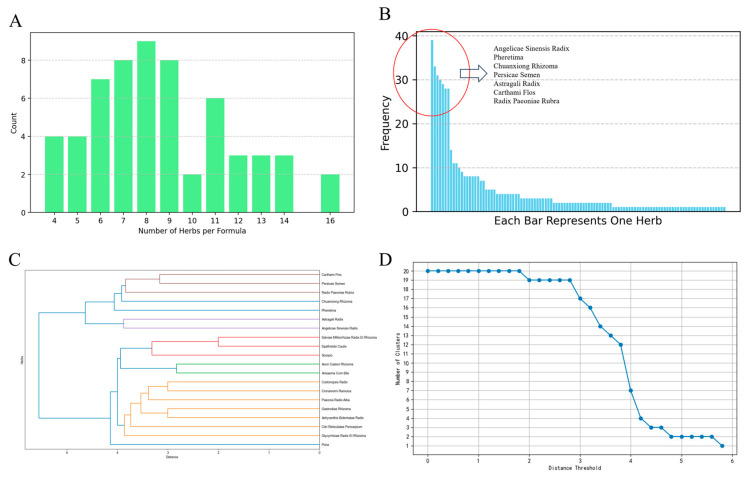 Figure 1
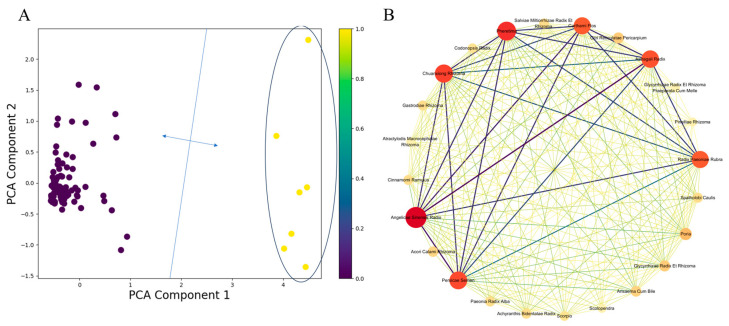 Figure 2
 Figure 3
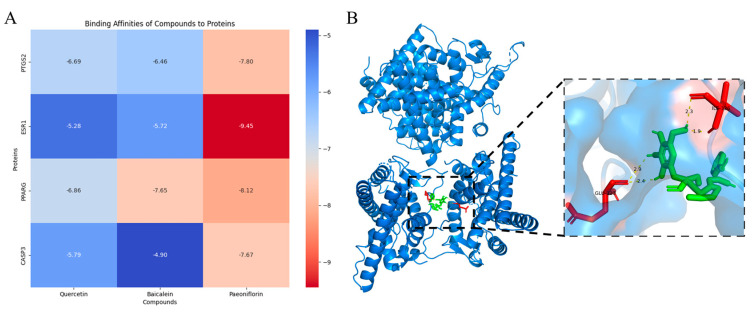 Figure 4
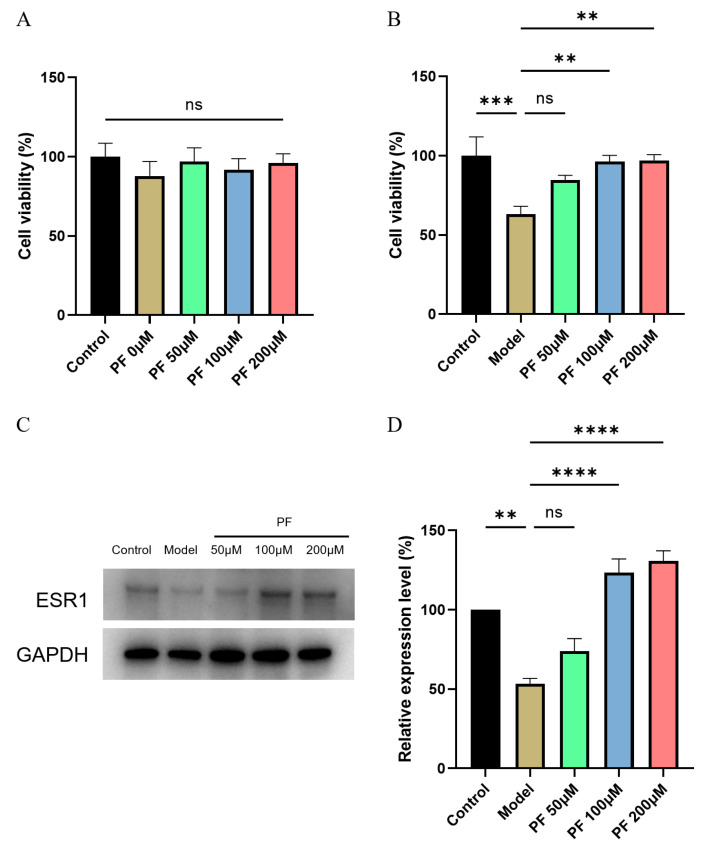 Figure 5
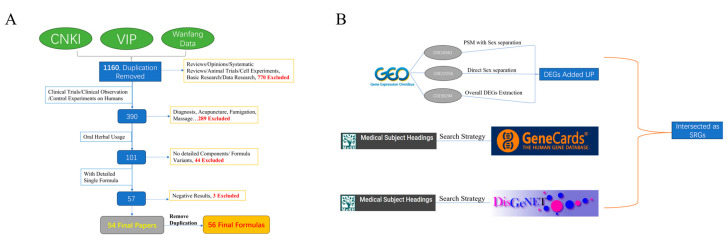 Figure 6
Peer Reviews
No public reviews on file for this paper yet. If you reviewed it on a platform where reviews are public (OpenReview, ICLR, NeurIPS, ICML), you can paste yours below so the community can read it here.
Videos
No videos yet. Explain this paper in a talk, walkthrough, or lecture? Add one.
Taxonomy
TopicsTraditional Chinese Medicine Analysis · Phytochemicals and Antioxidant Activities · Free Radicals and Antioxidants