First Molecular Evidence and Phylogeny of Hepatozoon sp. and Theileria sp. in Saudi Rodents
Sarra Farjallah, Abdulaziz Nasser Alagaili, Bandar H. AlOsaimi, Paolo Merella, Osama B. Mohammed, Nabil Amor

TL;DR
This study reports the first molecular evidence of Hepatozoon and Theileria parasites in Saudi rodents, revealing new genetic lineages and their ecological roles.
Contribution
The study provides the first molecular detection and phylogenetic analysis of Hepatozoon and Theileria in Saudi rodents, revealing novel haplotypes and host associations.
Findings
Hepatozoon was detected in four rodent species in Saudi Arabia, with a star-like haplogroup indicating host specificity.
Saudi Hepatozoon sequences clustered with reptile and rodent parasites, distinct from those in carnivores.
Theileria showed low genetic diversity in Saudi rodents, clustering with a single widespread haplotype.
Abstract
Apicomplexan species of the genera Hepatozoon and Theileria are known to infect both domestic and wild animals. This study, performed using molecular tools, provides the first report of Hepatozoon sp. in rodent species (Arvicanthis niloticus, Gerbillus cheesmani, G. nanus, and Rattus rattus) from Saudi Arabia. Additionally, Theileria sp. was detected in G. nanus and R. rattus. Genetic analyses revealed that Saudi Hepatozoon haplotypes form a star-like haplogroup, indicating host specificity to local rodent species. Phylogenetic analyses generated trees with similar topologies, revealing two sister clades: one comprising Hepatozoon spp. sequences from rodents and reptiles forming a distinct clade, separate from those found in felids and canids. These findings confirm that rodents play a key role in the epidemiology of reptile-associated Hepatozoon spp. rather than species linked to…
Genes, proteins, chemicals, diseases, species, mutations and cell lines named across the full text — each resolved to its canonical identifier and authoritative record.
Click any figure to enlarge with its caption.
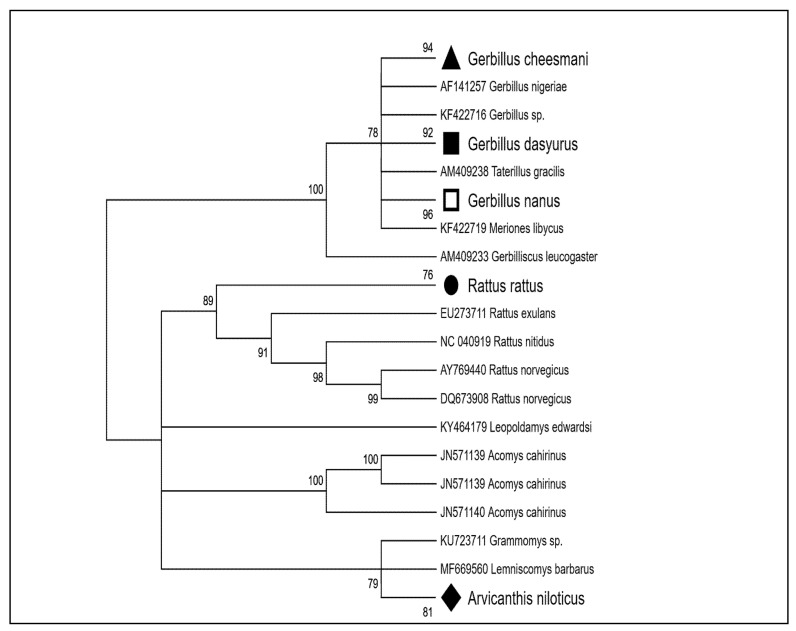 Figure 1
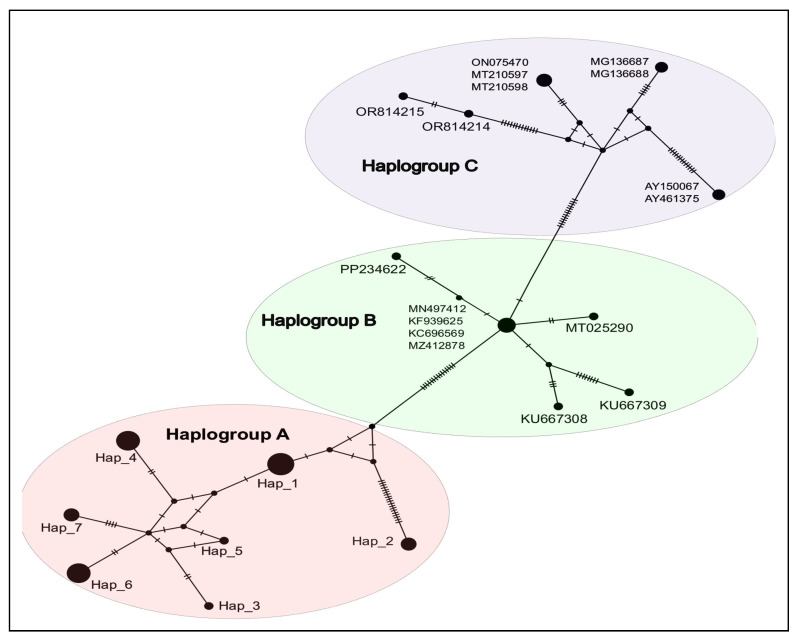 Figure 2
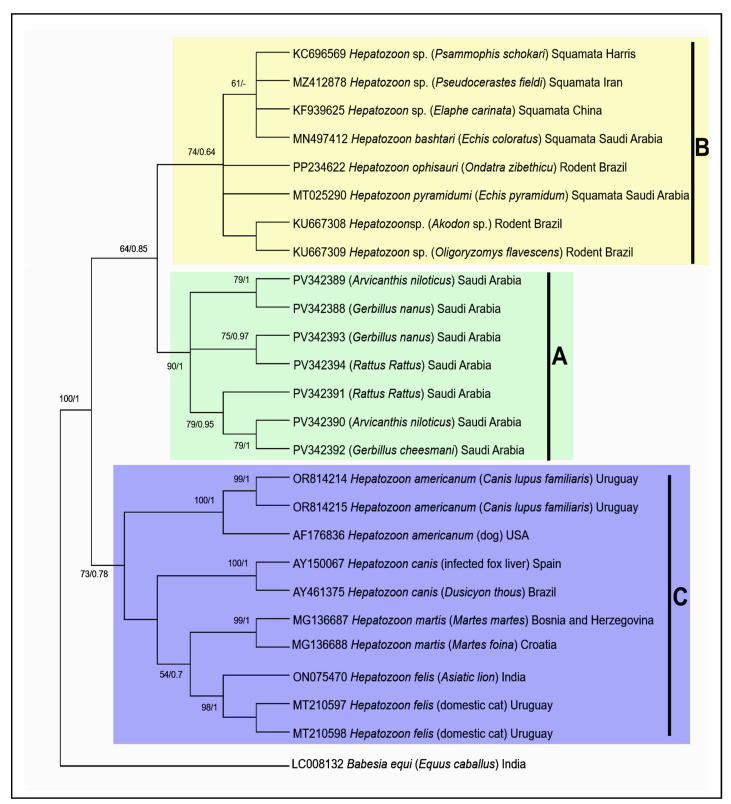 Figure 3
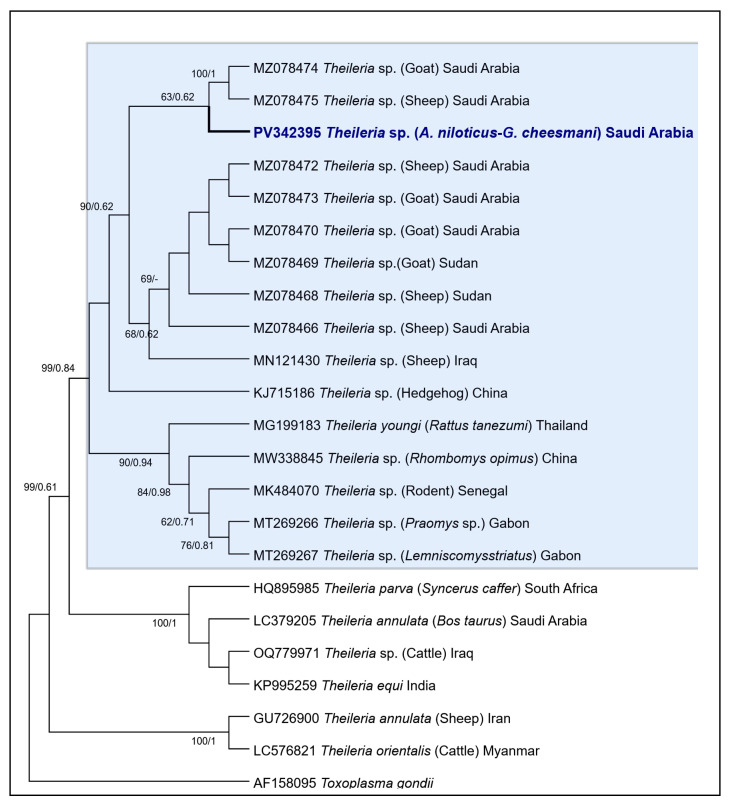 Figure 4
Peer Reviews
No public reviews on file for this paper yet. If you reviewed it on a platform where reviews are public (OpenReview, ICLR, NeurIPS, ICML), you can paste yours below so the community can read it here.
Videos
No videos yet. Explain this paper in a talk, walkthrough, or lecture? Add one.
Taxonomy
TopicsVector-borne infectious diseases · Yersinia bacterium, plague, ectoparasites research · Insect and Pesticide Research