Isolation, Identification, and Drug Sensitivity Test of Pseudomonas aeruginosa from Cynomolgus Monkey (Macaca fascicularis)
Heling Li, Ziyao Qian, Yulin Yan, Hong Wang

TL;DR
This study reports the first case of Pseudomonas aeruginosa isolated from a diarrheal cynomolgus monkey, including its identification and drug sensitivity profile.
Contribution
The first reported isolation of P. aeruginosa from the diarrhea feces of a cynomolgus monkey, with detailed drug sensitivity results.
Findings
The isolated strain PA/CM-101101 showed strong pathogenicity in mice and formed distinct colony morphologies on different media.
The strain was sensitive to 13 antibiotics but resistant to ampicillin, cefadroxil, cefazolin, erythromycin, and vancomycin.
16S rRNA gene sequencing confirmed over 98.4% similarity with known P. aeruginosa strains in GenBank.
Abstract
Pseudomonas aeruginosa (P. aeruginosa) is an aerobic, non-fermentative, oxidase-positive, small Gram-negative bacterium typically found in single pairs. It is a prevalent opportunistic pathogen in clinical practice that can cause healthcare-associated infections in both humans and animals, including goat, dog, cat, cow, forest musk deer, mink, blue fox, and so on. P. aeruginosa plays a significant role in diseases such as intestinal infections. We confirmed that P. aeruginosa was identified as the pathogen in the diarrhea feces of a cynomolgus monkey through morphological analysis, biochemical tests, 16S rRNA gene sequencing, and animal pathogenicity experiments. Additionally, we performed drug sensitivity testing on P. aeruginosa. So far, this is the first case of P. aeruginosa isolated from the diarrhea feces of a cynomolgus monkey. This study provides an important scientific…
Genes, proteins, chemicals, diseases, species, mutations and cell lines named across the full text — each resolved to its canonical identifier and authoritative record.
Click any figure to enlarge with its caption.
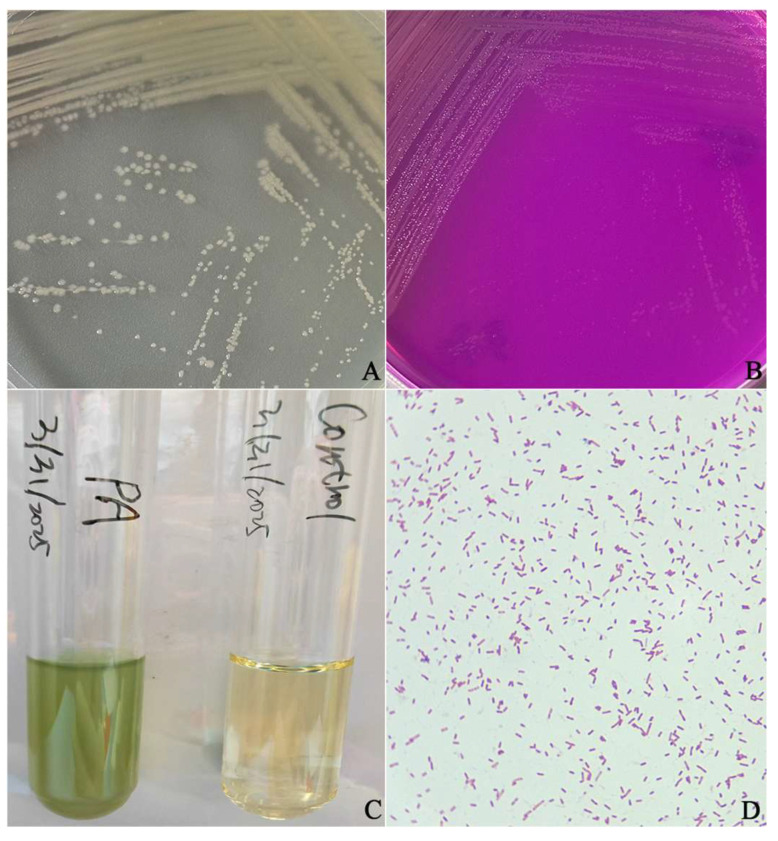 Figure 1
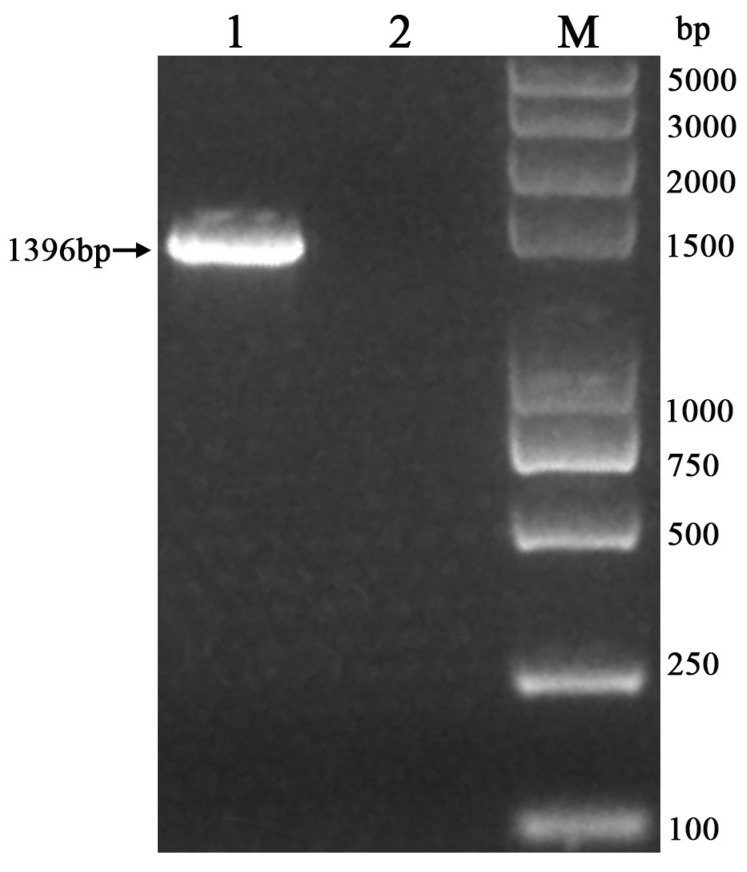 Figure 2
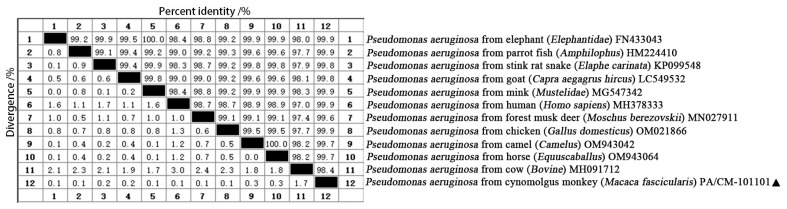 Figure 3
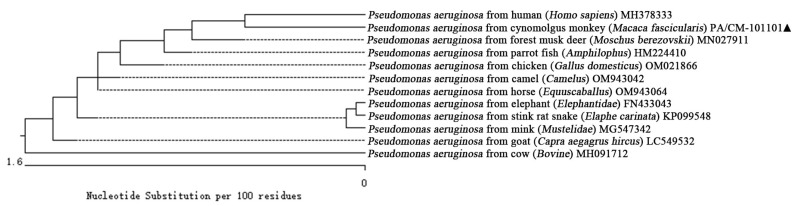 Figure 4
Peer Reviews
No public reviews on file for this paper yet. If you reviewed it on a platform where reviews are public (OpenReview, ICLR, NeurIPS, ICML), you can paste yours below so the community can read it here.
Videos
No videos yet. Explain this paper in a talk, walkthrough, or lecture? Add one.
Taxonomy
TopicsAntimicrobial Peptides and Activities · Lipid Membrane Structure and Behavior · Gut microbiota and health