Phosphonium Salt-Functionalized β-Cyclodextrin Film for Ultrasensitive and Selective Electrochemical Impedance Spectroscopy Detection of Perchlorate in Drinking Water
Zeineb Baatout, Achref Jebnouni, Nawfel Sakly, Safa Teka, Nuzaiha Mohamed, Sayda Osman, Raoudha Soury, Mabrouka El Oudi, Salman Hamdan Alsaqri, Nejmeddine Smida Jaballah, Mustapha Majdoub

TL;DR
A new sensor using modified cyclodextrin detects perchlorate in drinking water with high sensitivity and selectivity.
Contribution
The first use of phosphonium salt-functionalized β-cyclodextrin for perchlorate detection via EIS with record-low detection limits.
Findings
The sensor achieved a detection limit of ~10−12 M for perchlorate.
It showed a wide linear detection range from 10−11 M to 10−4 M.
Real water sample analysis confirmed high recovery rates and low variability.
Abstract
This work represents the first use of a phosphonium salt-functionalized β-Cyclodextrin polymer (β-CDP) as a highly selective sensing membrane for monitoring the safety of drinking water against perchlorate ions (ClO4−) using electrochemical impedance spectroscopy (EIS). Structural confirmation via 1H NMR, 13C NMR, 31P NMR, and FT-IR spectroscopies combined with AFM and contact angle measurements demonstrate how the enhanced solubility of modified cyclodextrin improves thin film quality. The innovation lies in the synergistic combination of two detection mechanisms: the “Host-Guest” inclusion in the cyclodextrin cavity and anionic exchange between the bromide ions of the phosphonium groups and perchlorate anions. Under optimized functionalization conditions, EIS reveals high sensitivity and selectivity, achieving a record-low detection limit (LOD) of ~10−12 M and a wide linear range of…
Genes, proteins, chemicals, diseases, species, mutations and cell lines named across the full text — each resolved to its canonical identifier and authoritative record.
Click any figure to enlarge with its caption.
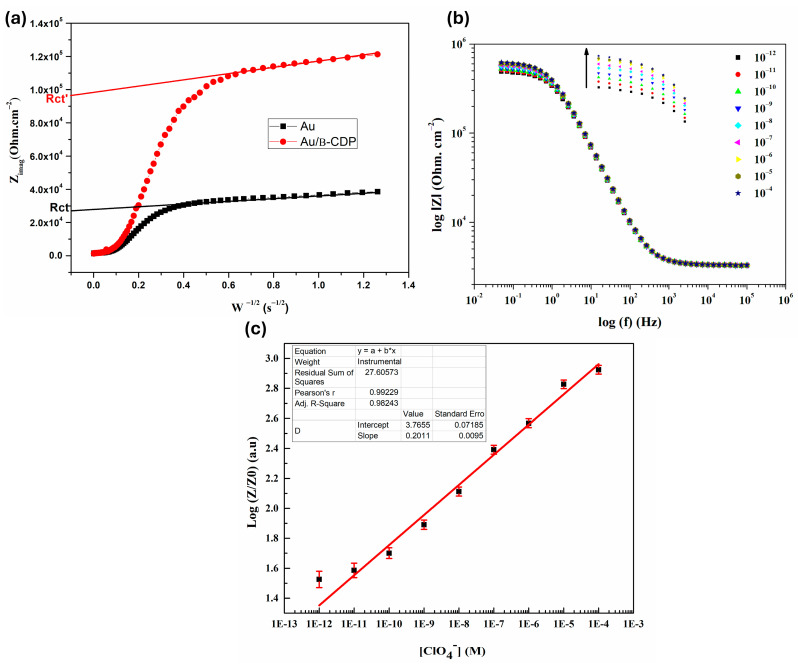 Figure 1
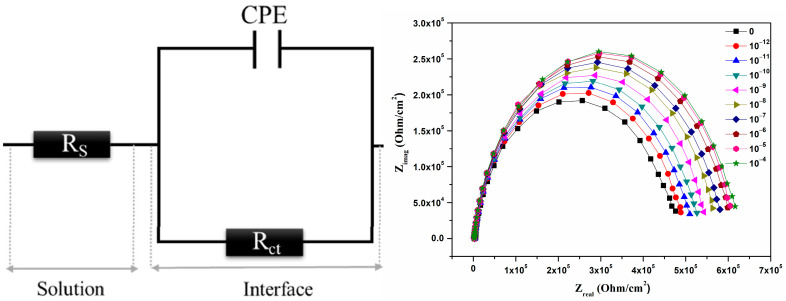 Figure 2
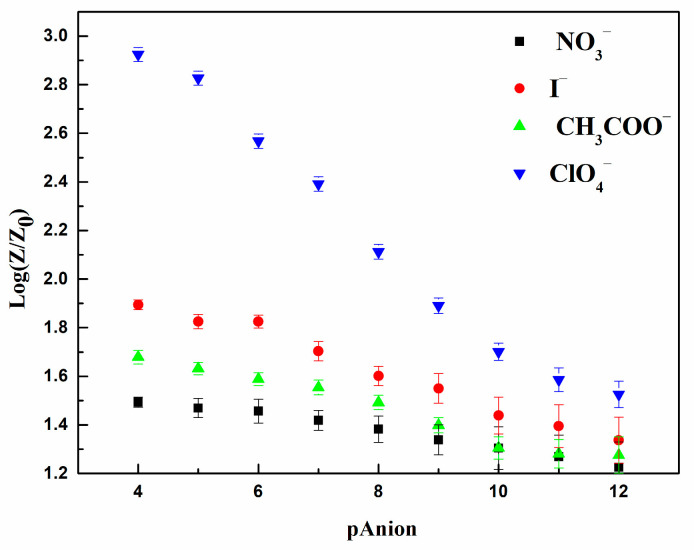 Figure 3
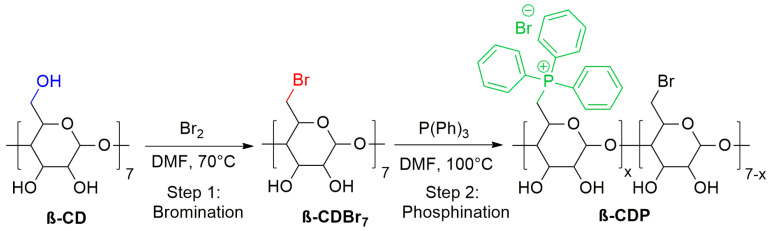 Figure 4
Peer Reviews
No public reviews on file for this paper yet. If you reviewed it on a platform where reviews are public (OpenReview, ICLR, NeurIPS, ICML), you can paste yours below so the community can read it here.
Videos
No videos yet. Explain this paper in a talk, walkthrough, or lecture? Add one.
Taxonomy
TopicsMembrane-based Ion Separation Techniques · Electrochemical Analysis and Applications · Analytical Chemistry and Sensors