Tetanus in Romania—Trends and Challenges
Andreea Marilena Păuna, Ștefan Eduard Mîinea, Bianca Georgiana Enciu, Daniela Pițigoi, Anca Mirela Sîrbu, Rodica Popescu, Carmen Daniela Chivu, Carmen-Cristina Vasile, Maria Dorina Crăciun

TL;DR
This paper analyzes tetanus trends in Romania from 2010 to 2023, showing a slight decline in cases but a high fatality rate, emphasizing the need for better vaccination and wound management.
Contribution
The study provides a detailed retrospective analysis of tetanus incidence and fatality trends in Romania, highlighting demographic and geographic patterns.
Findings
The average tetanus incidence rate in Romania was 0.03 per 100,000 inhabitants with a slight annual decline of 7%.
The highest incidence rates were observed in children aged 1 to 14 years and in rural areas.
The case fatality ratio remained high at an average of 42%, with a decreasing trend of 9% per year.
Abstract
Tetanus is a life-threatening, vaccine-preventable disease caused by tetanospasmin and tetanolysin, which are potent neurotoxins produced by Clostridium tetani, an anaerobic, spore-forming bacterium. Due to the widespread presence of spores in the environment, the disease cannot be eradicated. However, global tetanus prevention initiatives have contributed to a significant decline in tetanus incidence worldwide. Aiming to present the tetanus trends in Romania, we conducted a retrospective analysis of the tetanus surveillance data. During the study period (2010–2023), 97 cases of tetanus were reported in Romania (median: 6.5; IQR: 5–7) with an average incidence rate of 0.03 per 100,000 inhabitants (95% CI: 0.02–0.04; range: 0.01–0.09). The highest incidence rates were recorded among people aged 1 to 14 years old (0.09 per 100,000 inhabitants, 95% CI: 0.06–0.13; range: 0.00–0.20), male…
Genes, proteins, chemicals, diseases, species, mutations and cell lines named across the full text — each resolved to its canonical identifier and authoritative record.
Click any figure to enlarge with its caption.
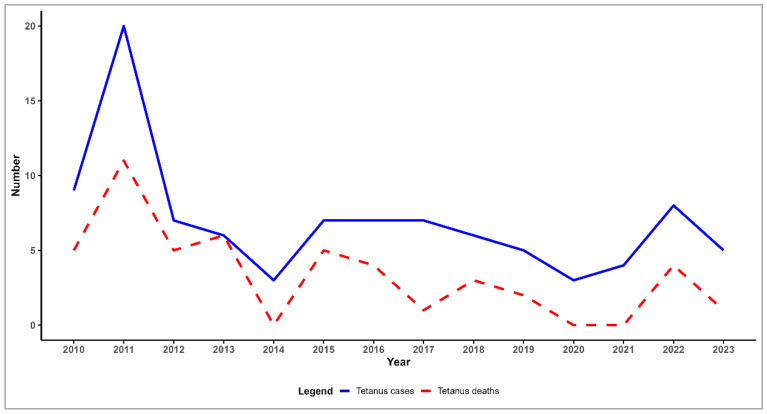 Figure 1
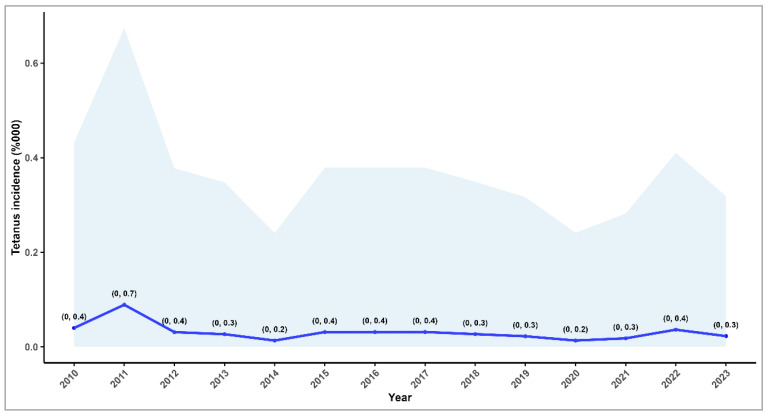 Figure 2
 Figure 3
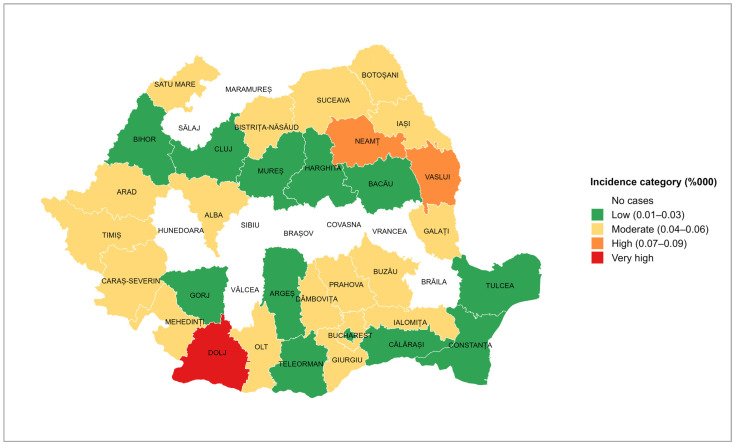 Figure 4
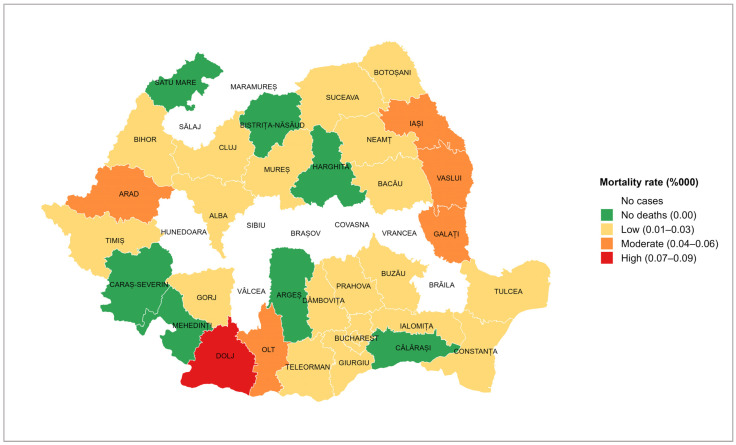 Figure 5
Peer Reviews
No public reviews on file for this paper yet. If you reviewed it on a platform where reviews are public (OpenReview, ICLR, NeurIPS, ICML), you can paste yours below so the community can read it here.
Videos
No videos yet. Explain this paper in a talk, walkthrough, or lecture? Add one.
Taxonomy
TopicsDiphtheria, Corynebacterium, and Tetanus · Clostridium difficile and Clostridium perfringens research · Botulinum Toxin and Related Neurological Disorders