Differentiating Zeranol Implant Abuse and Fusarium spp. Toxin-Contaminated Corn Intake by Detection and Quantification of Resorcylic Acid Lactones in Bovine Urine
Rafael Silva Gomes, Vanessa Gonçalves dos Santos, Carlos Juliano da Silva, Amanda Martinez Nagato Simões, Eliene Alves dos Santos, Mary Ane Gonçalves Lana, Kelly Moura Keller, Marco Blokland, Ane Arrizabalaga-Larrañaga, Rafael Romero Nicolino, Marcelo Resende de Souza

TL;DR
This study shows how to tell if cows were given illegal zeranol implants or ate moldy corn by measuring certain chemicals in their urine.
Contribution
A method to differentiate zeranol implant abuse from natural contamination in bovine urine using RAL detection and the EURL equation.
Findings
RALs were detected in urine of cattle fed zearalenone-contaminated diets.
Zeranol and taleranol were identified in urine of implanted animals.
The EURL equation effectively distinguishes RAL sources in bovine urine.
Abstract
Resorcylic acid lactones (RALs) are fungal metabolites with known biological activity. Zeranol, a synthetic RAL, has been used as an estrogenic growth promoter in cattle; however, its use is prohibited in several countries. Zearalenone, a mycotoxin produced by Fusarium spp., is commonly found in contaminated animal feed and can be metabolized into other RALs, which are subsequently excreted in urine. To differentiate between natural contamination from feed and the illegal administration of zeranol, the European Union Reference Laboratory for Growth Promoters (EURL) developed a mathematical equation. This study aims to evaluate the detection and quantification of RALs in bovine urine from animals fed zearalenone-contaminated diets, implanted with zeranol, or subjected to both conditions. RALs were detected and quantified in the urine of cattle consuming contaminated corn, while zeranol…
Genes, proteins, chemicals, diseases, species, mutations and cell lines named across the full text — each resolved to its canonical identifier and authoritative record.
Click any figure to enlarge with its caption.
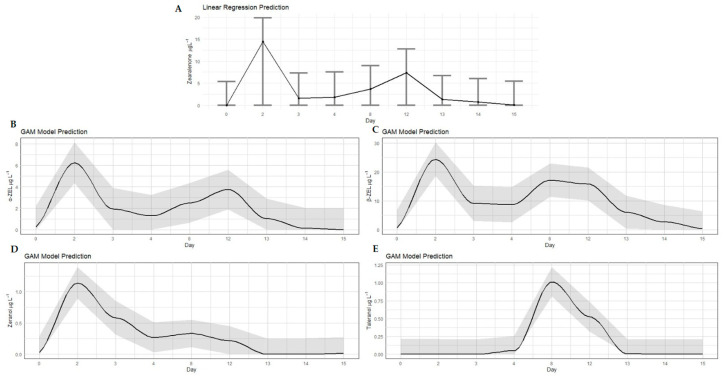 Figure 1
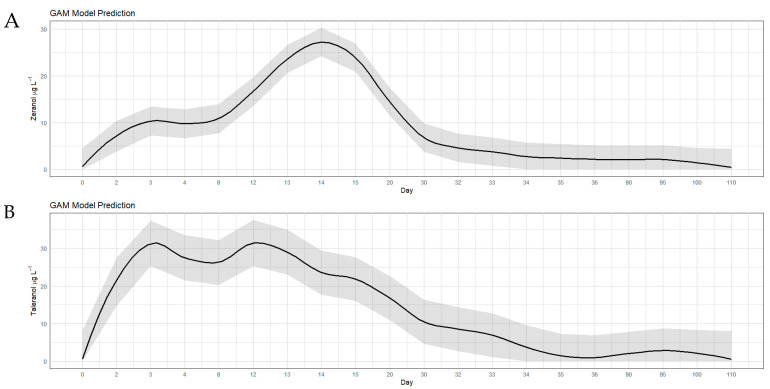 Figure 2
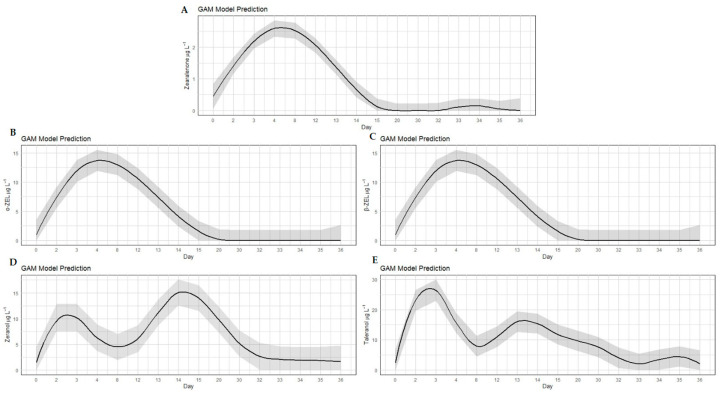 Figure 3
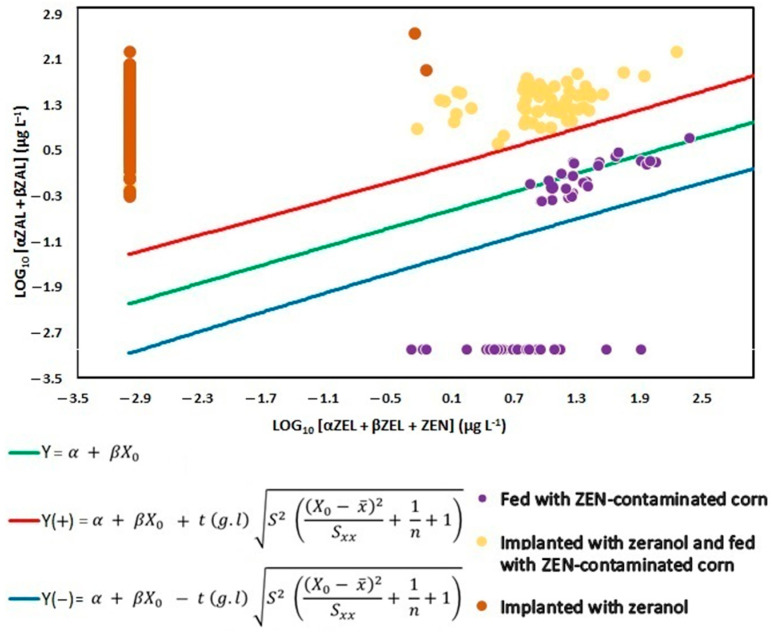 Figure 4
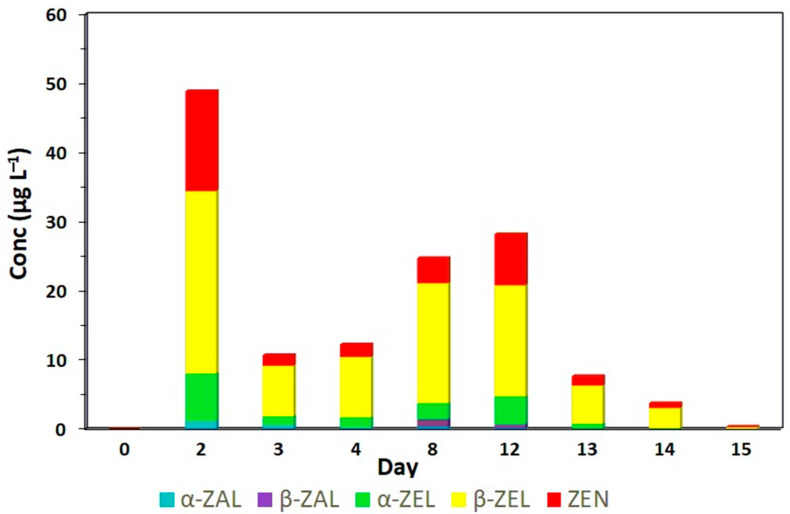 Figure 5
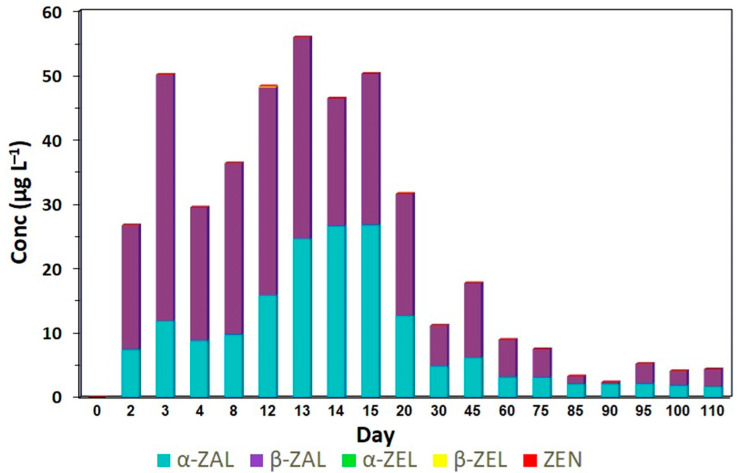 Figure 6
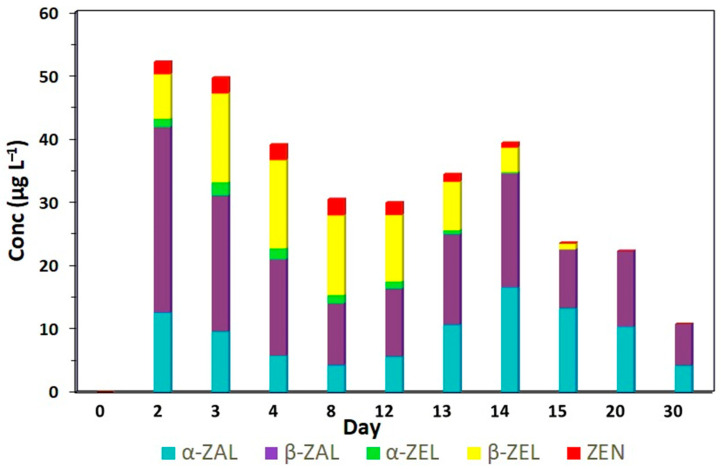 Figure 7
Peer Reviews
No public reviews on file for this paper yet. If you reviewed it on a platform where reviews are public (OpenReview, ICLR, NeurIPS, ICML), you can paste yours below so the community can read it here.
Videos
No videos yet. Explain this paper in a talk, walkthrough, or lecture? Add one.
Taxonomy
TopicsMycotoxins in Agriculture and Food · Plant and fungal interactions · Pesticide Residue Analysis and Safety