The Air Stability of Sodium Layered Oxide NaTMO2 (100) Surface Investigated via DFT Calculations
Hui Li, Qing Xue, Shengyi Li, Xuechun Wang, Yijie Hou, Chang Sun, Cun Wang, Guozheng Sheng, Peng Sheng, Huitao Bai, Li Xu, Yumin Qian

TL;DR
This paper uses DFT calculations to study how the surface of sodium layered oxide materials interacts with air, affecting their stability in sodium-ion batteries.
Contribution
The study reveals that electronic structure of adsorption sites, rather than phase symmetry alone, determines air stability of sodium layered oxides.
Findings
The O phase of NaNiO2 is more air-stable than the P phase, contrary to previous assumptions.
CO2 adsorption strength increases with t2g band center, but H2O adsorption shows no clear trend.
Electronic structure of adsorption sites is a key factor in determining air stability.
Abstract
Air stability caused by the H2O/CO2 reaction at the layered oxide NaTMO2 surface is one of the main obstacles to commercializing sodium-ion batteries (SIBS). The H2O and CO2 adsorption properties on the (100) surface of sodium layered transition metal oxide NaTMO2 (TM = Co, Ni, Mo, Nd) are calculated using the DFT method to study the surface air stability. This study showed that the material bulk phase (symmetry), surface site, element type, and surface termination are all (though not the only) important factors that affect the adsorption strength. Contrary to previous studies, the P phase is not always more air-stable than the O phase; our calculations showed that the NaNiO2 O phase is more stable than the P phase. The calculated band center and occupation showed a direct relationship with the adsorption energy. The Na site adsorption for CO2 and H2O showed the same V-shape trend.…
Genes, proteins, chemicals, diseases, species, mutations and cell lines named across the full text — each resolved to its canonical identifier and authoritative record.
Click any figure to enlarge with its caption.
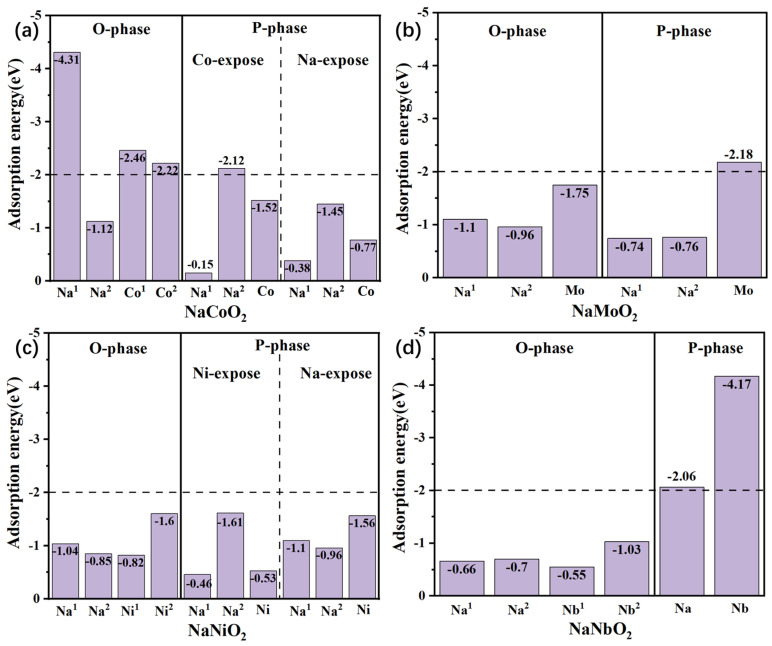 Figure 1
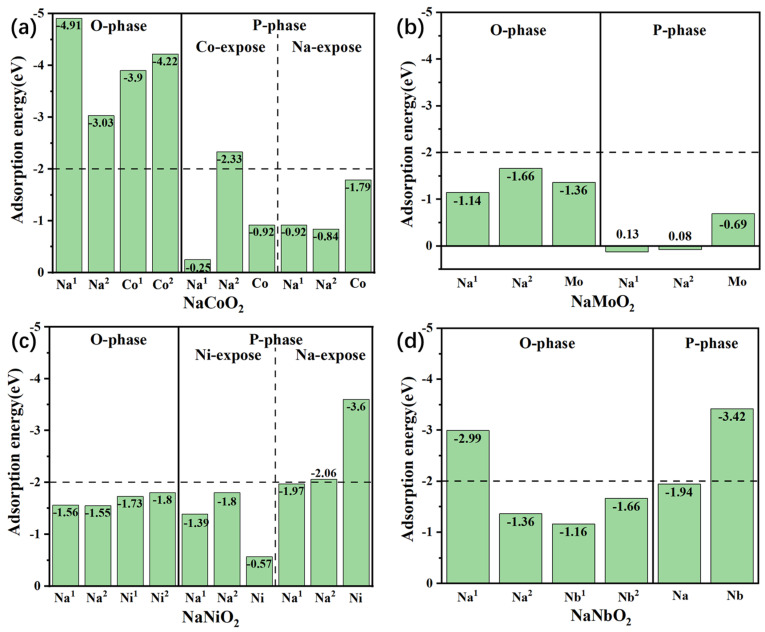 Figure 2
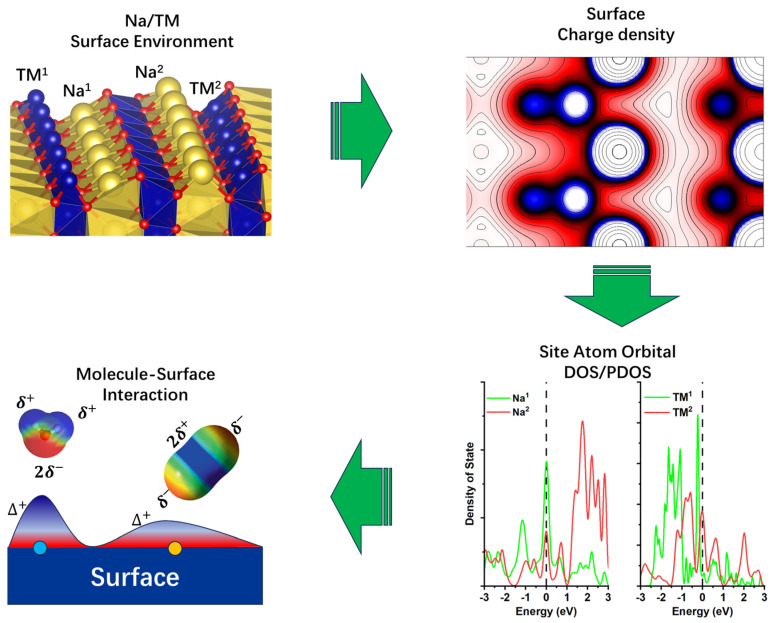 Figure 3
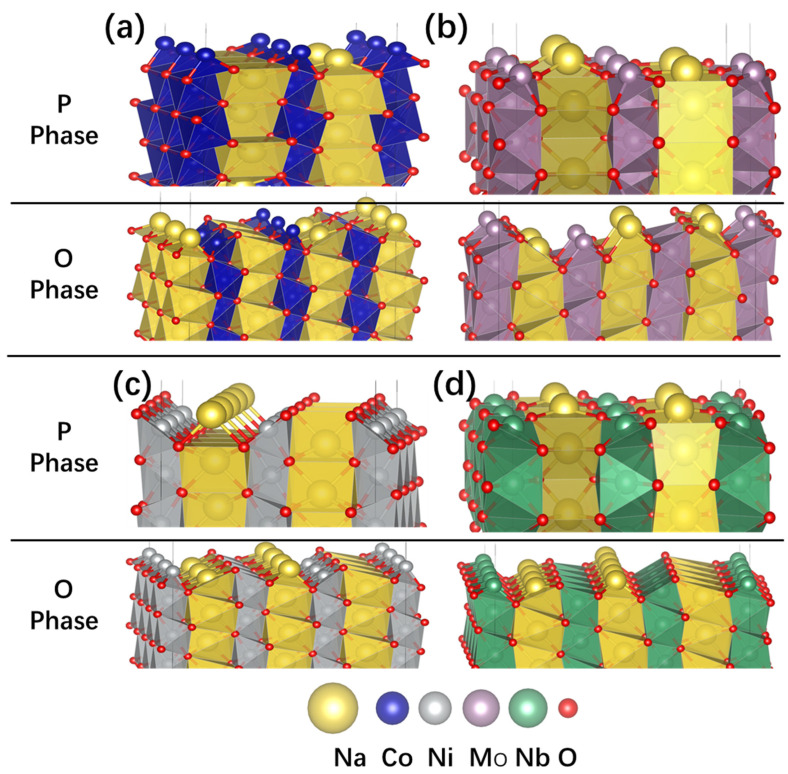 Figure 4
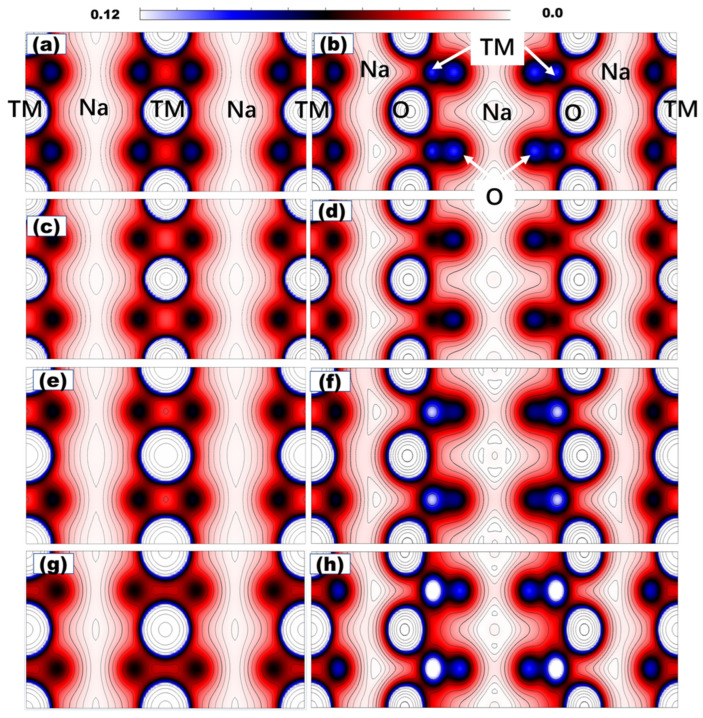 Figure 5
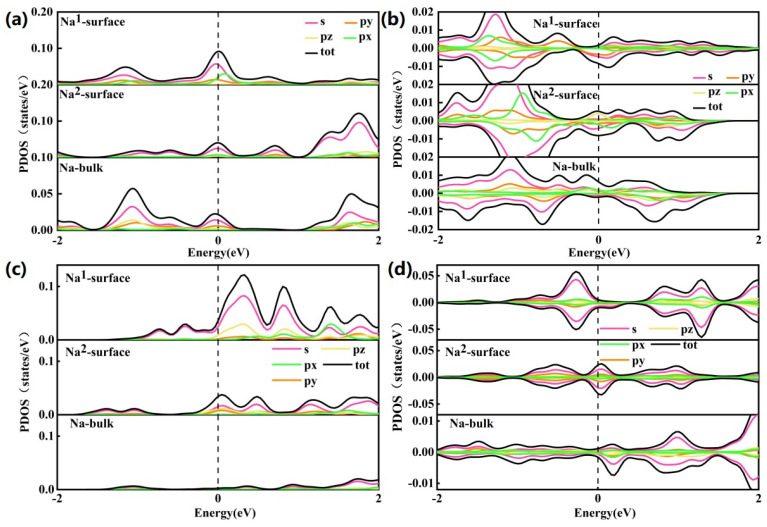 Figure 6
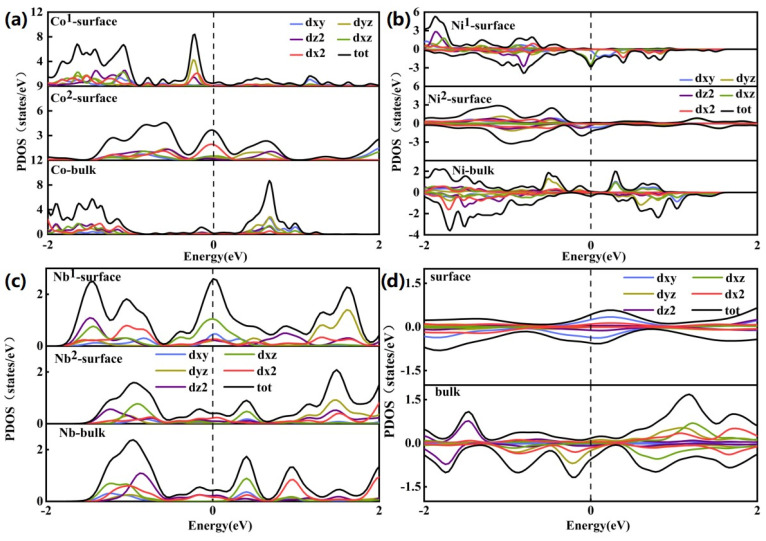 Figure 7
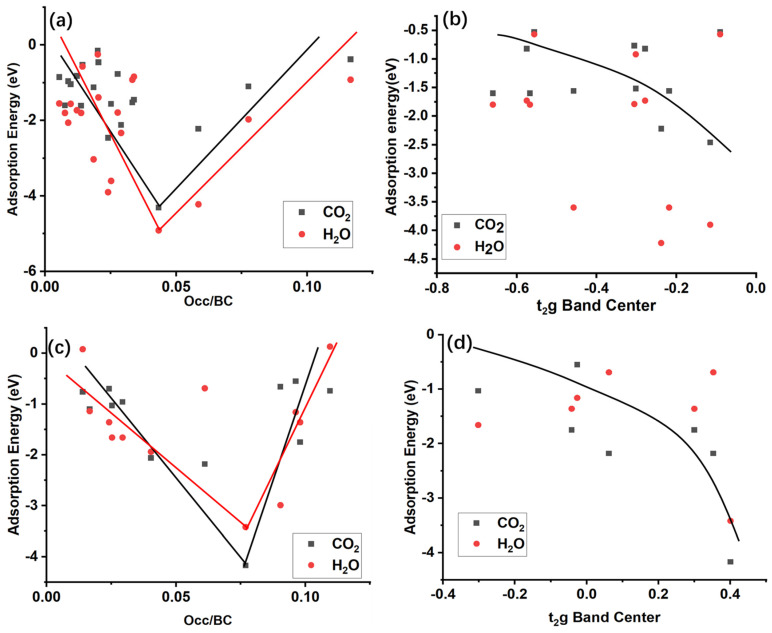 Figure 8
Peer Reviews
No public reviews on file for this paper yet. If you reviewed it on a platform where reviews are public (OpenReview, ICLR, NeurIPS, ICML), you can paste yours below so the community can read it here.
Videos
No videos yet. Explain this paper in a talk, walkthrough, or lecture? Add one.
Taxonomy
TopicsAdvancements in Battery Materials · Thermal Expansion and Ionic Conductivity · Transition Metal Oxide Nanomaterials