Toxic and Hallucinogenic Plants of Southern Chile of Forensic Interest: A Review
Ramiro Díaz, Mauricio Yáñez-Sánchez, Francisco de la Fuente, Andrea Ortega, Alejandra Figueroa-Carvajal, David Gangitano, Oscar Scholz-Wagenknecht

TL;DR
This paper reviews toxic and hallucinogenic plants in southern Chile, highlighting their forensic importance and risks to public health.
Contribution
The study identifies eight plant species of forensic interest in southern Chile and their toxic compounds.
Findings
Eight plant species with toxic or hallucinogenic properties were identified in southern Chile.
Most poisoning cases involved unintentional exposure, particularly in children.
The study emphasizes the lack of regulation and awareness regarding these plants.
Abstract
Several plants produce toxic and hallucinogenic metabolites, posing risks when misused due to a lack of botanical knowledge. Improper or accidental use of these plants poses a public health risk and has been associated with forensic cases involving poisoning, suicide, or drug-facilitated crimes. This review identified eight species of forensic interest that grow in southern Chile and analyzed their active compounds, mechanisms of toxicity, and documented clinical and legal cases. These selected species included both native and introduced taxa, whose main toxic agents are tropane alkaloids (atropine, scopolamine), piperidine (coniine), taxane pseudoalkaloids, and natural opiates (morphine, codeine). Most reported cases involved unintentional poisoning, mainly in children, highlighting the lack of regulation and awareness. This review revealed the need for improved forensic and clinical…
Genes, proteins, chemicals, diseases, species, mutations and cell lines named across the full text — each resolved to its canonical identifier and authoritative record.
Click any figure to enlarge with its caption.
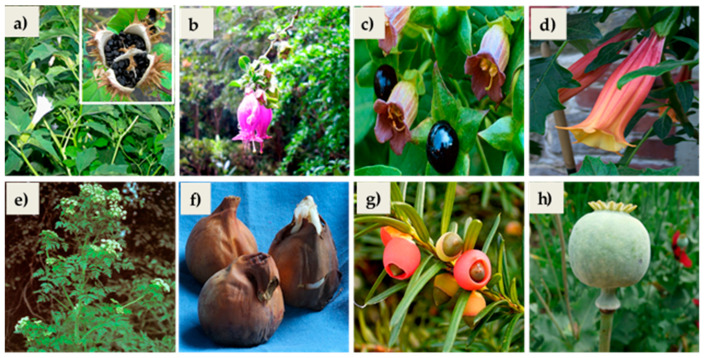 Figure 1
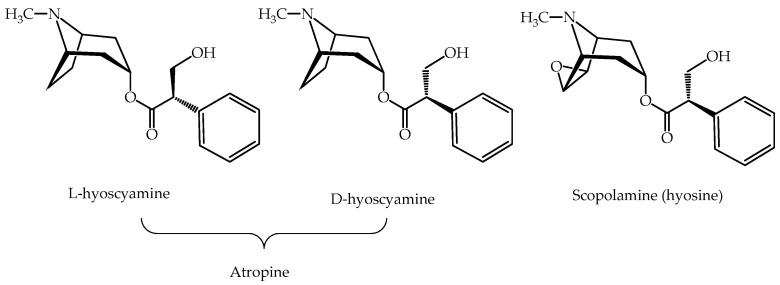 Figure 2
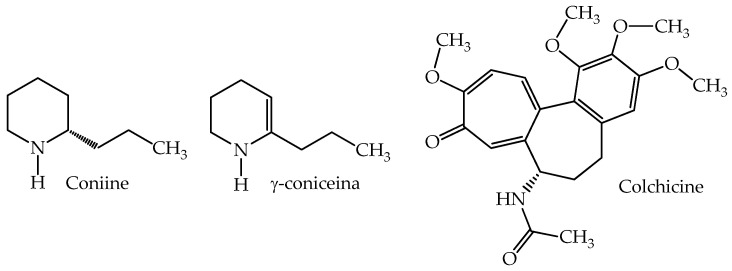 Figure 3
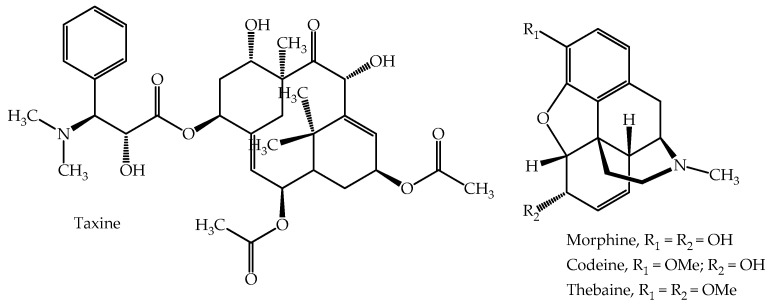 Figure 4
Peer Reviews
No public reviews on file for this paper yet. If you reviewed it on a platform where reviews are public (OpenReview, ICLR, NeurIPS, ICML), you can paste yours below so the community can read it here.
Videos
No videos yet. Explain this paper in a talk, walkthrough, or lecture? Add one.
Taxonomy
TopicsPlant-based Medicinal Research · Chemical synthesis and alkaloids · Berberine and alkaloids research