The Invertebrate-Derived Antimicrobial Peptide Cm-p5 Induces Cell Death and ROS Production in Melanoma Cells
Ernesto M. Martell-Huguet, Daniel Alpízar-Pedraza, Armando Rodriguez, Marc Zumwinkel, Mark Grieshober, Fidel Morales-Vicente, Ann-Kathrin Kissmann, Markus Krämer, Steffen Stenger, Octavio L. Franco, Ludger Ständker, Anselmo J. Otero-Gonzalez, Frank Rosenau

TL;DR
A natural antimicrobial peptide from a coastal mollusk shows promise in killing melanoma cells by damaging their membranes and causing oxidative stress.
Contribution
The study reveals the anti-cancer properties of the invertebrate-derived peptide Cm-p5, previously known only for antifungal activity.
Findings
Cm-p5 induces cell death in A375 melanoma cells without harming non-malignant cells.
Cm-p5 causes membrane disruption and depolarization in melanoma cells.
Cm-p5 treatment leads to reactive oxygen species overproduction and reduced cell proliferation.
Abstract
Nowadays, healthcare systems face two global challenges: the rise of multidrug-resistant pathogens and the growing incidence of cancer. Due to their broad spectrum of activities, antimicrobial peptides emerged as potential alternatives against both threats. Our group previously described the antifungal activity of the α-helical peptide Cm-p5, a derivative of the natural peptide Cm-p1, isolated from the coastal mollusk Cenchritis muricatus; however, its anti-cancer properties remained unexplored. Analyses through calorimetry and molecular dynamics simulations suggest the relevance of phosphatidylserine for the attachment of Cm-p5 to cancer cell membranes. Cm-p5 exhibited cytotoxic activity in a dose-dependent manner against A375 melanoma cells, without toxicity against non-malignant cells or hemolytic activity. DAPI/PI and DiSC3(5) staining confirmed permeabilization, disruption, and…
Genes, proteins, chemicals, diseases, species, mutations and cell lines named across the full text — each resolved to its canonical identifier and authoritative record.
Click any figure to enlarge with its caption.
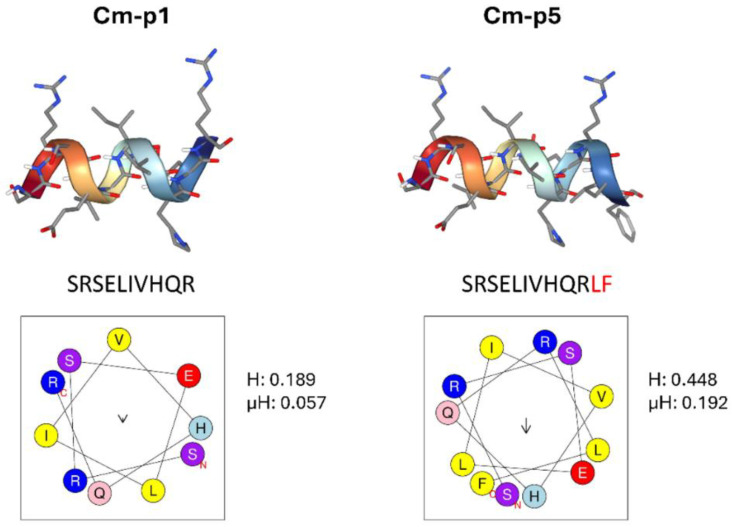 Figure 1
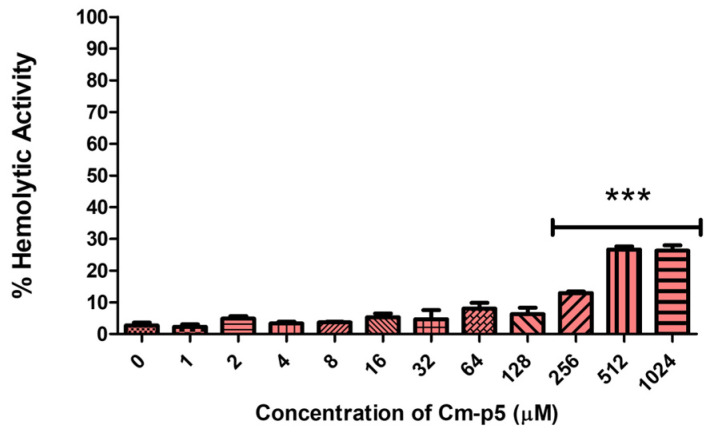 Figure 2
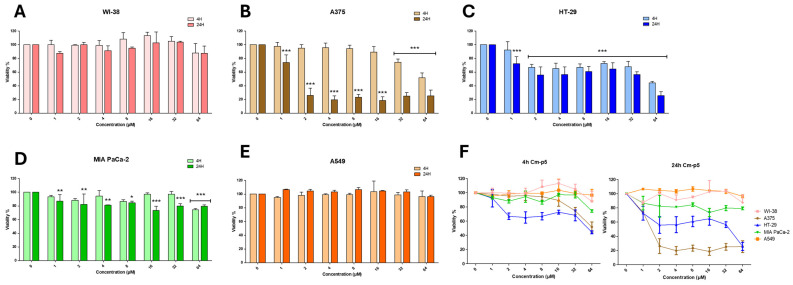 Figure 3
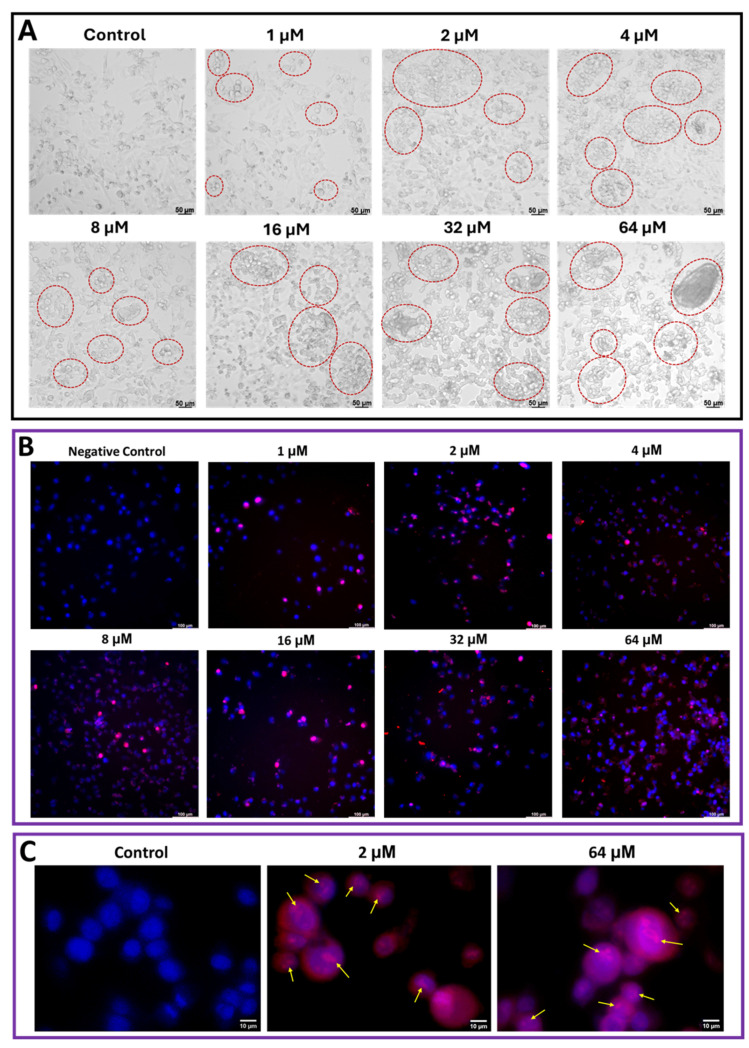 Figure 4
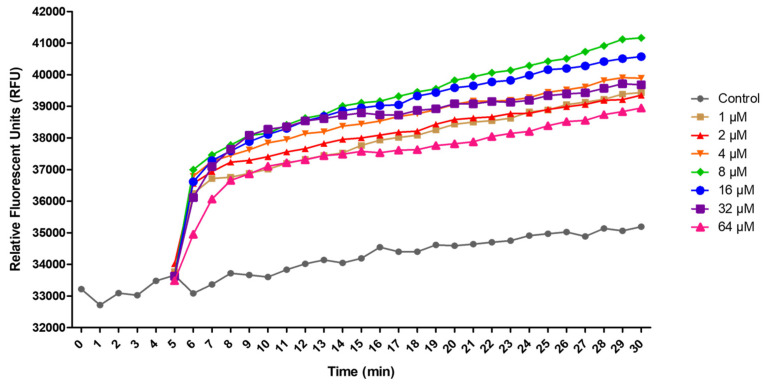 Figure 5
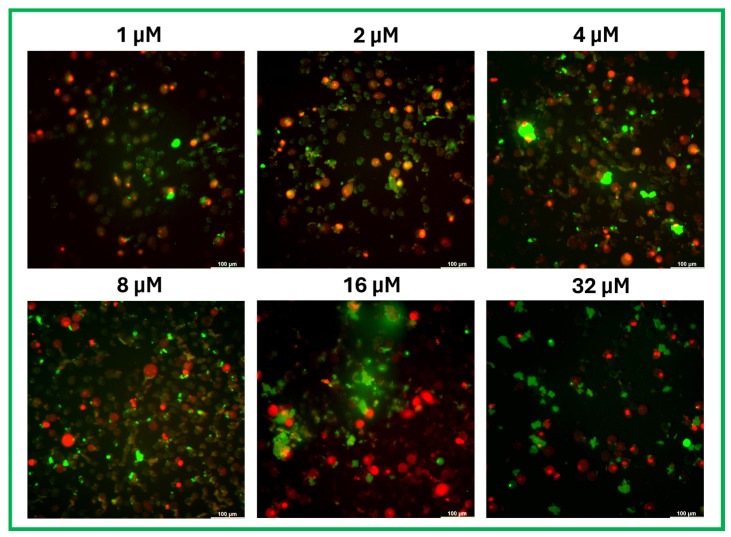 Figure 6
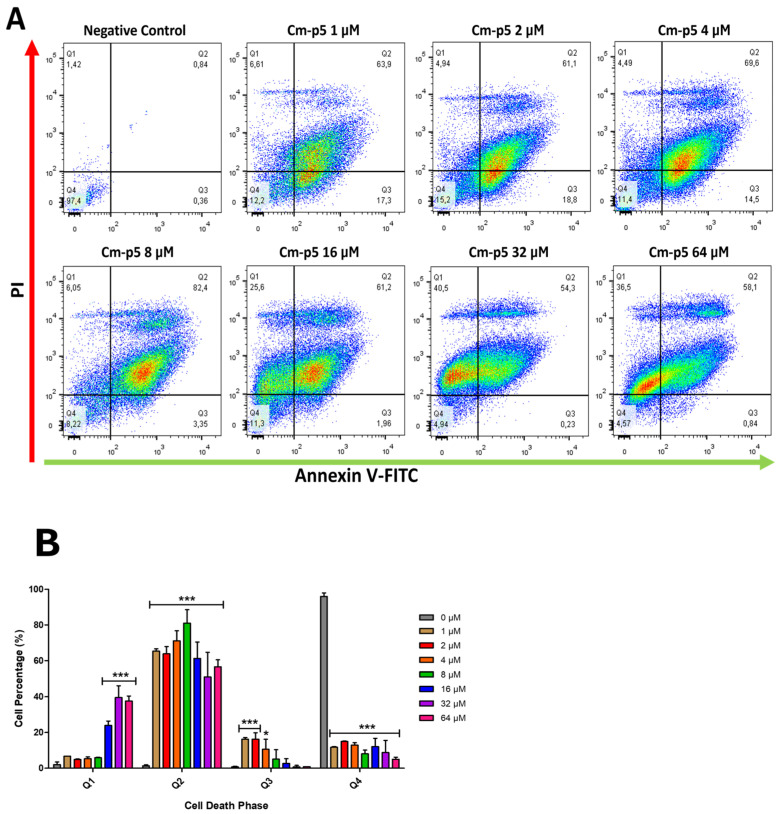 Figure 7
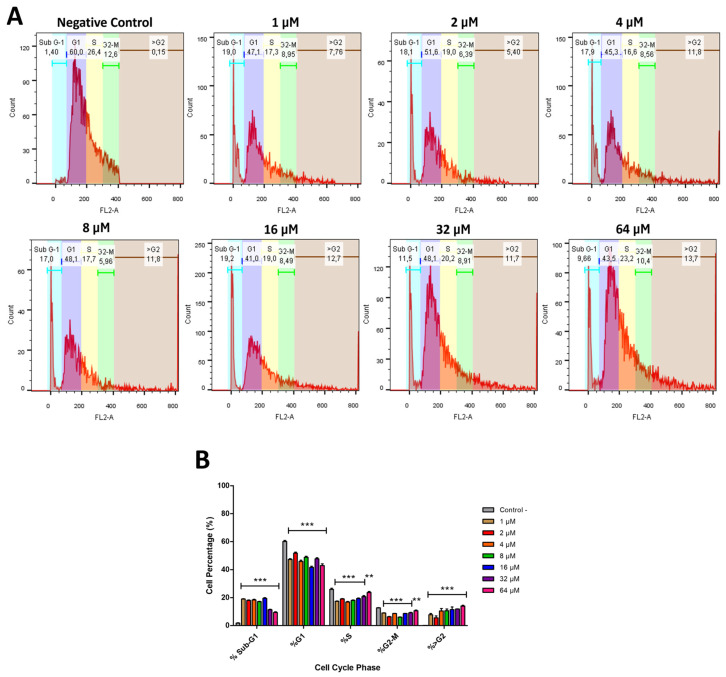 Figure 8
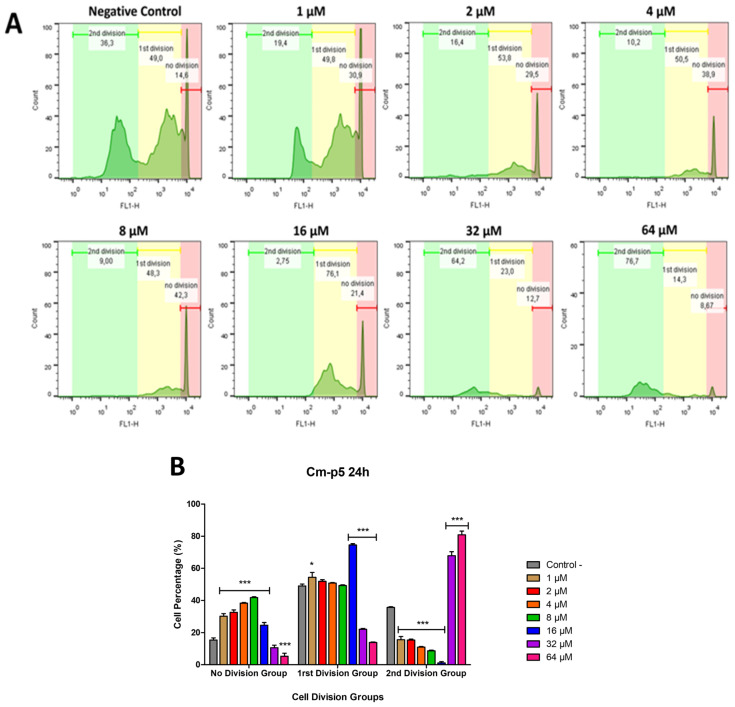 Figure 9
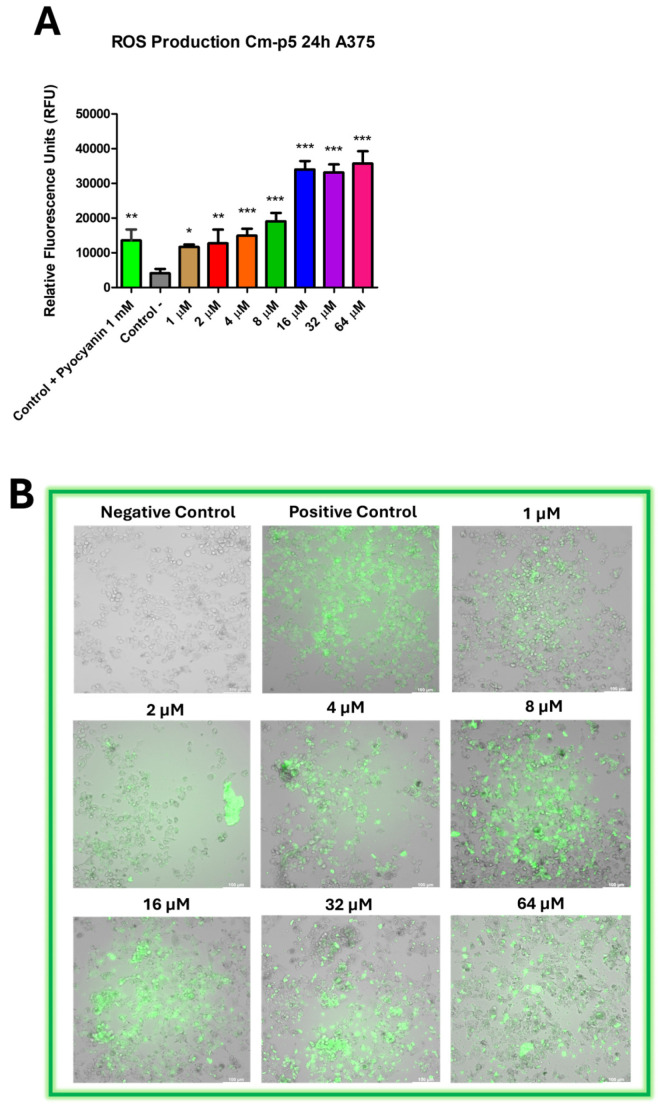 Figure 10
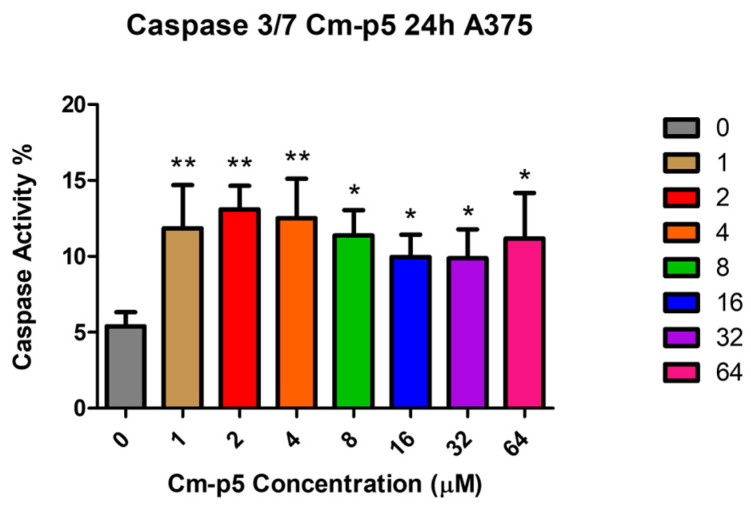 Figure 11
Peer Reviews
No public reviews on file for this paper yet. If you reviewed it on a platform where reviews are public (OpenReview, ICLR, NeurIPS, ICML), you can paste yours below so the community can read it here.
Videos
No videos yet. Explain this paper in a talk, walkthrough, or lecture? Add one.
Taxonomy
TopicsAntimicrobial Peptides and Activities · Protein Hydrolysis and Bioactive Peptides · Invertebrate Immune Response Mechanisms