Feasibility and Clinical Outcomes of Robot-Assisted Sacrocolpopexy Using Autologous Round Ligament Grafts: A Novel Non-Mesh Surgical Approach for Pelvic Organ Prolapse
Shinichi Togami, Takashi Ushiwaka, Nozomi Furuzono, Yusuke Kobayashi, Chikako Nagata, Mika Fukuda, Mika Mizuno, Shintaro Yanazume, Hiroaki Kobayashi

TL;DR
A new robot-assisted surgery using a patient's own tissue for pelvic organ prolapse shows promise as a non-mesh alternative with good short-term results.
Contribution
First report of non-mesh robot-assisted sacrocolpopexy using autologous round ligament grafts.
Findings
Non-mesh RSC using autologous round ligament grafts was feasible in all patients without intraoperative complications.
Short-term outcomes showed 5% grade ≥2 complications and 8% POP recurrence, with symptomatic improvement in all patients.
Higher BMI and advanced prolapse stage were significant predictors of recurrence.
Abstract
Background and Objectives: To evaluate the feasibility and clinical outcomes of a novel non-mesh robot-assisted sacrocolpopexy (RSC) using autologous round ligament (ARL) grafts in patients with pelvic organ prolapse (POP). Materials and Methods: This retrospective study included 92 patients who underwent non-mesh RSC with ARL grafts at Kagoshima University Hospital between August 2020 and June 2024. All patients met the inclusion criteria for symptomatic POP-Q stage II or higher and elected to undergo non-mesh RSC. The procedures were performed using the da Vinci® Xi or the hinotori™ Surgical Robot System. The clinical characteristics, operative data, complications, and recurrence rates were analyzed. Results: ARL harvesting was feasible in all patients, and the non-mesh RSC procedure was completed without conversion to open surgery or any intraoperative complications. The median…
Genes, proteins, chemicals, diseases, species, mutations and cell lines named across the full text — each resolved to its canonical identifier and authoritative record.
Click any figure to enlarge with its caption.
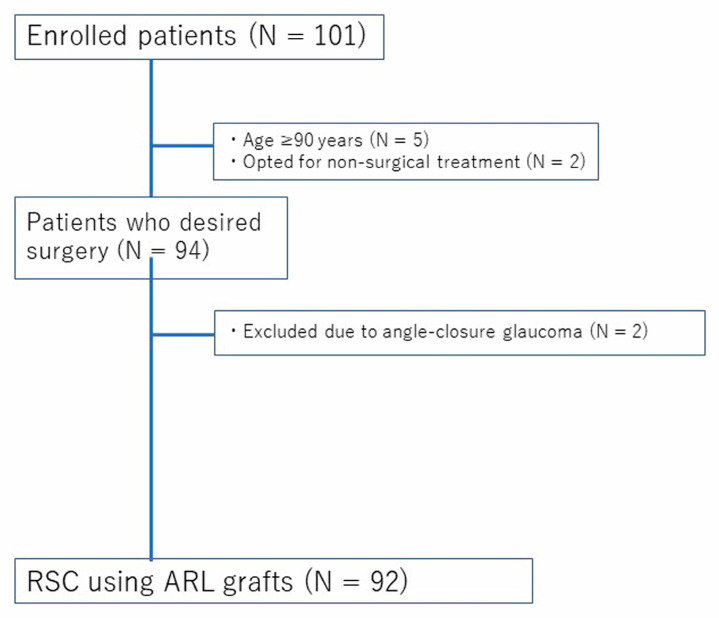 Figure 1
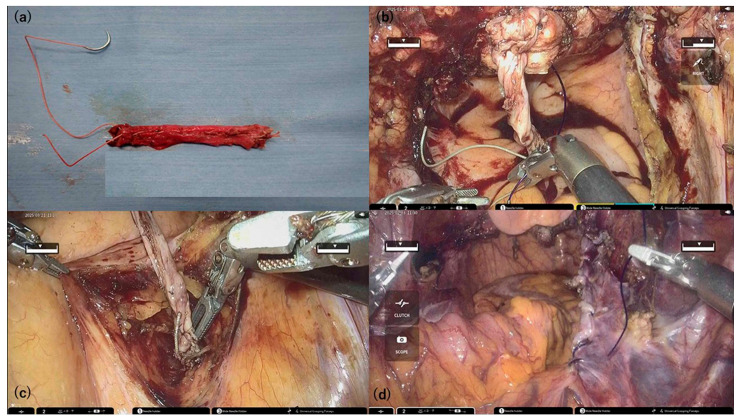 Figure 2
Peer Reviews
No public reviews on file for this paper yet. If you reviewed it on a platform where reviews are public (OpenReview, ICLR, NeurIPS, ICML), you can paste yours below so the community can read it here.
Videos
No videos yet. Explain this paper in a talk, walkthrough, or lecture? Add one.
Taxonomy
TopicsPelvic floor disorders treatments · Pelvic and Acetabular Injuries · Anorectal Disease Treatments and Outcomes