Triangular Fibrocartilage Characterization with Ultrashort Echo Time-T2* MRI: Insights from a Healthy Cohort
Sana Boudabbous, Hicham Bouredoucen, David Ferreira Branco, Stefan Sommer, Tom Hilbert, Pierre-Alexandre Poletti, Rares Salomir, Bénédicte Marie Anne Delattre

TL;DR
This study uses a special MRI technique to measure T2* relaxation time in the triangular fibrocartilage of healthy volunteers and finds it increases with age.
Contribution
The study introduces UTE-T2* MRI as a novel method to assess fibrocartilage health and establishes its correlation with aging in a healthy cohort.
Findings
T2* relaxation time in the triangular fibrocartilage was positively correlated with age.
T2* values were not significantly influenced by sex, hand dominance, or ulnar variance.
Higher T2* values may indicate early degeneration of fibrocartilage microstructure.
Abstract
The objective of this study is to measure T2* relaxation time in the triangular fibrocartilage (TFC) disc in asymptomatic volunteers and evaluate its variation with factors such as age, hand dominance, sex, and ulnar variance, using a dedicated MRI sequence. The MRI protocol included anatomical sequences as well as a 3D ultra-short echo time (UTE)-T2* mapping sequence. A linear regression model was used to assess the potential influence of age, sex, and hand dominance on T2* values measured in the TFC disc and to evaluate the correlation between T2* values and ulnar variance. T2* relaxation time was positively correlated with age. The higher T2* relaxation times may reflect early degeneration of the fibrocartilage microstructure, which is associated with both biomechanical factors and the aging process. However, T2* was not significantly influenced by sex or hand dominance, nor was it…
Genes, proteins, chemicals, diseases, species, mutations and cell lines named across the full text — each resolved to its canonical identifier and authoritative record.
Click any figure to enlarge with its caption.
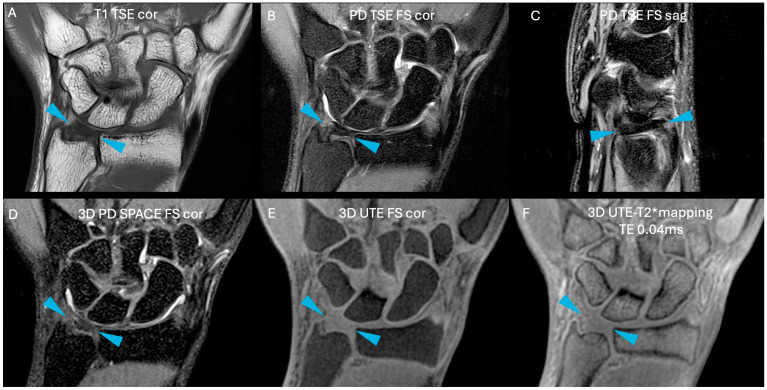 Figure 1
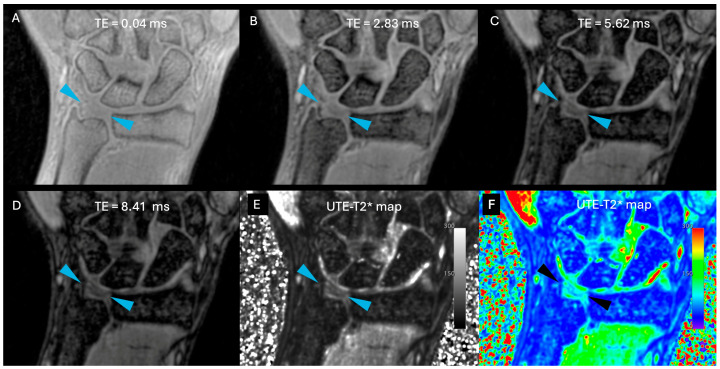 Figure 2
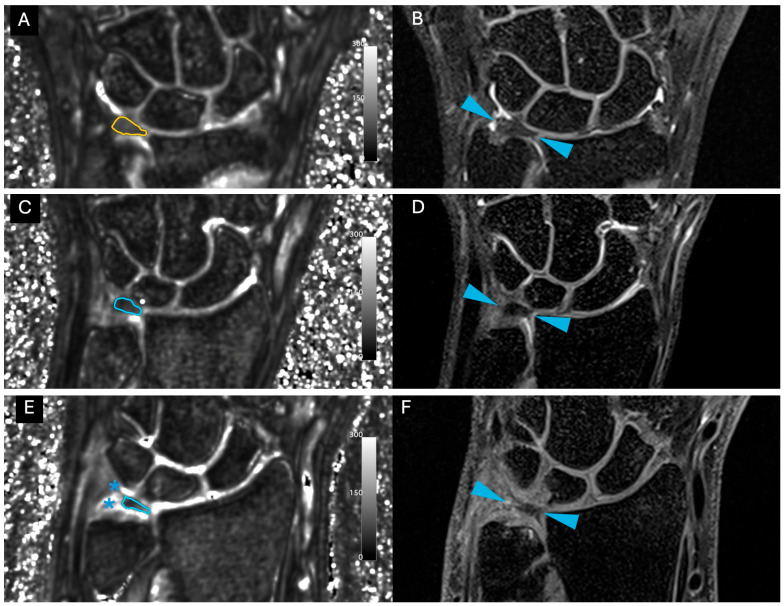 Figure 3
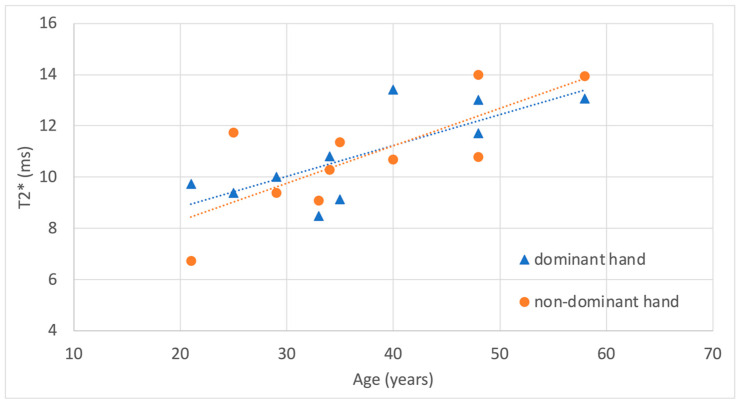 Figure 4
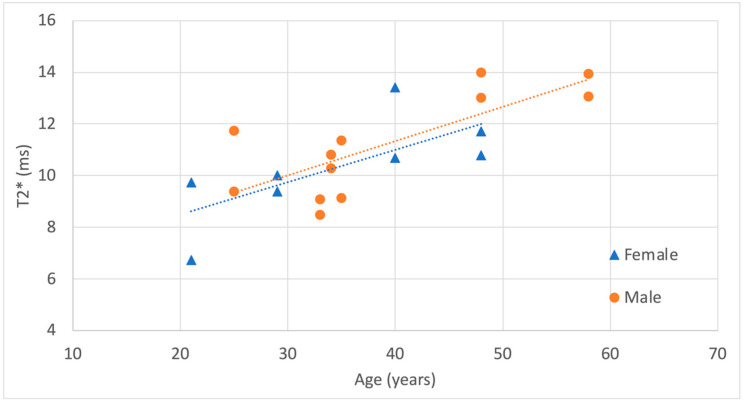 Figure 5
Peer Reviews
No public reviews on file for this paper yet. If you reviewed it on a platform where reviews are public (OpenReview, ICLR, NeurIPS, ICML), you can paste yours below so the community can read it here.
Videos
No videos yet. Explain this paper in a talk, walkthrough, or lecture? Add one.
Taxonomy
TopicsOrthopedic Surgery and Rehabilitation · Foot and Ankle Surgery · Osteoarthritis Treatment and Mechanisms