Assessment of Pulmonary Vein Diameters in Cavalier King Charles Spaniels with Myxomatous Mitral Valve Disease
Carlotta Ferri, Juliette Besso, Hugues Gaillot, Yannick Ruel, Albert Agoulon, Christophe Bourguignon, Clémence Mey, Vassiliki Gouni

TL;DR
This study shows that measuring the diameter of a specific pulmonary vein can help assess the severity of heart disease in Cavalier King Charles Spaniels.
Contribution
The study identifies pulmonary vein 2 (PV2) diameter as a reproducible and disease-stage-sensitive echocardiographic parameter in dogs with myxomatous mitral valve disease.
Findings
PV2 diameter increases with disease progression and is less influenced by body weight compared to other pulmonary veins.
A PV2 cut-off of 12.8 mm distinguishes stage C from stage B2 with 93% specificity but only 57% sensitivity.
PV2 diameter correlates with multiple echocardiographic indices of cardiac remodeling and pressure overload.
Abstract
This study examined whether the size of the pulmonary veins could help assess heart disease severity in Cavalier King Charles Spaniels (CKCSs) with myxomatous mitral valve disease (MMVD). Healthy dogs were compared to those at different stages of the disease using ultrasound measurements. The pulmonary vein 2 (PV2) diameter was found to be the least affected by body weight and increased as the disease progressed. The PV2 diameter showed positive correlations with several echocardiographic indices of cardiac remodeling. A PV2 cut-off value of 12.8 mm yielded a sensitivity of 57% and a specificity of 93% for distinguishing stage C from stage B2. PV2 measurements could be used as an additional, not standalone, tool for staging and treatment decisions and may offer additional insights into cardiac disease progression. The present study aimed to compare pulmonary vein (PV) diameters between…
Genes, proteins, chemicals, diseases, species, mutations and cell lines named across the full text — each resolved to its canonical identifier and authoritative record.
Click any figure to enlarge with its caption.
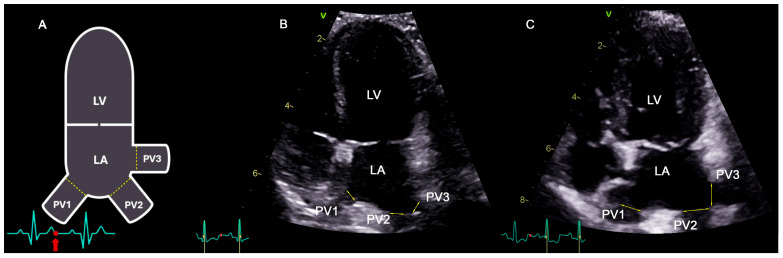 Figure 1
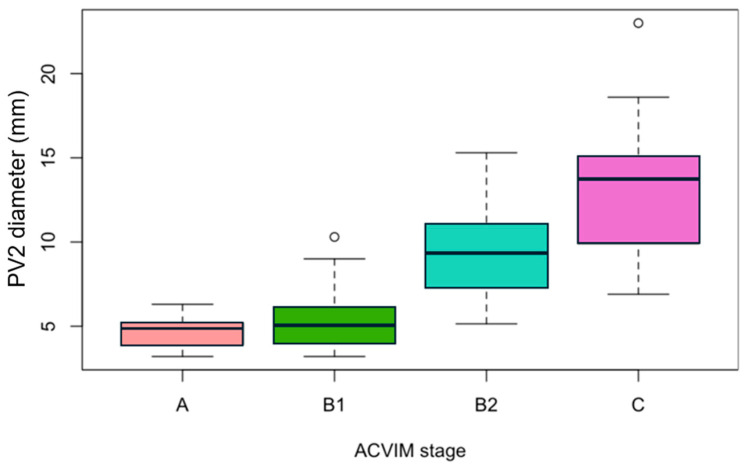 Figure 2
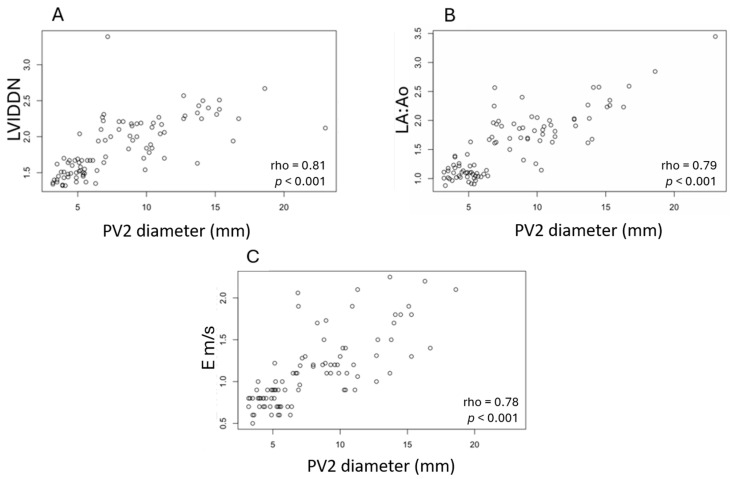 Figure 3
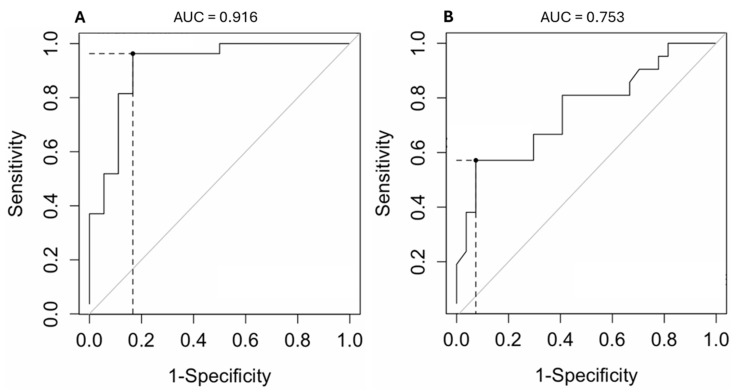 Figure 4
Peer Reviews
No public reviews on file for this paper yet. If you reviewed it on a platform where reviews are public (OpenReview, ICLR, NeurIPS, ICML), you can paste yours below so the community can read it here.
Videos
No videos yet. Explain this paper in a talk, walkthrough, or lecture? Add one.
Taxonomy
TopicsCardiovascular Conditions and Treatments · Pulmonary Hypertension Research and Treatments · Congenital Heart Disease Studies