Nutritional Composition, Volatile Profiles, and Biological Evaluation of Honeys from Melipona interrupta and Melipona seminigra from Amazonas State, Brazil
Emilly J. S. P. de Lima, Carlos V. A. da Silva, Fernanda A. S. Rocha, Aline de M. Rodrigues, Samuel C. Costa, Rebeca S. França, Raiana S. Gurgel, Bárbara N. Batista, Patrícia M. Albuquerque, Waldireny R. Gomes, Hector H. F. Koolen, Giovana A. Bataglion

TL;DR
This study examines the nutritional and chemical properties of honey from two Amazonian stingless bee species, highlighting their antioxidant and antibacterial potential.
Contribution
The study provides a detailed characterization of Melipona honey from the Amazon, including volatile profiles and biological activities.
Findings
Volatile compounds in Melipona interrupta and Melipona seminigra honey were identified using GC-MS.
The honey samples showed moderate antioxidant activity and slight antibacterial activity against two bacterial strains.
Chemical composition differences were observed, influenced by the local flora in the Amazon region.
Abstract
Honey is a natural product produced by bees from the nectar of plants and has been widely used as a sweetener for centuries. In addition to its traditional use, it is also employed for other purposes due to its biological and nutraceutical properties. Although honey production is mostly associated with bees of the genus Apis, species from other genera, such as Melipona, also produce it, albeit on a smaller scale. The honey produced by these two genera shows significant differences in its composition. Moreover, distinct geographical localizations, which, consequently, have different flora, guide the chemical compositions of these samples. Regarding the Amazon region, the amount of knowledge about the honey samples from Melipona species is still scarce. In this context, the present study aimed to characterize the volatile compositions of honey from Melipona interrupta and Melipona…
Genes, proteins, chemicals, diseases, species, mutations and cell lines named across the full text — each resolved to its canonical identifier and authoritative record.
Click any figure to enlarge with its caption.
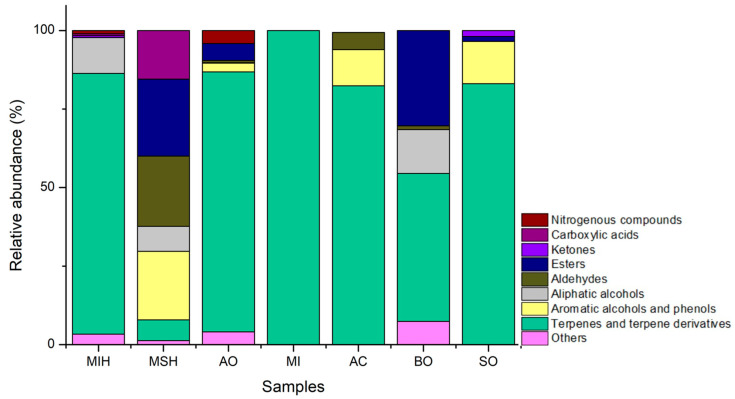 Figure 1
Peer Reviews
No public reviews on file for this paper yet. If you reviewed it on a platform where reviews are public (OpenReview, ICLR, NeurIPS, ICML), you can paste yours below so the community can read it here.
Videos
No videos yet. Explain this paper in a talk, walkthrough, or lecture? Add one.
Taxonomy
TopicsBee Products Chemical Analysis · Insect and Pesticide Research · Plant and animal studies